U.S. Military Conducts Targeted Strikes on Three Suspected Hostile Boats in the Pacific
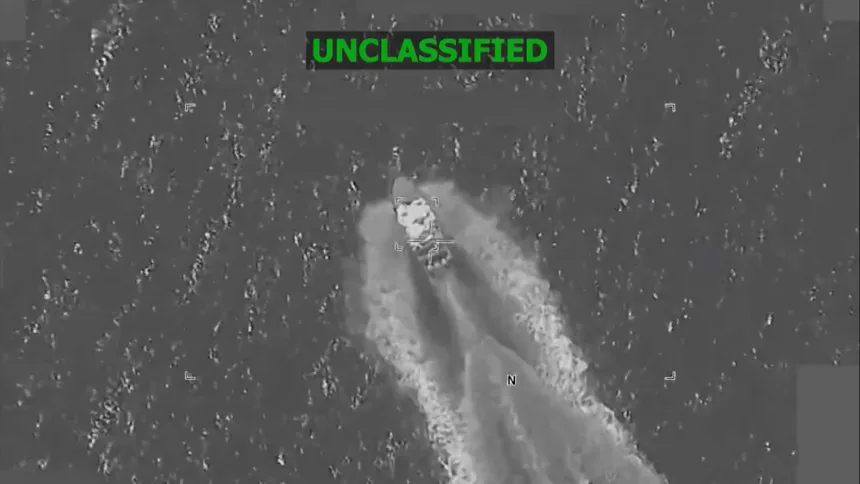
A U.S. military operation in the Pacific resulted in the destruction of three boats identified as hostile threats.
Defense officials say the operation was carried out to protect U.S. forces and maintain maritime security amid rising regional tensions.
The United States military has confirmed that it carried out precision strikes against three boats in the Pacific Ocean after determining they posed a credible threat to American forces operating in the region. The incident underscores the increasingly volatile security environment in key maritime corridors where U.S. assets remain on high alert.
According to U.S. defense officials, the boats were detected during routine surveillance and were assessed to be operating in a manner consistent with hostile intent. After multiple evaluations and real-time intelligence assessments, commanders authorized a limited military response aimed at neutralizing the perceived threat while avoiding broader escalation.
The strikes were executed using U.S. military aircraft and naval capabilities, resulting in the destruction of all three vessels. Officials emphasized that the operation was defensive in nature and designed to protect American personnel and equipment in the area. No U.S. casualties were reported, and there was no immediate indication of civilian involvement.
While details about the origin and affiliation of the boats remain limited, Pentagon sources indicated that the vessels were not part of a recognized national navy. Investigations are ongoing to determine whether the boats were linked to non-state actors or proxy forces operating within contested waters of the Pacific.
The Pacific region has become an increasingly complex theater for military operations as geopolitical competition intensifies. The U.S. maintains a strong naval and air presence in the area to support allies, safeguard trade routes, and deter actions that could destabilize regional security.
Defense analysts note that small, fast-moving boats have frequently been used in asymmetric maritime tactics, particularly in areas where rival forces seek to challenge larger naval powers without engaging in conventional warfare. Such tactics often require rapid decision-making to prevent potential attacks on high-value military assets.
U.S. officials stressed that strict rules of engagement were followed during the operation. Surveillance data, threat indicators, and command authorization were all part of the decision-making process before any action was taken. The military described the response as measured and proportional to the threat observed.
The incident has drawn attention to the broader strategic landscape in the Pacific, where freedom of navigation and the safety of international waters remain critical concerns. American commanders have repeatedly stated that they will act decisively when U.S. forces are threatened, regardless of location.
So far, there has been no immediate public response from foreign governments regarding the strikes. However, defense officials acknowledged that such incidents are closely monitored by regional powers and could influence diplomatic discussions and military posturing in the days ahead.
U.S. military leaders reiterated their commitment to de-escalation while maintaining readiness. They emphasized that the goal of American operations in the Pacific is deterrence, stability, and the protection of lawful maritime activity, not conflict for its own sake.
As investigations continue, the Pentagon is expected to release additional information if it can be shared without compromising operational security. For now, officials maintain that the action was necessary to prevent a potential attack and to ensure the safety of U.S. forces operating in the region.
By Ekolense International News Desk





















Comments