Milan-Cortina 2026: The Winter Olympics Set to Redefine Global Snow Sports
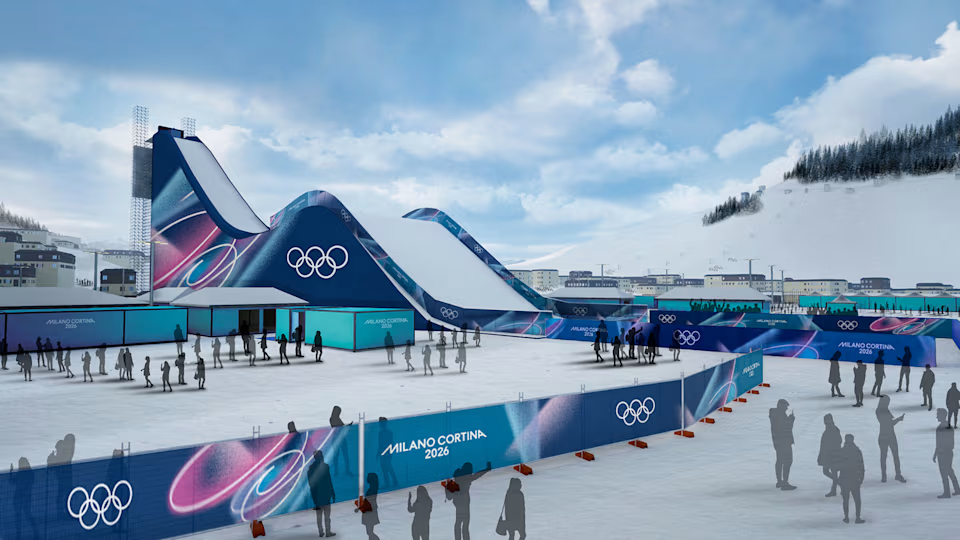
From Alpine peaks to historic arenas, the 2026 Winter Games promise elite competition, rising stars, and unforgettable Olympic moments.
From Alpine peaks to historic arenas, the 2026 Winter Games promise elite competition, rising stars, and unforgettable Olympic moments.
The 2026 Winter Olympics, officially Milan-Cortina 2026, are shaping up to be one of the most highly anticipated editions in recent history. Slated to take place from February 6 to 22, 2026, in northern Italy, the Games combine stunning Alpine landscapes, historic cities, and cutting-edge venues, creating an unparalleled setting for winter sports.
Fans and analysts alike are asking critical questions: Who will dominate the medal table? Which athletes will make history? Which venues will provide the most thrilling competitions? This article provides an in-depth preview of Milan-Cortina 2026, exploring the host cities, key athletes, top contenders, emerging sports, challenges, and factors that could influence outcomes at this iconic global event.
Who Will Host the Winter Olympics 2026?
The International Olympic Committee (IOC) awarded the 2026 Winter Olympics to a joint bid by Milan and Cortina d’Ampezzo, Italy, after evaluating several competing cities. This marks Italy’s third Winter Games, following Cortina in 1956 and Turin in 2006.
Italy’s bid stood out due to several factors:
- Sustainable infrastructure and environmentally-conscious planning.
- Existing world-class skiing and ice sports venues.
- The ability to blend historical charm with modern city amenities.
The IOC highlighted that Italy’s approach to the Games prioritizes a lasting legacy, ensuring that venues and investments will continue benefiting local communities and athletes long after 2026. (IOC Official Report 2026 Evaluation)
Where Will the 2026 Winter Olympics Be Held?
Unlike past Winter Games, Milan-Cortina 2026 adopts a multi-cluster approach, integrating both urban hubs and mountain resorts. This layout not only showcases Italy’s geographical diversity but also ensures that each sport has a customized venue to enhance athlete performance and spectator experience.
1. Milan – The Urban Hub
- Opening Ceremony at San Siro Stadium, blending historic significance with modern spectacle.
- Indoor ice sports, including ice hockey, figure skating, short-track, and speed skating.
- World-class accommodations, transport links, and entertainment hubs for fans.
2. Cortina d’Ampezzo – The Alpine Jewel
- Host of alpine skiing, bobsleigh, luge, skeleton, and curling.
- Famous for its Dolomite slopes and winter sports legacy dating back to Cortina 1956.
- Venues designed to combine athlete safety with spectator enjoyment.
3. Bormio – Alpine Skiing Specialist
- Home to Stelvio Ski Centre, hosting men’s downhill and giant slalom events.
- Known for challenging courses that test technical skill, speed, and endurance.
4. Livigno – Freestyle & Snowboard Hub
- Hosts snowboarding and freestyle skiing (moguls, aerials, halfpipe).
- Snow parks equipped with cutting-edge facilities, attracting top international athletes.
5. Val di Fiemme – Nordic Excellence
- Nordic hub for ski jumping, cross-country, and Nordic combined.
- Venues at Predazzo and Tesero renowned for world-class snow conditions.
6. Verona – Historic Closing Ceremony
- The closing ceremony will take place in the Verona Arena, a 2,000-year-old Roman amphitheater.
- Combines culture, history, and Olympic flair in a unique finale.
Predicting Olympic medal tables is always complex, but history and current world rankings provide insights.
- Norway: Dominates Nordic skiing and cross-country, consistently leading medal tables.
- Switzerland: Alpine skiing powerhouse, featuring stars like Marco Odermatt.
- United States: Excels across freestyle, snowboarding, Alpine skiing, and cross-country skiing.
- Italy: Home advantage could propel Sofia Goggia and Federica Brignone to podium finishes.
- Germany & Austria: Exceptional in bobsleigh, luge, ski jumping, and Nordic combined.
- Emerging nations and underdogs like South Korea, Japan, and Canada also have strong athletes capable of upsetting medal predictions, particularly in short track, freestyle skiing, and figure skating.
Top Athletes to Watch
Milan-Cortina 2026 will feature both established legends and emerging talents. Here’s a breakdown of stars likely to define the Games:
Alpine Skiing
- Mikaela Shiffrin (USA): Slalom and giant slalom specialist with multiple Olympic and World Championship medals.
- Marco Odermatt (Switzerland): Dominant in downhill and combined events.
- Sofia Goggia & Federica Brignone (Italy): Key figures for host nation pride.
Snowboarding & Freestyle Skiing
- Chloe Kim (USA): Halfpipe superstar pursuing a historic third Olympic gold.
- Eileen Gu (USA): Freestyle skiing phenom with multiple World Cup victories.
- Alex Ferreira (USA): Halfpipe competitor with strong medal potential.
Cross-Country & Nordic
- Johannes Høsflot Klæbo (Norway): Sprint and distance cross-country favorite.
- Jessie Diggins (USA): Multiple-time medalist with endurance and versatility.
Sliding Sports
- Wolfgang Kindl (Austria): Luge competitor with a record of consistency.
- Felix Loch (Germany): Legendary luger aiming to add more medals to his career tally.
Emerging Sports & Exciting Additions
The 2026 Games will introduce ski mountaineering, a new discipline combining alpine skiing and mountaineering. This addition is expected to highlight versatility and endurance, offering spectators an exciting new challenge.
Other sports, like freestyle skiing combined events and mixed team competitions, are also gaining popularity, providing dynamic viewing experiences.
Key Notes & Risks to Consider
- Infrastructure & Readiness: Cortina’s Sliding Centre and other facilities must be ready to meet Olympic standards. Delays could affect schedules.
- Geographic Spread: Multiple clusters mean transportation and logistics challenges for athletes, spectators, and media.
- Budget & Sustainability: Despite eco-friendly plans, cost overruns remain a concern. Maintaining a long-term legacy is critical.
- Geopolitical Issues: Some athletes may compete under neutral flags due to international restrictions, affecting competitive dynamics.
- Athlete Health & Injuries: Winter sports are high-risk; injuries can alter medal predictions.
- Weather Conditions: Alpine and Nordic events depend on consistent snow quality, which may be impacted by climate factors.
Strategic Questions for Analysts and Fans
- Who will dominate the medal table at Milan-Cortina 2026?
- Which athletes will make history with multiple gold medals?
- Will Italy’s home advantage propel its athletes to more podium finishes?
- How will new sports like ski mountaineering impact the Games?
- Which logistical challenges could affect competition schedules?
Historical Context: Why Milan-Cortina Matters
Italy has a rich history in winter sports. Hosting the first Winter Olympics in Cortina in 1956, followed by Turin in 2006, Italy has demonstrated both organizational expertise and a deep passion for winter sports. Milan-Cortina 2026 represents a return to tradition while embracing modernity, combining:
- Historic towns and Olympic legacy sites.
- Cutting-edge sports infrastructure.
- Global attention on Italian winter tourism and culture.
Predicted Medal Table (Top 10 Nations)
- Norway – Expected to dominate Nordic skiing.
- United States – Strength in freestyle, Alpine, and snowboarding.
- Switzerland – Alpine skiing medal powerhouse.
- Germany – Sliding sports and Nordic combined.
- Italy – Host advantage in Alpine skiing and speed skating.
- Austria – Luge, bobsleigh, and Alpine skiing.
- Canada – Freestyle skiing and snowboarding.
- Sweden – Cross-country skiing and biathlon.
- Japan – Short track and ski jumping.
- South Korea – Short track, speed skating, and emerging freestyle talent.
Why Milan-Cortina 2026 Matters Globally
- Cultural exchange, highlighting Italy’s history, food, and traditions.
- Global collaboration, bringing nations together through sport.
- Technological and environmental innovation, from sustainable venues to advanced broadcasting.
- Athlete inspiration, showcasing skill, resilience, and sportsmanship.
For spectators, it promises breathtaking performances and unforgettable experiences. For Italy, it’s an opportunity to leave a lasting legacy in global winter sports.
Milan-Cortina 2026 is set to redefine the Winter Olympics experience. With stunning Alpine landscapes, modern arenas, and elite athletes, the Games promise excitement, inspiration, and unforgettable Olympic moments. As fans and analysts look forward to February 2026, the world will watch closely: Who will triumph? Which nations and athletes will dominate? What new stories will unfold on Italy’s winter stage?
The 2026 Winter Olympics is more than just a sporting event—it’s a celebration of athletic excellence, global unity, and human ambition.
By Ekolense Sports News




















Comments