House Approves Sweeping Defense Policy Bill, Setting Stage for Military Spending and Strategic Priorities
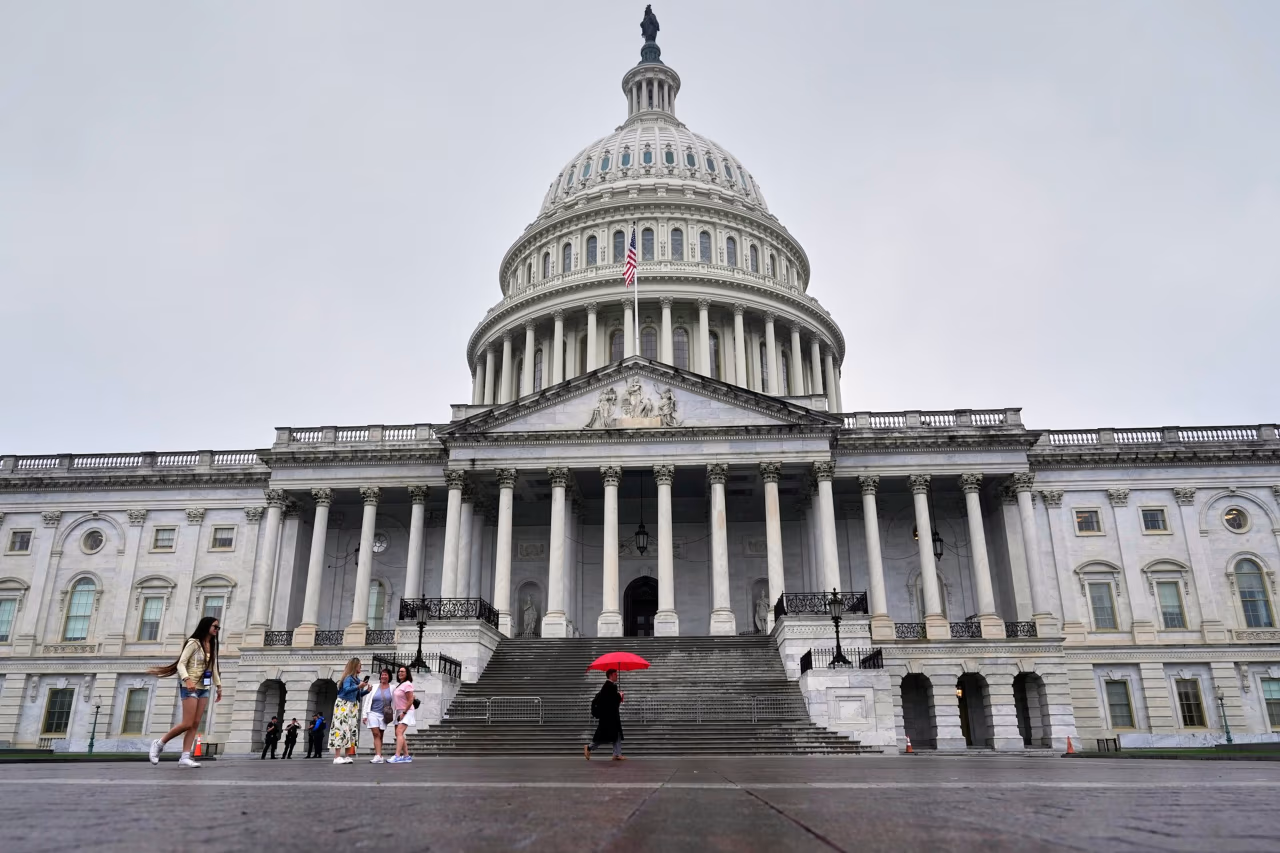
The House passes the National Defense Authorization Act for fiscal 2026, outlining U.S. military funding, modernization, and global commitments.
The National Defense Authorization Act for fiscal 2026 clears the House, highlighting military funding, personnel benefits, and strategic priorities amid ongoing global security challenges.
WASHINGTON — In a decisive move reflecting bipartisan support for national security priorities, the U.S. House of Representatives on Wednesday approved the National Defense Authorization Act (NDAA) for fiscal year 2026, a cornerstone piece of legislation that sets the framework for military spending, personnel policies, and strategic defense initiatives. Passed with a vote of 312 to 112, the bill now advances to the Senate for further deliberation before reaching the President’s desk for final approval.
The NDAA is a recurring annual bill that establishes defense policy priorities, programs, and operational strategies for the U.S. military, even though actual funding allocations are made through separate appropriations. This year, the legislation balances continued support for traditional defense programs with recognition of emerging global threats.
At approximately $900 billion, the bill authorizes record-level spending across personnel, procurement, research and development, and operational readiness. Key allocations include next-generation fighter jets, missile defense systems, cyber capabilities, and naval modernization programs, designed to maintain and enhance U.S. military capabilities amid strategic competition with China and Russia.
A central component of the NDAA is its focus on service members and their families. The legislation includes a 4% pay increase, improvements to housing and base infrastructure, and enhanced quality-of-life programs. Lawmakers emphasized that these provisions are vital for morale, recruitment, and retention within the armed forces.
Global commitments are reinforced through funding for defense assistance to Ukraine, support for NATO allies, and security cooperation programs in the Indo-Pacific. Defense officials describe these measures as crucial to deterring aggression and maintaining the credibility of U.S. international commitments.
Oversight and accountability are also embedded within the bill, including reporting requirements for major procurement programs, operational decisions, and legal compliance. Lawmakers stress that robust oversight reduces waste, prevents inefficiencies, and ensures alignment with strategic objectives.
The NDAA repeals certain provisions from previous overseas conflicts, signaling a shift toward forward-looking defense planning. This highlights the need for adaptive military policy in a rapidly evolving global environment.
Political debates around the bill reflect broader discussions on national security and defense spending. Critics questioned the sustainability of high defense budgets, while supporters stressed that robust funding is essential to safeguard national interests and global stability.
Strategic competition shapes much of the legislation, with directives to modernize cyber operations, artificial intelligence, space systems, and advanced munitions. These investments aim to maintain technological superiority and ensure U.S. military agility against emerging threats.
Training, readiness, and force structure are addressed through allocations for ongoing training programs, recruitment, retention, and educational opportunities. Investment in personnel alongside equipment ensures a professional and adaptable force capable of responding to conventional and nonconventional threats.
The bill also strengthens domestic support for military families, with expanded benefits for veterans, improved healthcare, and initiatives to enhance base infrastructure. Lawmakers emphasized that a capable military requires resilient personnel and supportive family structures.
With the House’s passage, the bill moves to the Senate for potential amendments, after which it will return to the House for reconciliation before reaching the President. Defense officials are preparing implementation plans to ensure authorized programs execute efficiently and according to legislative intent.
The NDAA serves as a policy framework and strategic signal, communicating U.S. resolve to allies and adversaries while demonstrating commitment to modernization, oversight, and responsible governance.
Beyond immediate military priorities, the bill impacts U.S. foreign policy and global influence. Funding for alliances, technological upgrades, and personnel readiness enables response to crises and protection of economic and security interests amid geopolitical volatility.
The House vote underscores bipartisan consensus on core defense matters. While disagreements exist on specific details, there remains widespread support for a capable, modern, and ready military force.
In conclusion, the House’s approval of the NDAA 2026 is a critical step in shaping U.S. defense policy. By addressing personnel pay, global commitments, modernization, and oversight, the legislation balances strategic priorities with accountability. As it advances to the Senate and ultimately to the President, it defines the scope, direction, and capabilities of the U.S. military in a pivotal global moment.
By Ekolense International News Desk























Comments