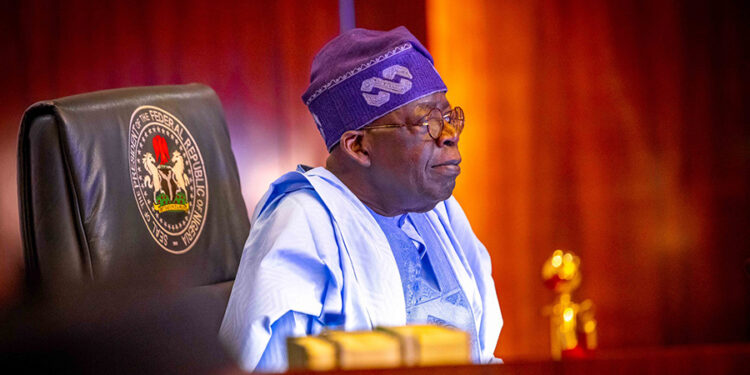
President Bola Ahmed Tinubu has formally requested the approval of the Nigerian Senate to borrow ₦1.15 trillion from the domestic debt market — a move aimed at bridging a widening funding gap in the 2025 national budget.
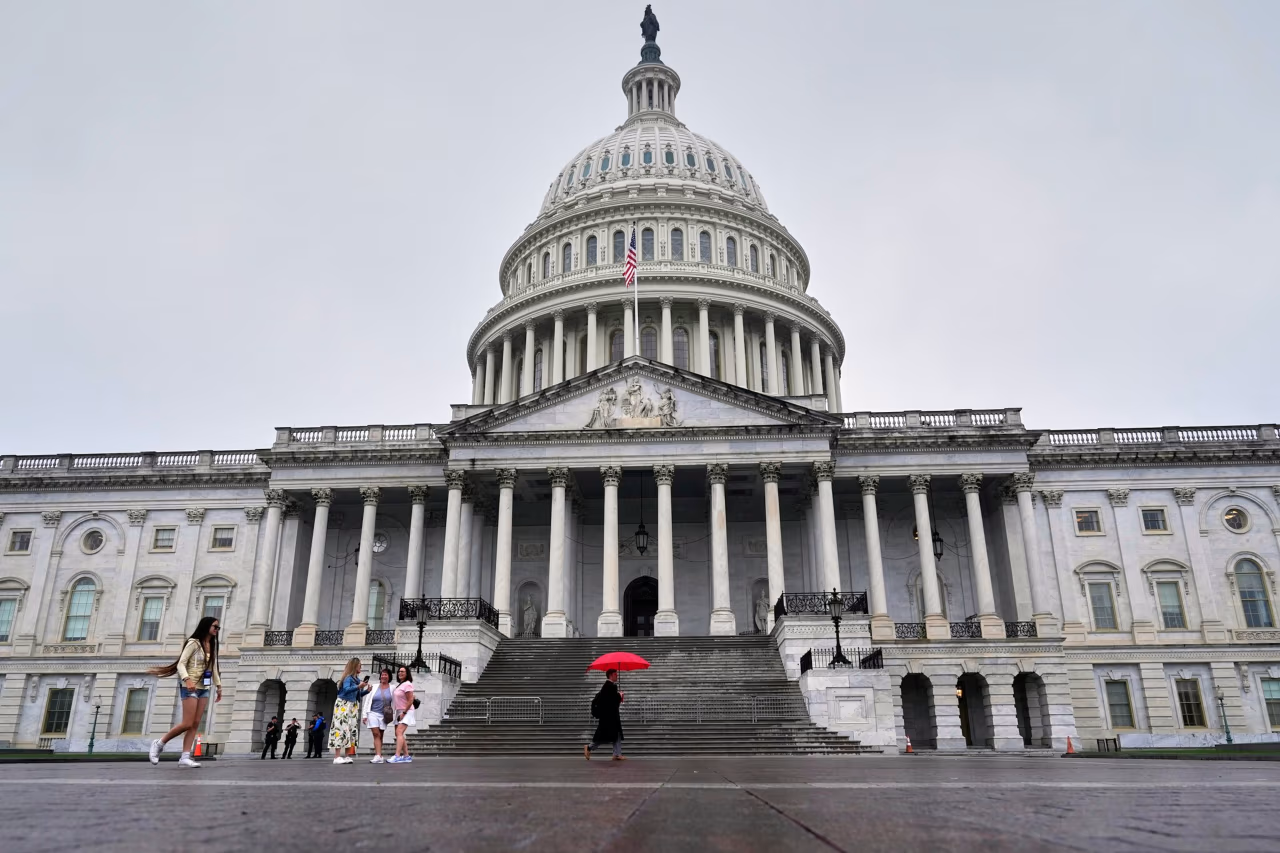
The letter conveying the request was read on the Senate floor by Senate President Godswill Akpabio, who announced that the proposal has been referred to the Senate Committee on Local and Foreign Debt for urgent consideration. The committee is expected to present its report within one week.
According to President Tinubu’s correspondence, the fresh borrowing became necessary due to an increase in the size of the 2025 budget and a shortfall in the government’s revenue projections. The president explained that the additional funds will help finance critical infrastructure projects and offset outstanding obligations to local contractors.
This new loan request comes just days after the Senate approved a $2.3 billion external loan — a development that has sparked debate about Nigeria’s rising debt profile. Critics argue that the government’s growing dependence on loans may eventually cripple the economy if not matched with robust revenue reforms and prudent fiscal management.
Nigeria’s Debt Management Office (DMO) recently disclosed that the country’s total public debt has surpassed ₦121 trillion, combining both domestic and external components. Out of this, domestic debt accounts for a significant portion, raising concerns about the sustainability of internal borrowing, especially given the government’s frequent resort to the local bond market.
Government insiders insist that the new domestic borrowing will support the administration’s Renewed Hope Agenda, which prioritizes infrastructure, industrialization, and social welfare programs.
Part of the funds, according to sources within the Federal Ministry of Finance, will go toward clearing verified debts owed to local contractors, stabilizing ongoing infrastructure projects, and ensuring liquidity within the domestic economy.
However, economists warn that the increased government appetite for borrowing could have far-reaching consequences for the broader financial system — particularly if the proceeds are not channeled into productive investments that generate tangible economic returns.
Nigeria continues to grapple with one of the most challenging macroeconomic environments in recent years. Inflation remains above 28%, the naira has experienced volatile fluctuations, and unemployment continues to weigh on consumer spending.
At the same time, the government’s revenue base remains weak — heavily reliant on crude oil earnings, which have been unstable due to fluctuating global prices and production challenges.
This combination of low revenue and rising expenditure has forced the Tinubu administration to rely increasingly on domestic debt instruments such as Treasury Bills and Federal Government Bonds, effectively competing with the private sector for limited credit resources.
Opposition lawmakers and economic analysts have raised concerns about the pace of Nigeria’s borrowing under the current administration. The People’s Democratic Party (PDP) and the Coalition of United Political Parties (CUPP) have accused the government of “borrowing without accountability,” arguing that constant recourse to loans will only deepen poverty and erode investor confidence.
Meanwhile, civil society groups are calling for transparency in the loan disbursement process. They demand that any approved funds be tied to specific, measurable projects rather than absorbed into recurrent spending — a recurring issue in Nigeria’s budget execution cycle.
Financial experts say that while borrowing to fund infrastructure is not inherently bad, the cost of debt servicing remains a major red flag. According to data from the Budget Office, Nigeria spends over 70% of its total revenue on servicing debt obligations — leaving little room for capital expenditure and social programs.
“Without urgent fiscal reforms, Nigeria risks falling into a debt trap,” warned Dr. Henry Adedayo, a Lagos-based economist. “The government must expand its tax base, improve collection efficiency, and cut down on wasteful spending. Otherwise, every new loan only postpones the inevitable.”
The Senate Committee on Local and Foreign Debt is expected to deliberate on the president’s request in the coming days, after which a plenary vote will determine whether the loan will be approved.
If the Senate gives the green light, Nigeria’s debt-to-GDP ratio — already under pressure — will climb even higher, raising further concerns about long-term fiscal sustainability.
Still, the administration remains confident that the move will stabilize public finances and sustain the country’s developmental priorities heading into 2026.
President Tinubu’s ₦1.15 trillion loan request underscores the depth of Nigeria’s fiscal challenges. While borrowing may provide temporary relief, the real test lies in how effectively the government manages the funds and drives economic productivity.
By Ekolense News Desk