U.S. Strategic Bombers Join Japanese Fighter Jets in High-Profile Air Display After China–Russia Drills
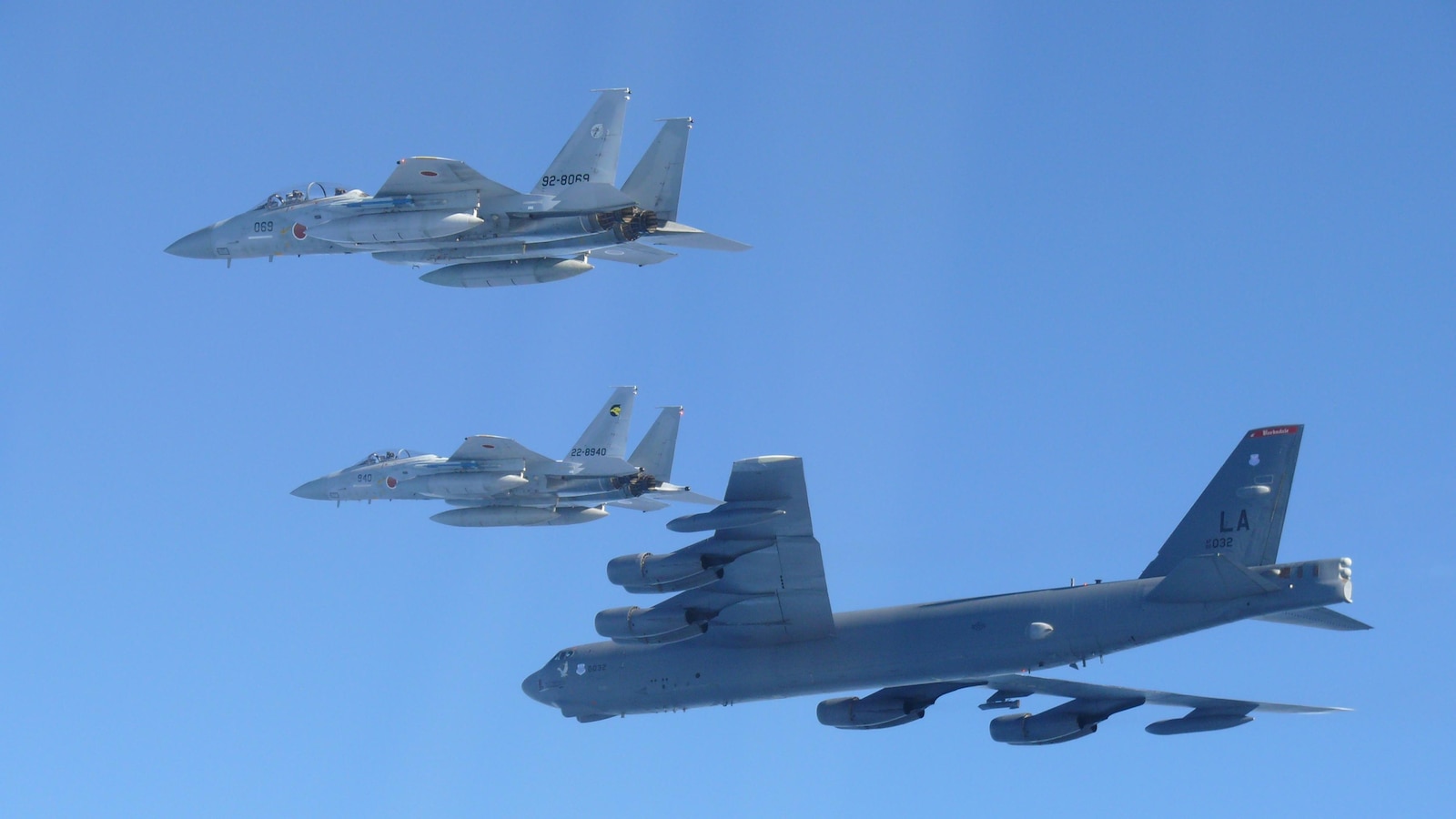
U.S. B‑52 bombers and Japanese F‑35/F‑15 jets conducted joint exercises over the Sea of Japan amid heightened regional tensions.
The United States and Japan staged joint flight operations over the Sea of Japan, showcasing allied military readiness after recent Chinese and Russian bomber patrols heightened regional security concerns.
In a prominent demonstration of allied military capability, the United States and Japan carried out a joint aircraft operation over the Sea of Japan, marking a rare instance of U.S. strategic bombers flying alongside Japanese Air Self‑Defense Force fighters. This move comes amid growing concern over increased Chinese and Russian military activities in East Asia, signaling a robust stance by Tokyo and Washington on regional security.
The exercise featured two U.S. B‑52 strategic bombers, capable of long-range missions and carrying both conventional and nuclear ordnance, alongside three Japanese F‑35 stealth fighters and three F‑15 air‑superiority jets. This combination highlighted both the heavy firepower and the advanced technological capabilities of the allies, sending a clear message of readiness and deterrence.
Backdrop: China and Russia’s Military Maneuvers
Earlier in the week, China and Russia conducted coordinated long-range bomber operations over the East China Sea and western Pacific. Japanese forces were dispatched to shadow these flights, highlighting Tokyo’s heightened alertness to regional security developments. Although no airspace was violated, these drills were widely interpreted as strategic signaling between Beijing and Moscow.
In addition, Chinese carrier-based exercises near southern Japan prompted further concern. Japanese defense officials reported radar interactions they considered unsafe, while Beijing maintained its drills were routine training exercises, not directed at any specific nation.
Strategic Message and Regional Security Concerns
Japan framed the U.S.–Japan exercise as a demonstration of allied solidarity and a deterrent against any unilateral attempts to alter the regional status quo by force. Deploying strategic bombers, rarely seen in routine bilateral exercises, reinforced Washington’s commitment to Tokyo’s defense and regional stability in the Indo-Pacific.
Japan’s Chief of Staff of the Joint Staff emphasized that pairing bombers with fighters affirmed the “readiness posture” of both forces amid a “severe security environment.” The U.S. Department of Defense confirmed that the operation aligned with alliance obligations and was not intended to provoke any nation.
Diplomatic Reactions
Beijing maintains that its drills are routine and aimed at regional stability. Japanese officials, however, expressed concern about insufficient pre-notification for carrier-based exercises near Okinawa. Washington and Tokyo continue high-level consultations to assess China’s expanding military footprint and the associated security implications for East Asia.
Regional Impact
These exercises reflect broader geopolitical competition in the Indo-Pacific. Flashpoints, including Taiwan and territorial disputes in the East China Sea, contribute to heightened alertness among governments. South Korea, hosting U.S. assets, also reported scrambling jets in response to recent Chinese and Russian flights entering its air defense identification zone.
Deterrence, Signaling, and Risks
Experts note the delicate balancing act of deterrence versus provocation. While joint exercises reassure allies, they carry potential risks of miscalculation when multiple states operate advanced aircraft in proximity. Maintaining communication and clear rules of engagement is critical to prevent unplanned confrontations.
Looking Ahead
Regional defense postures in East Asia are likely to remain vigilant. Japan’s alliance with the U.S., coordination with regional partners, and visible joint exercises underscore a sustained readiness phase. Officials stress that these measures aim to maintain stability without triggering direct conflict, with the Sea of Japan serving as a prominent stage for this strategic demonstration.
By Ekolense International Desk




















Comments