Most Countries Make Progress Towards Universal Health Coverage, But Major Challenges Persist, WHO–World Bank Report Finds
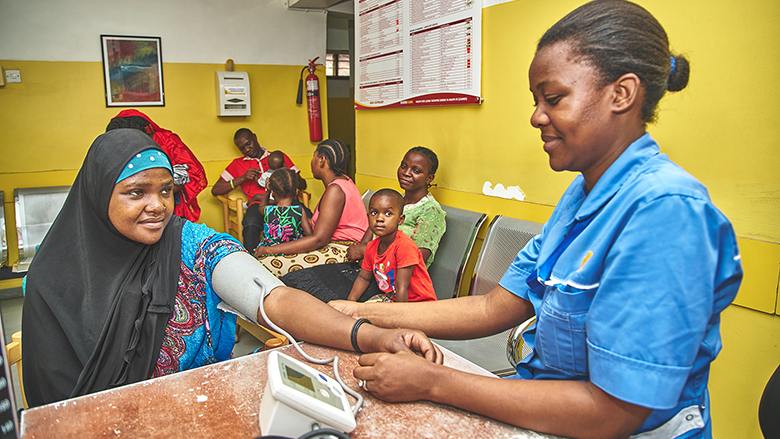
The WHO–World Bank 2025 Global Monitoring Report highlights progress and ongoing challenges in achieving Universal Health Coverage worldwide.
Despite steady improvements in access to essential health services and reductions in financial hardship, millions worldwide still face barriers to care, underscoring urgent action needed to achieve Universal Health Coverage by 2030.
The journey toward universal health coverage (UHC) has gained significant momentum over the past two decades, according to a comprehensive report released jointly by the World Health Organization (WHO) and the World Bank Group. The 2025 Global Monitoring Report, unveiled on 6 December 2025, highlights encouraging progress in many countries in expanding access to essential health services and mitigating financial hardships linked to medical expenses. However, it also warns that systemic gaps, inequities, and financial vulnerabilities continue to impede the global attainment of UHC, leaving millions of people without the protection and care they need.
The report tracks two core dimensions of UHC: service coverage, which measures access to essential health interventions such as immunizations, maternal and child health services, and treatment for chronic and infectious diseases; and financial protection, which assesses whether people are protected from catastrophic out-of-pocket spending that can drive households into poverty. Together, these dimensions form the foundation of UHC and are central to achieving Sustainable Development Goal 3.8, which commits the international community to ensuring health for all by 2030.
According to the report, most countries have made measurable gains in service coverage since 2000. Immunization rates have improved in low- and middle-income countries, access to reproductive and maternal health services has expanded, and treatment coverage for diseases such as tuberculosis and HIV/AIDS has increased. Countries across Africa, Asia, and Latin America have launched targeted programs to reach rural populations and marginalized groups, resulting in demonstrable improvements in population health outcomes.
Equally important, the report notes incremental progress in financial protection, although it remains uneven. Many countries have implemented health financing reforms aimed at reducing the reliance on out-of-pocket payments, including national health insurance schemes, subsidies for essential medicines, and conditional cash transfer programs. In countries with such measures, the number of people pushed into poverty due to healthcare expenses has declined. Nevertheless, the report emphasizes that billions of individuals remain financially vulnerable, and catastrophic health spending continues to threaten households in low- and middle-income nations.
Despite these achievements, the report identifies persistent challenges that threaten to derail progress toward full UHC. One major concern is coverage gaps. Even where essential services are theoretically available, practical barriers—such as geographic inaccessibility, shortages of trained healthcare workers, inadequate health infrastructure, and sociocultural barriers—prevent millions from receiving care. Rural populations, women, children, the elderly, and marginalized communities often face the greatest obstacles, reinforcing inequalities in health outcomes.
Another challenge is the slowing pace of improvement in many regions. While the first decade of the 21st century saw rapid gains, the report observes that service coverage growth has plateaued in numerous countries since roughly 2015. The slowing momentum is particularly evident in areas such as non-communicable disease management, mental health services, and emergency care infrastructure, which have historically received less attention and investment compared to infectious disease programs.
Financial protection remains a critical concern. Although some countries have expanded insurance coverage or subsidized care, the report highlights that in many low-income and fragile states, households still shoulder a disproportionate share of healthcare costs. Out-of-pocket payments, often for medications, consultations, and diagnostic services, remain a significant source of economic stress, sometimes pushing families below the poverty line. The report underscores that without substantial expansion of risk pooling mechanisms and government investment in healthcare, these vulnerabilities will persist.
The report also emphasizes the interdependence of health service access and financial protection. Countries that improve one dimension without addressing the other may see limited impact on overall well-being. For example, expanding service coverage without reducing out-of-pocket costs may lead to increased utilization among those who can afford care but continued exclusion of the most vulnerable. Conversely, financial protection measures alone cannot achieve health outcomes if services are unavailable, low quality, or geographically inaccessible.
The WHO–World Bank team notes that strong political commitment, effective governance, and sustainable financing are key determinants of success. Countries that have made substantial progress toward UHC share common characteristics: they prioritize primary healthcare as the foundation of their systems, invest in workforce training and retention, implement evidence-based policy reforms, and maintain accountability mechanisms to monitor performance. The report calls on other countries to adopt similar strategies while tailoring approaches to local contexts and challenges.
One notable finding of the report is the critical role of international cooperation and donor support in advancing UHC. Low-income countries often rely on technical and financial assistance to strengthen health systems, scale up essential services, and protect vulnerable populations from catastrophic expenditures. The report highlights successful examples where donor partnerships have facilitated mass immunization campaigns, expanded maternal and child health services, and provided emergency response capacity during epidemics. Nevertheless, the report warns that overreliance on external funding can undermine long-term sustainability if domestic financing and institutional capacity are not simultaneously strengthened.
The global COVID-19 pandemic underscored both the importance of UHC and the fragility of health systems. The report cites evidence that countries with stronger primary healthcare systems, broader service coverage, and robust financial protection mechanisms were better able to respond to health crises, maintain essential services, and minimize economic hardship. Conversely, countries with fragmented health systems and high out-of-pocket spending struggled to meet population needs during the pandemic, leading to preventable morbidity and mortality. These lessons reinforce the urgency of accelerating UHC implementation as a cornerstone of global health security.
Regional disparities remain a significant concern. In sub-Saharan Africa, for example, coverage for key interventions such as skilled birth attendance, antenatal care, and immunization remains below global averages. In South Asia, financial protection gaps are particularly pronounced, with many households spending more than 10% of income on healthcare. Meanwhile, in parts of Latin America and Eastern Europe, service coverage has improved but quality and equity issues persist. The report stresses that tailored strategies are needed to address these contextual challenges and ensure that UHC benefits reach all segments of society.
The report also highlights the importance of monitoring and accountability mechanisms. Countries need robust data systems to track both service coverage and financial protection outcomes. Reliable, disaggregated data allow policymakers to identify inequities, target interventions, and measure progress over time. The report notes that innovations such as digital health platforms, geospatial mapping, and routine health surveys have proven effective in enhancing UHC monitoring, but further investment in health information systems is essential.
In addition to domestic reforms, the report calls for global collaboration to address cross-border health challenges. Epidemics, pandemics, and the global movement of people make UHC not only a national priority but an international responsibility. The report suggests that enhanced coordination among countries, international organizations, and regional networks can strengthen resilience, optimize resource allocation, and improve health outcomes worldwide.
The humanitarian context is also critical. Conflicts, natural disasters, and forced displacement disrupt health service delivery, exacerbate financial vulnerabilities, and leave affected populations at heightened risk. The report emphasizes that integrating UHC strategies into emergency response planning and post-crisis recovery can help ensure continuity of care, protect populations from financial shock, and contribute to long-term stability.
Despite the challenges, the report conveys a message of cautious optimism. Countries that invest in UHC reap multiple benefits beyond health. Improved population health enhances productivity, reduces poverty, and supports economic growth. Moreover, equitable access to healthcare strengthens social cohesion and trust in institutions, which are essential components of resilient societies. The report emphasizes that UHC is not only a moral imperative but also a strategic investment in sustainable development.
Looking forward, the WHO–World Bank report outlines priority actions for accelerating progress toward UHC:
- Expand primary healthcare coverage: Focus on comprehensive, people-centered services, including preventive, promotive, and curative interventions.
- Increase financial protection: Reduce reliance on out-of-pocket spending through risk pooling, insurance schemes, and public subsidies.
- Strengthen health workforce and infrastructure: Train, retain, and deploy healthcare professionals strategically, particularly in underserved areas.
- Enhance health data systems: Invest in monitoring tools, surveys, and digital platforms to track coverage, quality, and equity.
- Promote equity-focused policies: Address disparities for marginalized groups, including women, children, elderly, rural populations, and displaced persons.
- Ensure sustainable financing: Combine domestic resource mobilization with strategic use of external assistance to guarantee long-term viability.
- Integrate UHC into global health security: Use UHC as a platform for pandemic preparedness, emergency response, and cross-border collaboration.
In conclusion, while significant strides have been made toward Universal Health Coverage, the path to 2030 remains fraught with challenges. Millions still lack access to essential services, and financial vulnerability remains widespread. The WHO–World Bank report serves as both a record of progress and a call to action, urging governments, international organizations, and stakeholders to intensify efforts, strengthen health systems, and implement policies that leave no one behind.
By Ekolense International News Desk



















Comments