The United States President, Donald J. Trump Receives FIFA Peace Prize at 2026 World Cup Draw
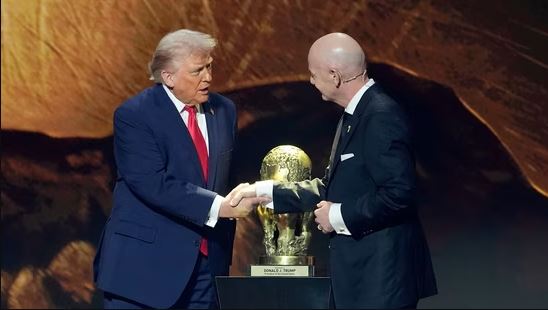
FIFA President Gianni Infantino presents the inaugural FIFA Peace Prize to U.S. President Donald J. Trump during the 2026 World Cup draw in Washington, D.C.
FIFA inaugurates the Peace Prize to honor extraordinary efforts for global peace, awarding it to U.S. President Donald J. Trump during the 2026 World Cup draw in Washington, D.C.
During a high-profile ceremony at the John F. Kennedy Center for the Performing Arts in Washington, D.C., FIFA formally presented the inaugural FIFA Peace Prize to Donald J. Trump, the President of the United States. The award, newly established by the international football governing body, recognizes individuals who have demonstrated exceptional contributions to peace, diplomacy, and global unity.
The presentation coincided with the draw for the 2026 FIFA World Cup, an event that traditionally celebrates the sport itself, but this year marked a historic expansion as FIFA emphasized its growing role in global diplomacy. FIFA President Gianni Infantino personally presented the gold trophy, a certificate, and a commemorative medal to President Trump, praising his “efforts to foster peace, dialogue, and international collaboration.”
In his acceptance speech, President Trump described the award as “one of the great honors” of his life. He highlighted his administration’s international initiatives, asserting that policies under his leadership had contributed to stabilizing conflict zones and saving millions of lives around the world. Trump referenced several regions, including Gaza, India-Pakistan, and the Democratic Republic of Congo, claiming his diplomatic and economic measures had helped mitigate tensions and prevent escalations.
The ceremony underscored the intersection of sports and diplomacy. FIFA, long recognized for promoting football globally, has now expanded its scope to include recognition for contributions to peace and international cooperation. Infantino emphasized that the prize is intended to honor leaders and visionaries who unite people across borders, and he noted that football can serve as a bridge between nations and cultures.
International reactions to the announcement have been mixed. While some commentators applauded FIFA’s initiative, highlighting the symbolic power of linking sports with peace efforts, others criticized the choice of a sitting political figure with a divisive global reputation. Analysts noted that the award’s credibility would be tested by the clarity of the selection criteria and the demonstrable impact of recipients’ actions on global peace.
Historically, FIFA has engaged in initiatives promoting social development, anti-discrimination, and humanitarian aid, but the creation of a high-profile Peace Prize marks a significant step into international diplomacy. Critics argue that awarding such a prize to a head of state may politicize the honor, while supporters suggest it highlights the potential for football to inspire dialogue and collaboration.
The 2026 World Cup draw itself became a platform for this diplomatic emphasis. Delegates from participating nations observed the proceedings, which included remarks on global unity and the power of football as a tool for understanding and cooperation. Infantino reiterated that while football remains FIFA’s central mission, the organization recognizes the sport’s ability to bring people together in meaningful ways beyond the field.
Trump’s recognition sparked widespread media coverage. Some outlets described the award as a milestone in sports diplomacy, while others questioned the decision due to President Trump’s polarizing political record. Humanitarian organizations and commentators called for transparency in future selections to ensure the award reflects genuine contributions to global peace rather than symbolic gestures or political optics.
The ceremony’s optics reinforced FIFA’s intention to use the Peace Prize as a platform for global engagement. Observers note that subsequent recipients could include international leaders, activists, or organizations whose work directly contributes to conflict resolution, humanitarian aid, or fostering understanding across communities. The inaugural award, however, will remain a defining example of how the organization seeks to blend sport and diplomacy.
For President Trump, the award provides an international stage to highlight his administration’s diplomatic initiatives. It also positions the United States at the center of discussions about the role of sports institutions in fostering dialogue and influence on global affairs. FIFA’s move suggests a growing trend of using football not only for competition but also as a conduit for international visibility and soft power.
While the Peace Prize adds a new dimension to the World Cup draw, FIFA stressed that it complements rather than overshadows the sporting event. Infantino emphasized that football’s global reach can promote understanding, collaboration, and a culture of peace, reinforcing the idea that sport and diplomacy can be mutually supportive.
Looking ahead, FIFA’s management of the Peace Prize will be closely scrutinized. Observers anticipate that the transparency of the selection process and the demonstrable achievements of future recipients will determine the award’s credibility. The first award, given to President Trump, sets a high-profile benchmark, generating both interest and debate about the evolving relationship between global sports and international diplomacy.
The awarding of the FIFA Peace Prize to Donald J. Trump at the 2026 World Cup draw represents a landmark moment at the crossroads of football, politics, and global humanitarian recognition. It demonstrates FIFA’s ambition to extend the impact of sport beyond the pitch, into arenas of diplomacy and international cooperation. Whether the award becomes a respected and enduring acknowledgment of global peace efforts will depend on FIFA’s ability to maintain credibility, transparency, and meaningful selection criteria in the years to come.
For millions of football fans and observers worldwide, the Peace Prize marks a new era where sport is more than competition; it is also a platform for highlighting the importance of leadership, collaboration, and global harmony. FIFA’s initiative reflects the belief that football, as a universally beloved sport, can influence positive change and inspire individuals and nations to work toward common goals.
The presentation of the FIFA Peace Prize to President Donald J. Trump is both symbolic and transformative, signaling FIFA’s willingness to integrate the values of peace and diplomacy into the world of sports. While reactions remain mixed, the award establishes a precedent for recognizing influential figures whose work transcends borders, encouraging dialogue and collaboration in a world often defined by conflict.
By Ekolense International News Desk








Comments