UN welcomes DR Congo–Rwanda accord as a “critical step,” even as fighting persists at the border
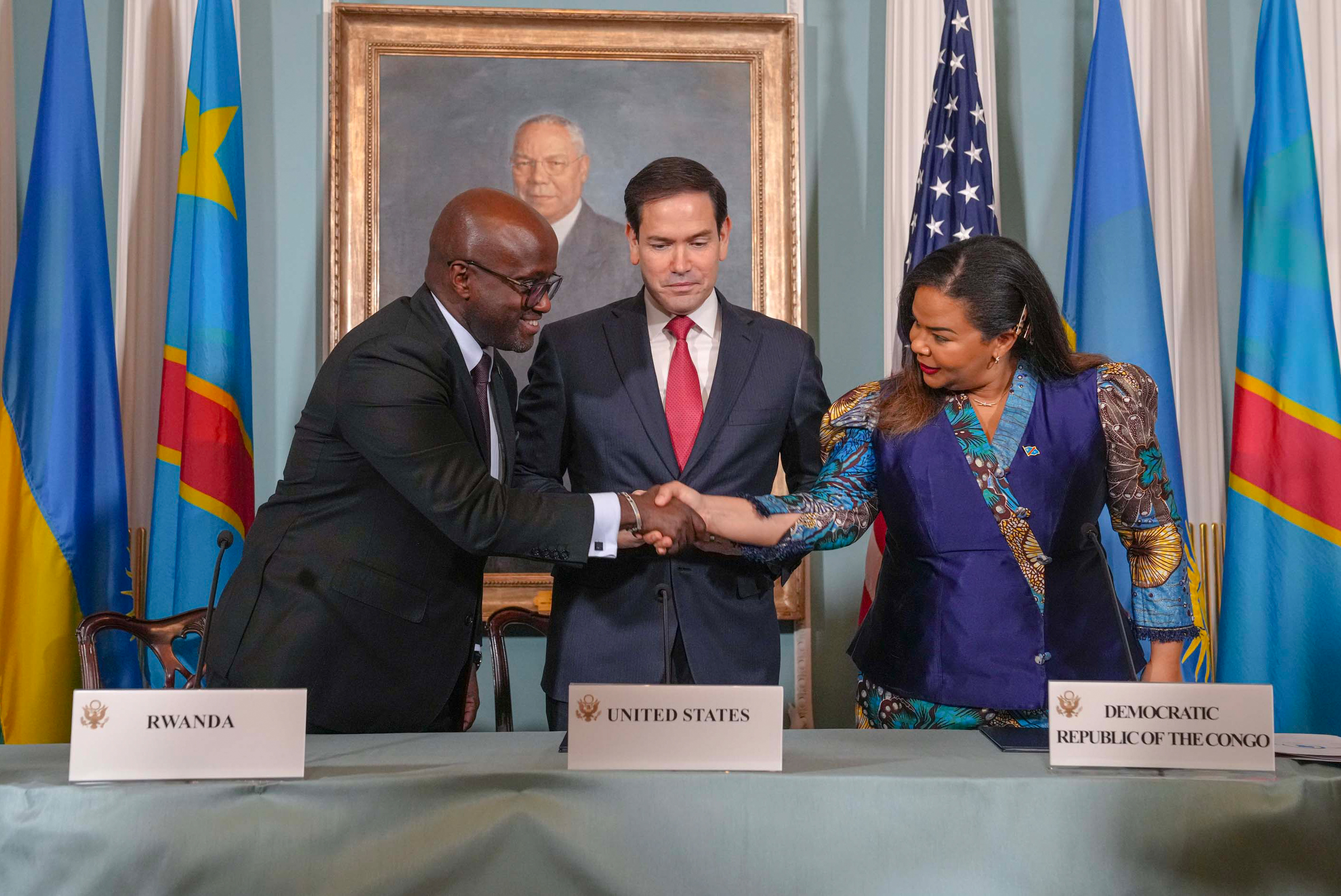
The United Nations praises the new DRC–Rwanda peace deal but warns that violence is still affecting civilians along the border.
The United Nations hails the Washington-brokered peace deal as an important milestone — but warns that active hostilities continue to harm civilians in eastern DR Congo.
The United Nations has formally applauded the recent peace agreement reached between the Democratic Republic of the Congo (DRC) and Rwanda, describing the Washington-brokered pact as a long-awaited breakthrough in diplomatic efforts to ease tensions between the neighboring countries. The two nations, whose relationship has been marked by decades of mistrust and repeated border skirmishes, committed to a framework designed to restore confidence, reduce hostilities, and strengthen regional stability.
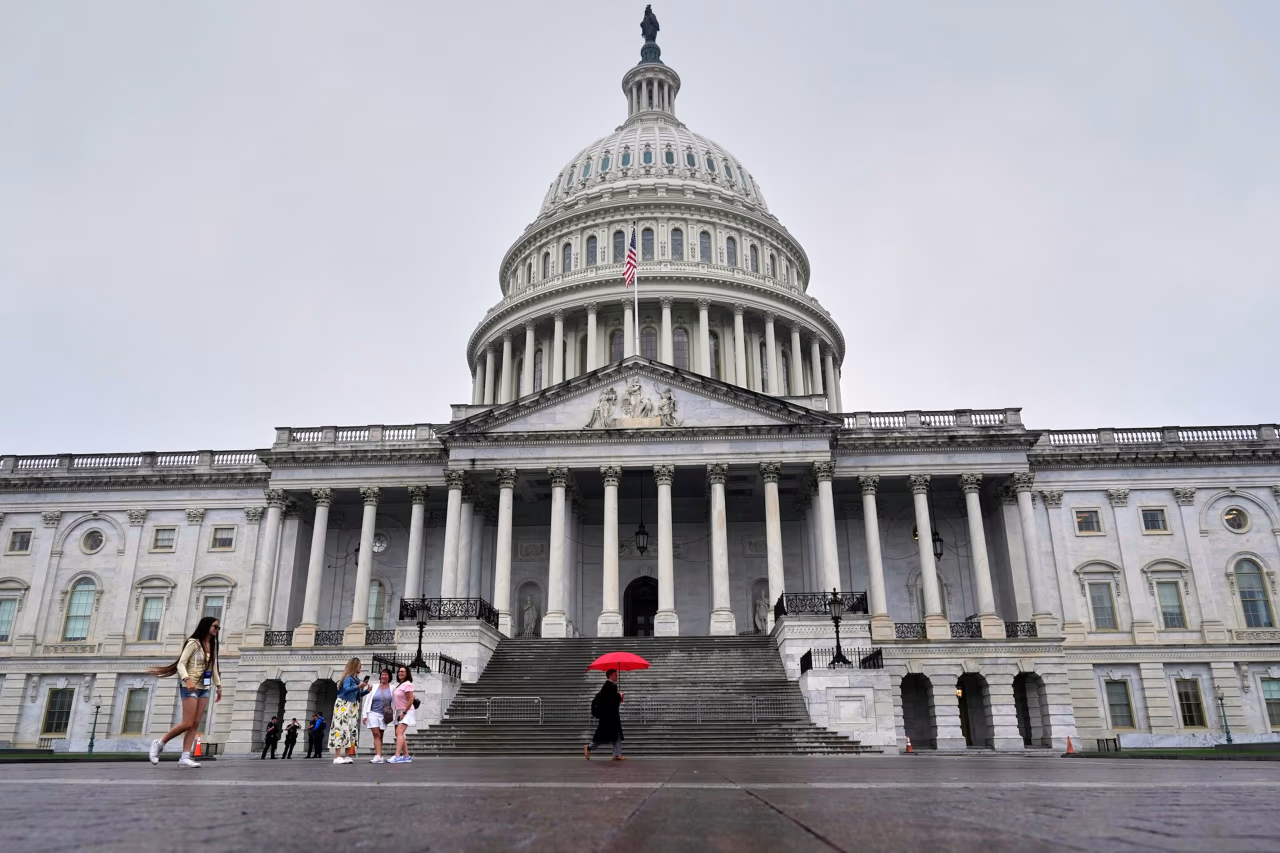
The agreement — now widely referred to as the Washington Accords for Peace and Prosperity — was finalized with the support of U.S. mediators and brings together senior officials from both governments. UN Secretary-General António Guterres praised the signing as “an important milestone,” emphasizing that the accord represents a renewed willingness by both sides to prioritize peaceful engagement over confrontation. According to the UN, the willingness of the DRC and Rwanda to sit down and negotiate such a comprehensive agreement is itself a promising signal after years of mutual accusations and fractured diplomacy.
The deal outlines several central commitments: an immediate and lasting ceasefire, coordinated disarmament of armed factions operating in eastern Congo, and structured cooperation on regional economic development. The agreement also encourages both governments to take concrete steps toward rebuilding political trust and reducing military exposure along contested border zones. UN officials stressed that adherence to the agreement’s terms will be essential if the region is to move toward a meaningful and sustainable peace.
Beyond its security objectives, the accord contains provisions aimed at reinforcing economic stability. These include cross-border infrastructure plans, trade formalization initiatives, and joint mechanisms for curbing illegal resource exploitation — a known driver of conflict in eastern Congo. By strengthening legal commercial channels and creating opportunities for shared development, the deal seeks to reduce the economic incentives that fuel armed activity.
Despite the diplomatic progress, UN assessments warn that the situation on the ground tells a more troubling story. In the days following the signing, heavy clashes continued to be reported in multiple eastern provinces. Communities in Uvira, Walungu, Kabare, Fizi, and Kalehe have suffered repeated fighting, leaving residents caught between armed groups and fragile ceasefire arrangements. Local sources confirm the use of heavy artillery in some areas, resulting in the loss of lives, destruction of homes, and mass displacement.
The humanitarian consequences remain severe. As of late October, an estimated 1.2 million people had been uprooted from their homes in South Kivu alone due to ongoing violence. Relief agencies working under the UN umbrella have attempted to scale up support, distributing food supplies, temporary shelters, medical care, and protection services. Between January and September, roughly 1.5 million people received humanitarian assistance, yet large populations remain out of reach due to insecurity and inaccessible terrain.
The UN has reiterated its call for all parties — state and non-state actors alike — to uphold international humanitarian law. It insists that civilians must be shielded from harm, and humanitarian agencies must be granted safe and unhindered access to vulnerable communities. According to UN officials, enabling secure humanitarian corridors is essential to preventing further deterioration of conditions in already traumatized regions.
The peace agreement also carries notable economic and geopolitical weight. Eastern Congo hosts substantial mineral deposits, including cobalt, gold, copper, tantalum, and lithium — resources crucial to global industries. However, the sector has long been plagued by illegal mining networks, smuggling, and armed control of key mineral sites. By promoting transparent supply chains and structured cooperation between the DRC, Rwanda, and international partners, the accord aims to weaken illicit financial systems that have historically empowered armed actors.
Proponents of the accord argue that the economic sections of the agreement are not secondary; they are foundational. Improved economic conditions, they say, create a pathway for community development, employment, and long-term stability. If successfully implemented, such reforms could help shift local economies away from dependence on armed groups and unregulated mining operations, offering residents safer and more predictable livelihoods.
However, analysts warn that turning promises into practical change will require political will from both governments. The region has witnessed a long line of ceasefire agreements that either collapsed or were only partially observed. Armed factions — including the notorious M23 group — have previously captured strategic territories despite diplomatic commitments in place. The durability of the Washington accord will depend heavily on measurable disarmament, withdrawal of external military forces, and verifiable adherence to the agreement’s security provisions.
Long-standing distrust between Kinshasa and Kigali presents another challenge. Accusations of interference, proxy support for rebel movements, and political rivalry have repeatedly undermined peace initiatives in the past. Observers stress that confidence-building measures, independent monitoring teams, and transparent reporting systems will be necessary to prevent disagreements from escalating into renewed conflict.
International involvement adds an additional layer of accountability. The UN’s support, along with engagement from regional blocs and Washington, places diplomatic pressure on both governments to uphold their commitments. It also signals the growing interest of global actors in stabilizing a region whose security and economic resources hold international implications.
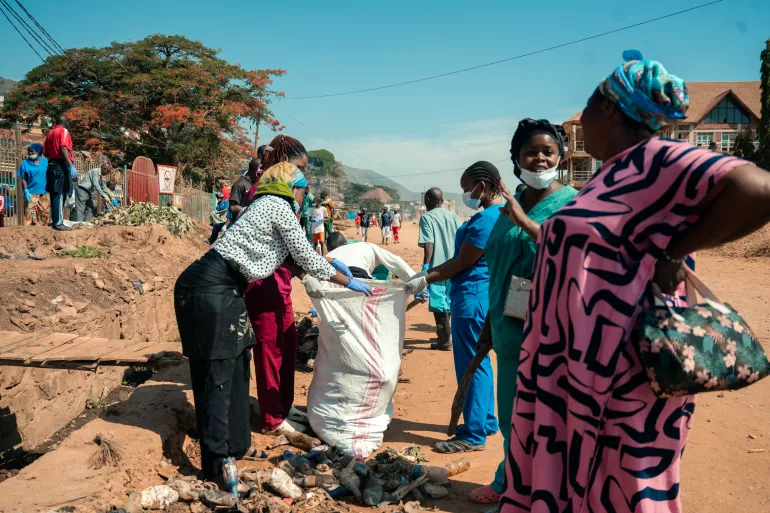
For civilians living in eastern Congo, the peace deal inspires both hope and caution. While many welcome the prospect of reduced violence and improved stability, the continuation of hostilities even after the agreement’s signing serves as a reminder of the fragility of progress. Families remain displaced, agricultural lands lie abandoned, and access to food and healthcare is inconsistent at best.
Humanitarian workers emphasize that until fighting ceases completely, communities will continue to suffer. Children are out of school, local markets cannot operate safely, and many villages remain empty as residents seek refuge in temporary camps. The success of the peace accord, therefore, hinges not only on political cooperation but also on immediate action to secure civilian areas and reopen access routes.
In summary, the UN’s endorsement of the DRC–Rwanda peace deal underscores its potential to reshape the security and economic landscape of eastern Congo. The agreement introduces structured pathways for conflict reduction, disarmament, and regional cooperation. Yet the persistence of deadly clashes proves that diplomatic signatures alone cannot end a complex, deeply rooted conflict.
Whether the Washington Accords become a turning point or another unrealized promise will depend on sustained commitment, verification, and genuine cooperation between the two nations. If implemented fully, the deal could reduce violence, revive regional trade, and provide millions of civilians with the stability they desperately seek. But without rigorous enforcement and continued international oversight, the fragile hope it brings may remain out of reach.
By Ekolense International News Desk












Comments