Bangladesh Mourns Death of Khaleda Zia, Nation’s First Female Prime Minister
Veteran politician and BNP leader passes away at 80 after prolonged illness, leaving a complex political legacy.
Ekolense International Desk | 2025-12-30 | Politics, Bangladesh
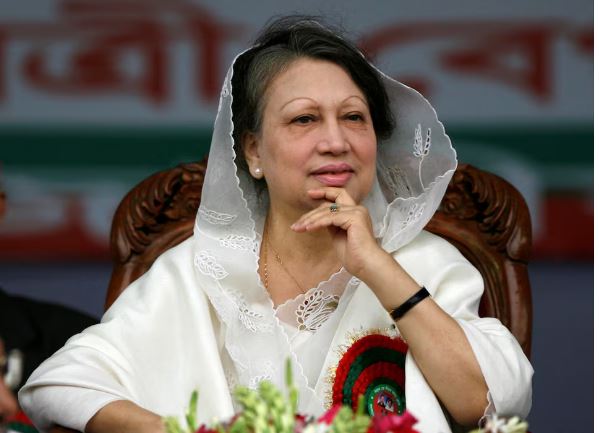
Khaleda Zia, the first female prime minister of Bangladesh and BNP leader, who passed away at 80.
Bangladesh is in deep mourning following the death of Khaleda Zia, the country’s first female prime minister and a towering figure in its modern political history. She passed away on Tuesday at the age of 80, after battling multiple chronic illnesses, her political party, the Bangladesh Nationalist Party (BNP), confirmed. Zia’s death marks the end of a political career that spanned more than three decades, defined by historic achievements, fierce rivalries, and moments of intense national controversy.
Zia had suffered from a combination of serious health conditions, including advanced liver cirrhosis, arthritis, diabetes, and recurring heart and chest complications. Her deteriorating health had necessitated extended treatment both at home in Dhaka and abroad, including a four-month stay in London earlier this year before she returned to Bangladesh. Her prolonged illness had limited her direct involvement in politics in recent years, but she remained a symbolic leader for millions of supporters.
A Historic Political Rise
Khaleda Zia’s rise to the premiership was extraordinary in both national and regional terms. She first became Bangladesh’s prime minister in 1991, following a landmark election that restored parliamentary democracy after years of military and autocratic rule. Her ascent represented not only a political milestone but also a social one: she became one of the earliest women in a Muslim-majority country to hold the office of prime minister.
Her political career was closely linked with her late husband, Ziaur Rahman, a former army officer who became president of Bangladesh before being assassinated in 1981. She assumed leadership of the BNP, the party founded by her husband, and successfully transformed it into a dominant force in national politics. Her leadership style combined political pragmatism with a strong populist appeal, often emphasizing nationalism, economic development, and social welfare policies.
During her first tenure, Zia helped oversee Bangladesh’s transition from a presidential system to a parliamentary democracy. Her government prioritized administrative reforms, educational expansion, and early economic liberalization policies, while simultaneously navigating the complex dynamics of a nation still recovering from the trauma of independence and political unrest.
Rivalries and Political Turmoil
A defining feature of Zia’s political life was her long-standing rivalry with Sheikh Hasina, leader of the Awami League and daughter of Bangladesh’s founding father, Sheikh Mujibur Rahman. The two women alternated in power for decades, shaping a political landscape characterized by intense competition, partisan polarization, and frequent street-level unrest.
This rivalry often manifested in nationwide protests, strikes, and episodes of political violence. Both leaders were occasionally detained during periods of political upheaval, reflecting the high stakes of their ongoing struggle for political dominance. Analysts describe their rivalry as one of the most enduring and personal in global political history, symbolizing broader ideological and regional divides within Bangladesh.
Zia’s second term as prime minister was particularly controversial. Her administration faced criticism over governance challenges and allegations of corruption, while dealing with growing political violence, including a grenade attack in 2004 that targeted a rally addressed by Hasina. Although responsibility for the attack was attributed to militant elements, the incident heightened domestic tension and complicated efforts to achieve national stability.
Legal Challenges and Later Years
After leaving office in 2006, Khaleda Zia faced multiple legal challenges and corruption charges, which she and her supporters claimed were politically motivated to weaken the BNP’s influence. She was imprisoned in 2018 but later placed under house arrest due to declining health. Her convictions were eventually overturned in early 2025, restoring her and her family’s political standing just ahead of the upcoming 2026 parliamentary elections.
Despite her health struggles, Zia had expressed intentions to participate in the national elections, demonstrating her enduring influence over the BNP and her continued role as a political figurehead. Her son, Tarique Rahman, who serves as the party’s acting chairman, has been widely regarded as her political successor, returning to Bangladesh after nearly 17 years in exile. Analysts suggest that Tarique’s leadership will now be crucial in steering the BNP through the political challenges following his mother’s death.
National and International Reactions
News of Khaleda Zia’s passing prompted an outpouring of condolences across Bangladesh and internationally. Current government officials, political rivals, and international diplomats acknowledged her contributions to Bangladesh’s political development. Many highlighted her trailblazing role as a female leader in a predominantly male political arena, noting her impact on gender representation and political participation.
Domestic media extensively covered her funeral arrangements and tributes, while public gatherings reflected both mourning and celebration of her political life. Supporters remembered her as a champion of democracy and a figure who had navigated the nation through some of its most turbulent years, while critics reflected on the challenges and controversies that marked her tenure.
Internationally, political observers noted her death as the passing of a significant figure in South Asian politics, whose career mirrored the broader struggles of developing democracies grappling with institutional stability, economic development, and the tensions of personalistic leadership.
Legacy and Political Implications
Khaleda Zia’s death leaves a complex political legacy. She is remembered for her historic achievements in advancing women’s leadership, her contributions to parliamentary democracy, and her efforts to develop Bangladesh’s economic and social infrastructure. However, her career was also marked by intense rivalry, legal controversies, and periods of political instability that defined Bangladeshi politics for decades.
Her passing comes just weeks before the national parliamentary elections scheduled for February 2026, a development that could reshape the political landscape. The BNP now faces the challenge of maintaining its influence and voter base without its long-time leader, even as the acting chairman, Tarique Rahman, steps forward to consolidate power and rally support.
Political analysts predict that her death could influence voter sentiment, particularly among traditional BNP supporters who see Zia as a symbol of political resilience and national pride. The party will need to balance honoring her legacy with articulating a forward-looking agenda to remain competitive in the upcoming elections.
A Nation Remembers
As Bangladesh mourns Khaleda Zia, her life serves as a reminder of the country’s evolving political journey. From her historic rise as the first female prime minister to her decades-long rivalry with Sheikh Hasina, Zia’s story reflects both the possibilities and challenges of leadership in a young democracy.
Her death closes a chapter in Bangladeshi politics but also signals the beginning of a new era for the BNP and for national politics. Observers will be closely watching how the party navigates this transition, the role of her family in guiding the party forward, and how her legacy shapes political discourse in the years to come.
In a nation that has experienced rapid social, economic, and political change since its independence, Khaleda Zia’s life and career remain emblematic of the resilience, ambition, and complexity of Bangladeshi politics. Her passing is not only a moment of reflection for the country’s political community but also a pivotal point in shaping Bangladesh’s future trajectory.
















Comments