Greta Thunberg Arrested in London Under UK Terrorism Law While Protesting in Support of Palestine Action Detainees
The Swedish climate activist was detained by City of London Police for displaying a placard at a pro‑Palestinian demonstration, igniting global debate on free speech, protest rights, and the application of counter‑terror legislation.
Ekeoma Nwosu | 2025-12-23 | International Activism
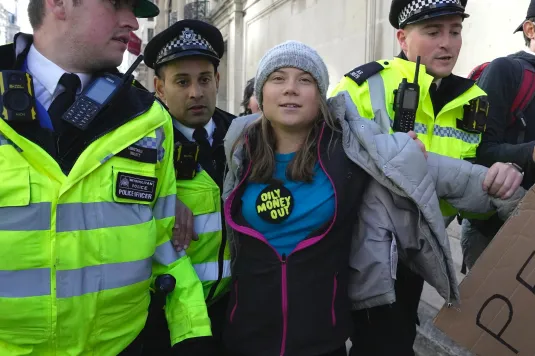
Greta Thunberg at a pro-Palestinian demonstration in London, displaying a placard in solidarity with Palestine Action detainees.
London, United Kingdom — December 23, 2025 — Swedish climate and human rights activist Greta Thunberg was arrested in central London on Tuesday morning during a pro‑Palestinian protest outside the offices of Aspen Insurance, drawing worldwide attention and controversy. The detention — made under the UK’s Terrorism Act 2000 — has raised heated discussions about activism, legal boundaries, and the right to protest in modern democracies.
What Happened at the Protest?
Around 7 a.m. local time, officers from the City of London Police arrested Thunberg after she stood holding a sign that read: “I support the Palestine Action prisoners. I oppose genocide.” The demonstration was organized by a group called Prisoners for Palestine to show solidarity with members of Palestine Action — a collective legally declared a proscribed terrorist organization by the UK government earlier in 2025.
The protest was aimed at Aspen Insurance, a firm targeted for its alleged ties to Elbit Systems UK, a defense contractor linked to Israeli arms manufacturing. Protesters accused Aspen of providing essential insurance services to Elbit Systems, indirectly supporting military equipment production.
Before Thunberg’s arrival, two activists sprayed red paint on the building’s facade with repurposed fire extinguishers — symbolizing “bloodshed” — and glued themselves to the entrance before being arrested for criminal damage. Thunberg then arrived, displaying her placard in solidarity with hunger‑striking detainees before police detained her under Section 13 of the Terrorism Act for allegedly endorsing a banned organization.
Who Is Greta Thunberg? More Than a Climate Activist
Greta Thunberg, now in her early 20s, first gained global prominence in 2018 with her “School Strike for Climate” protests outside the Swedish Parliament. What started as a solo act inspired millions of young people worldwide to join climate strikes and demand urgent action from governments and corporations.
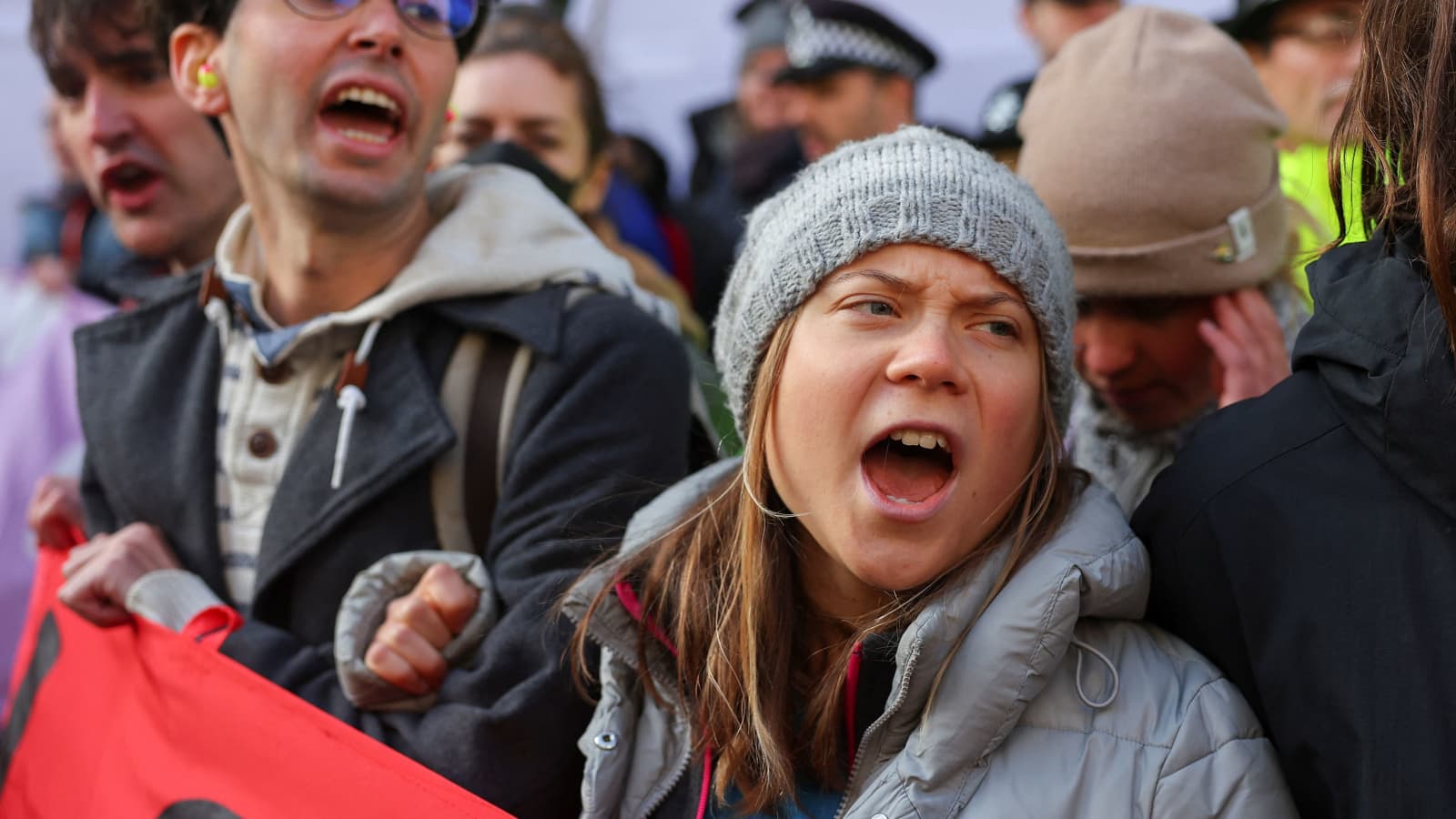
Greta Thunberg at a pro-Palestinian demonstration in London, displaying a placard in solidarity with Palestine Action detainees.
Her long-standing commitment to activism includes:
- Protests against fossil fuel interests and global energy policies.
- Participation in international flotillas delivering humanitarian aid to Gaza.
- Demonstrations supporting Palestinian rights and opposing military actions.
Thunberg has previously been detained during pro‑Palestinian protests in cities like Copenhagen and Malmö and has spoken at rallies condemning military actions and urging humanitarian intervention.
Why the Arrest Was Made — UK Terrorism Act Explained
The central legal issue in Thunberg’s detention is that Palestine Action is a proscribed organization under UK counter-terrorism law. The provisions make it a criminal offense to display support or encouragement for a listed organization, including via visual materials.
Police statements indicated Thunberg was arrested for showing a placard in support of Palestine Action prisoners, which authorities considered support of the proscribed organization itself, regardless of the humanitarian context cited by protesters.
Under Section 13 of the Terrorism Act 2000, such support can carry serious legal penalties, including potential prison sentences. Experts say successful prosecution would require proof that the individual intended to support the group’s aims — a key point if charges are pursued.
The Broader Protest Context
This incident occurred amid heightened political tensions in the UK and Europe regarding pro‑Palestinian demonstrations, government enforcement of public order, and the application of anti‑terror legislation in public protests. Activists staged rallies across cities focusing on detention conditions, restrictions on bail for suspects linked to Palestine Action, and broader condemnation of Middle East conflicts.
Several Palestine Action members were reportedly on hunger strike at the time, with some in critical stages after weeks without food. Demonstrators called for the UK government to lift the ban, improve detention conditions, and ensure justice in trials of earlier protests.
Global Reaction: Support and Backlash
News of Thunberg’s arrest spread internationally. Supporters hailed her commitment to human rights and solidarity with marginalized groups, praising her long record of combining environmental activism with political causes.
Critics argue that public support for a proscribed organization crosses from peaceful protest into unlawful endorsement. Some stress that freedom of speech and peaceful protest must be balanced against public safety laws protecting against designated extremist groups.
What Happens Next? The Legal and Political Stakes
As of now, authorities have not confirmed whether formal charges will be filed or when Thunberg might appear in court. If prosecuted, her case could become a high-profile legal battle over the interpretation and application of terrorism legislation in protest contexts.
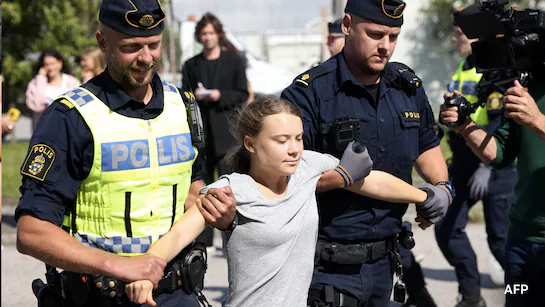
Greta Thunberg at a pro-Palestinian demonstration in London, displaying a placard in solidarity with Palestine Action detainees.
Possible outcomes include:
- No charges filed or dropped: If evidence is insufficient to prove intent to support the proscribed organization.
- Formal charges and trial: A full legal process debating free speech, protest rights, and counter-terror laws.
- Public and political debate: The arrest may fuel broader discussions in the UK and abroad about how laws are applied to peaceful protesters.
Why This Matters Beyond One Arrest
Thunberg’s detention highlights questions facing modern democracies: the limits of protest, counter-terror laws, and how high-profile activists influence political discourse. It epitomizes the crossover between climate justice, human rights advocacy, and political solidarity campaigns.
In today’s era of rapid communication and politically charged movements, authorities and activists alike are grappling with balancing public order and freedom of expression. Thunberg’s case may serve as a test for how these tensions play out in courts, legislatures, and public opinion in the months ahead.














Comments