U.S. Travel Ban: 39 Nations Suddenly Locked Out — Who’s Next on the List?
Ekolense International Desk | 2025-12-18 | International Relations
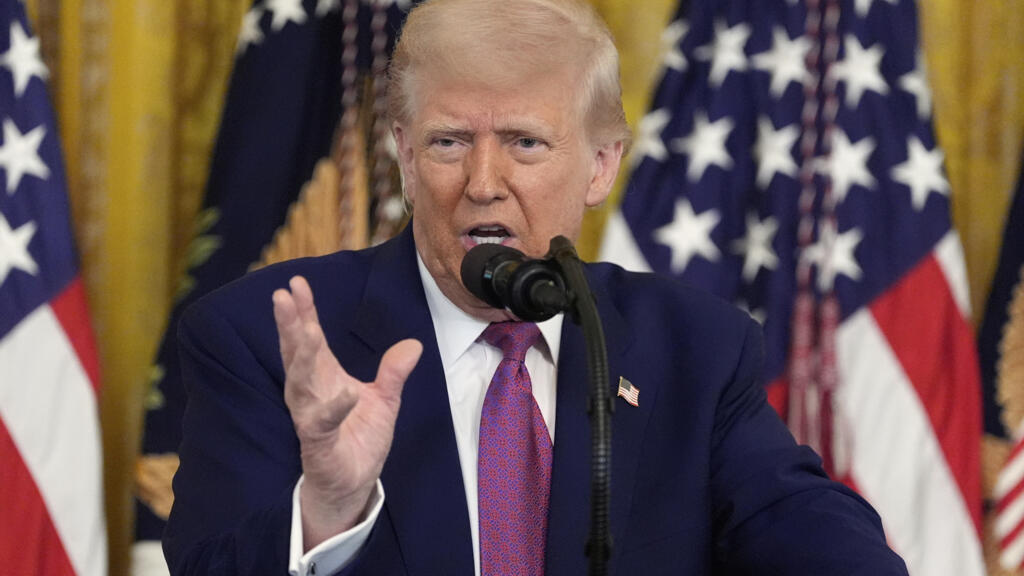
U.S. President Donald J. Trump
New White House proclamation bans or restricts entry for nearly 20% of world nations, igniting global debate on security, sovereignty, and international mobility.
The United States has once again redefined who gets through its doors — and who does not. In a move that has sent shockwaves across continents, Washington has imposed a sweeping travel ban affecting 39 countries, marking one of the most far-reaching entry restrictions in modern American history. The decision, announced under the banner of national security, is already reshaping diplomacy, migration, education, and global perception of the world’s most powerful nation.
For millions of people, the change was abrupt. One day, travel plans, visa applications, academic offers, and family reunification hopes were alive. The next, they were uncertain — or erased entirely.
“This action is about closing security gaps, not singling out people,” a U.S. State Department spokesperson said on background. “Countries can be reviewed and removed once compliance benchmarks are met.”
What the New Ban Actually Does
Unlike previous iterations that focused narrowly on a handful of states, this policy introduces a layered system of exclusion. Some countries face an almost total shutdown: their citizens are largely barred from entering the U.S., regardless of purpose. Others are placed under partial restrictions, where visas are limited, processing is slowed, or entire categories of travel — tourism, study, business — become significantly harder.
The affected countries span Africa, the Middle East, Asia, the Caribbean, and Latin America, making this ban global in scope rather than regional in focus. The scale alone is unprecedented: nearly one in every five countries on earth now faces some form of U.S. entry restriction.
U.S. officials argue the decision is grounded in security realities, not politics. According to the administration, several of the targeted countries lack reliable identity verification systems, fail to share traveler data adequately, or have high rates of visa overstays. In some cases, ongoing conflict, state fragility, or the presence of armed extremist groups were cited as risk factors.
From Washington’s perspective, the ban is framed as a preventive measure — a way to reduce uncertainty before threats materialize. Supporters insist that border control is a sovereign right and that the U.S. is simply exercising due caution in an increasingly volatile world.
A Policy That Punishes Passports, Not People
One of the most persistent criticisms of the ban is its collective nature. Entire populations are affected, regardless of individual background, education, or intent. A student with a scholarship, a doctor attending a conference, or a family member visiting relatives can all be treated the same under the new rules.
Human rights advocates say this approach undermines the principle of individual assessment — replacing it with nationality-based suspicion.
“Blanket travel restrictions raise serious concerns about fairness and collective punishment,” United Nations Secretary-General António Guterres warned. “Security must not come at the expense of global cooperation.”
For countries like Nigeria, Haiti, Afghanistan, and Sudan, the implications are particularly severe. These nations already grapple with economic and political challenges, and restrictions on mobility further limit opportunities for their citizens to study, trade, and engage globally.
“Nigeria remains committed to engagement and dialogue,” the Nigerian Ministry of Foreign Affairs said in a statement. “We urge U.S. authorities to reconsider policies that affect law-abiding citizens, students, and professionals.”
International Reactions and Diplomatic Tension
International reactions have ranged from muted concern to outright condemnation. Some governments have issued formal protests, arguing that the ban damages bilateral relations and stigmatizes their citizens. Others have responded cautiously, wary of escalating tensions with Washington.
Behind closed doors, diplomats warn that the policy could have long-term consequences. Travel restrictions do not exist in isolation — they affect cooperation on security, climate, trade, and regional stability. When mobility narrows, trust often follows.
African regional bodies, in particular, have expressed concern that the ban reinforces old hierarchies in global movement.
“Such measures risk deepening inequality in global mobility,” said Moussa Faki Mahamat, Chairperson of the African Union Commission. “They undermine decades of partnership between Africa and the United States.”
Students, Families, and the Human Cost
Beyond geopolitics, the most immediate impact is deeply personal.
Universities across the U.S. are reassessing admissions and exchange programs. International students from restricted countries now face uncertainty even after securing admission and funding.
“I followed every rule, got my admission, secured funding — and now I don’t know if I can go,” said Aisha Bello, a Nigerian postgraduate student admitted to a U.S. university. “It feels like the door closed without warning.”
Families are also caught in the middle. Weddings postponed. Funerals unattended. Parents separated from children. Even lawful residents worry that travel abroad could become a gamble rather than a right.
“This isn’t about security to families like ours,” said Jean-Marc Pierre, a Haitian-American community organizer in Florida. “It’s about separation, fear, and being told you don’t belong.”
For diaspora communities already living in the U.S., the ban has reopened old anxieties — fears of exclusion, impermanence, and being viewed as outsiders despite years of contribution.
While the political debate dominates headlines, economists warn of quieter fallout. Reduced travel affects airlines, tourism, higher education revenue, and foreign investment. Skilled professionals who once viewed the U.S. as a destination of choice may now look elsewhere.
In an era where global talent is highly mobile, restrictions can shift innovation hubs. Countries that keep doors open often benefit from those that close them.
The expansion is also likely to face legal scrutiny. Past travel bans triggered years of court battles, forcing revisions and clarifications. Legal scholars argue that while the executive branch has wide authority over immigration, blanket nationality-based restrictions remain controversial.
The key question is whether the government can convincingly demonstrate that the ban is narrowly tailored, evidence-based, and free from discriminatory intent. Lawsuits are expected — and the courts may once again become the arena where America’s border philosophy is tested.
Full List: Countries Affected by the U.S. Travel Ban
Full or Near-Total Entry Restrictions: Afghanistan, Burkina Faso, Chad, Eritrea, Haiti, Iran, Libya, Mali, Myanmar (Burma), Niger, Republic of the Congo, Sierra Leone, Somalia, South Sudan, Sudan, Syria, Yemen, Laos, Palestinian Authority passport holders.
Partial Restrictions or Heightened Controls: Angola, Antigua and Barbuda, Benin, Burundi, Côte d’Ivoire, Cuba, Dominica, Gabon, The Gambia, Malawi, Mauritania, Nigeria, Senegal, Tanzania, Togo, Tonga, Turkmenistan, Venezuela, Zambia, Zimbabwe.
(Restrictions vary by country and visa category.)
Beyond its immediate effects, the ban sends a message. It signals a United States that is more cautious, more inward-looking, and more willing to trade openness for perceived security. To supporters, this is pragmatism. To critics, it is retreat.
What remains unclear is whether the policy will make Americans safer — or simply more isolated.
As the restrictions take effect, millions around the world are left asking the same question: Is this the future of global travel — where borders harden, mobility shrinks, and opportunity depends increasingly on the passport you hold?
For now, the line has been drawn. Who crosses it next — and who is added to the list — is the suspense the world is watching.













Comments