U.S. Burns Down Syria - Firestorm on ISIS
Ekeoma Nwosu | 2025-12-20 | World News
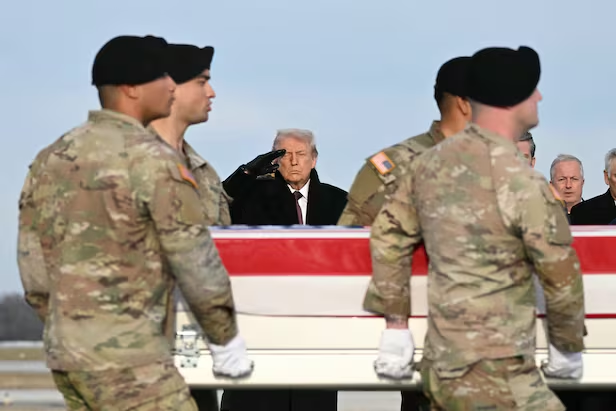
The United States Army.
A deadly ambush ignites a powerful American response as warplanes, rockets, and allies converge to crush Islamic State remnants
The United States has carried out one of its most expansive and forceful military operations against the Islamic State in recent years, launching a coordinated wave of airstrikes and ground-supported attacks across central Syria in a decisive response to the killing of American personnel. The operation, executed with precision and overwhelming firepower, signals Washington’s renewed determination to prevent ISIS from exploiting instability to rebuild its operational capacity.
U.S. Central Command confirmed that American and coalition forces struck more than 70 ISIS-linked targets in a sweeping campaign aimed at dismantling the extremist group’s remaining networks. The strikes targeted fighter concentrations, weapons depots, supply routes, and operational infrastructure hidden across Syria’s vast desert regions, areas long used by ISIS as concealment zones after the collapse of its territorial “caliphate.”
The offensive marks a sharp escalation in U.S. military action and underscores a clear message: attacks on American forces will trigger swift and decisive retaliation.
The Attack That Sparked the Response
The large-scale strikes were triggered by a deadly ambush near Palmyra, a historic city in central Syria surrounded by open desert. During a routine joint operation, gunfire erupted, killing two U.S. soldiers and a civilian interpreter, and wounding several others. The incident sent shockwaves through U.S. defense circles and immediately raised alarms about lingering extremist threats in the region.
Initial investigations linked the attack to ISIS-affiliated elements operating covertly in the area, reinforcing long-held assessments that the group, while weakened, remains capable of lethal violence. The deaths marked the most serious loss of American life in Syria in years and prompted urgent calls for a response that would both punish the perpetrators and deter future attacks.
President Donald Trump publicly vowed that those responsible would face severe consequences, emphasizing that the United States would not allow its forces to be targeted without repercussion.
Operation Hawkeye Strike: Power, Precision, and Coordination
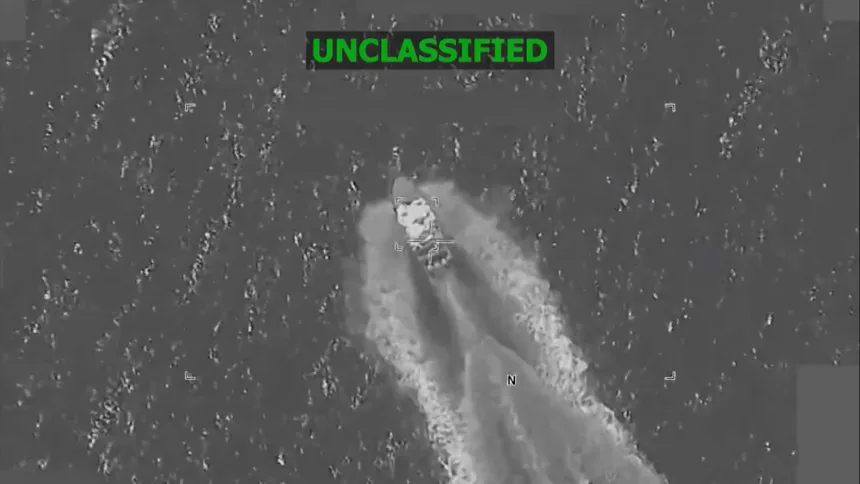
The retaliatory campaign, known as Operation Hawkeye Strike, was planned as a synchronized, intelligence-driven assault rather than a limited or symbolic strike. U.S. commanders sought to overwhelm ISIS networks across multiple locations simultaneously, denying militants the ability to relocate, regroup, or mount counterattacks.
The operation deployed a broad range of military assets:
F-15 and A-10 fighter aircraft conducted sustained bombing runs against hardened targets
Apache attack helicopters struck mobile units and exposed positions
HIMARS rocket systems and artillery delivered long-range precision fire
Coalition aircraft, including confirmed participation from Jordan, reinforced the air campaign
Military officials stated that over 100 precision-guided munitions were used, carefully selected to reduce civilian risk while maximizing operational impact. The scale and coordination of the assault reflected months of intelligence gathering on ISIS movements, hideouts, and supply chains.
The focus on central Syria was not accidental. The region’s harsh terrain, sparse population, and limited state presence have made it a natural refuge for extremist cells. ISIS has increasingly relied on these desert corridors to move fighters, store weapons, and plan attacks beyond the reach of routine patrols.
Security experts warn that while ISIS no longer controls cities or large swaths of land, it has evolved into a guerrilla-style insurgency, using ambushes, assassinations, and sabotage to maintain relevance. These tactics allow the group to remain dangerous despite heavy losses.
By striking deep into these areas, U.S. forces aimed to deny ISIS freedom of movement, disrupt leadership nodes, and shatter the logistical backbone that sustains its operations.
Jordan’s participation in the strikes highlighted the continued unity of the U.S.-led anti-ISIS coalition, a partnership that has endured for over a decade. Jordan, which shares borders with Syria and has faced extremist threats of its own, has consistently supported operations to weaken militant groups operating near its frontiers.
The coalition’s involvement sends a broader regional signal: the fight against ISIS is not solely an American effort, but a shared security priority. Analysts say this unity is critical in preventing extremist groups from exploiting diplomatic or military divisions.
A Broader Strategic Message
Beyond the immediate tactical gains, Operation Hawkeye Strike carries significant strategic weight. U.S. officials emphasized that the operation was a direct response to the killing of Americans, but also part of a broader effort to maintain pressure on extremist networks worldwide.
Defense leaders made clear that the strikes were not intended to expand the conflict or initiate a prolonged campaign, but rather to reassert deterrence. The underlying message was unambiguous: any group that targets U.S. forces will face overwhelming force.
This stance comes at a time when global attention is divided among multiple crises, making the operation a reminder that counterterrorism remains a core pillar of U.S. military policy.
The strikes unfold against the backdrop of Syria’s fragile security environment. Years of conflict have left parts of the country vulnerable to militant infiltration, even as political dynamics continue to shift. In such conditions, extremist groups like ISIS seek to exploit governance gaps and local grievances.
U.S. officials argue that sustained counterterrorism pressure is essential to prevent the group from rebuilding. Approximately 1,000 American troops remain stationed in Syria, primarily supporting local partners and conducting operations aimed at preventing ISIS’s resurgence.
Military planners stress that airstrikes alone are not a permanent solution, but an essential component of a broader strategy combining intelligence, regional cooperation, and local security efforts.
While damage assessments are ongoing, early indications suggest that the strikes significantly disrupted ISIS infrastructure and eliminated multiple operational sites. Analysts caution, however, that extremist groups often attempt to adapt quickly, dispersing fighters and shifting tactics to survive.
The true measure of success will depend on whether ISIS’s ability to plan and execute attacks is meaningfully reduced in the coming months. U.S. defense officials have indicated that additional operations remain possible if credible threats emerge.
Operation Hawkeye Strike represents a clear demonstration of U.S. resolve, but it is unlikely to be the final chapter in the fight against ISIS. History has shown that extremist movements rarely disappear overnight, particularly in unstable regions.
For now, Washington has delivered a powerful response intended to restore deterrence, reassure allies, and send a warning to militant groups watching closely. As Syria’s deserts settle after the roar of jets and explosions, the message remains unmistakable: the United States will continue to hunt ISIS wherever it attempts to regroup—and will respond decisively when American lives are taken.




















Comments