US–Venezuela Oil Pact Sparks Diplomatic Firestorm as China Rebukes Washington
Ekolense International Desk | 2026-01-07 | Energy & Geopolitics
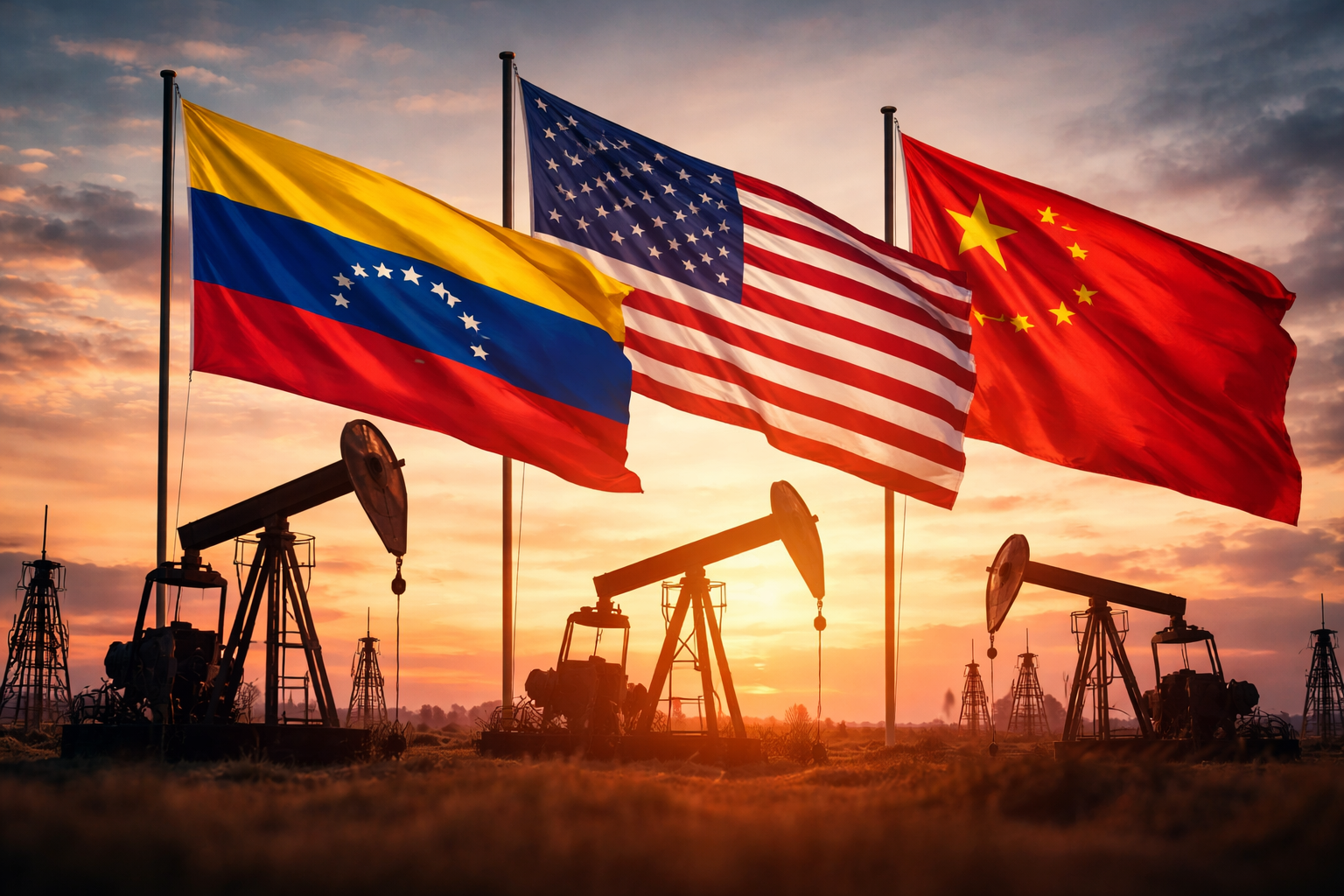
The US–Venezuela oil pact has triggered global market reactions as China condemns Washington’s move.
A new deal allowing Venezuelan crude to flow into American refineries rattles Beijing, jolts global markets, and reopens a geopolitical rivalry over control of Latin America’s resources
A newly announced oil arrangement between Washington and Caracas has set off a geopolitical shockwave, drawing sharp condemnation from China and nudging global oil prices downward as traders adjust to the prospect of increased U.S. supply. The deal — outlined this week by U.S. officials — effectively unlocks Venezuelan crude that was previously restricted, redirecting it from Chinese buyers to American refineries. The move is the most forceful signal yet of President Donald Trump’s renewed focus on gaining influence over Venezuela’s oil patch, believed to contain the world’s largest proven reserves.
A Political Bet With Economic Teeth
Although the full terms of the agreement remain confidential, U.S. energy advisers say the arrangement could involve roughly $2 billion worth of oil that would otherwise be routed to Asia. The Biden administration had long maintained sanctions aimed at isolating Venezuelan shipments from formal trade networks, but the Trump White House has taken a different approach: exert pressure while selectively opening doors. By structuring a controlled, sanctions-compliant export channel that delivers crude directly to American refiners, Washington appears to have taken a strategic step aimed at both reducing reliance on Middle Eastern suppliers and reasserting control over a critical energy corridor in the Western Hemisphere. Venezuela’s interim government, led by Delcy Rodríguez following the country’s chaotic political restructurings, has agreed to the shift — a pragmatic concession rooted in desperate economic need. After years of collapsed production, dilapidated infrastructure, and crippling sanctions, Caracas is eager for any arrangement that delivers hard currency.
China Sees a Red Line Crossed
Beijing erupted in anger almost immediately. In statements circulating through Chinese state media, officials accused Washington of coercion, framing the deal as a violation of international law and an infringement on Venezuela’s sovereignty. Chinese refiners — particularly those reliant on discounted Venezuelan heavy crude — are bracing for disruption. Over the past decade, Beijing has poured billions into Venezuela through loans and infrastructure investments, often repaid directly in oil. From China’s vantage point, the U.S. intervention threatens to unwind these long-term arrangements and undermine its footprint in Latin America. Analysts warn that China may respond by deepening imports from Iran, another sanctioned producer, or by accelerating projects to secure alternative low-grade barrels across Africa.
Oil Prices React Quickly
The immediate ripple effect was felt in the global oil market. Crude benchmarks slipped roughly one percent as traders recalculated supply expectations. If Venezuelan shipments flow steadily into the Gulf Coast, they could modestly ease supply tightness stemming from production slowdowns in other regions. For U.S. refineries — especially those built to process thick, sulfur-rich crude — Venezuela’s heavy oil is a near-perfect match. Facilities in Texas and Louisiana once relied heavily on Venezuelan barrels before sanctions sealed them off in 2019. Energy economists say even a limited return of Venezuelan crude could dampen volatility and blunt upward price pressure during peak demand months.
A Three-Sided Tug-of-War
At its core, the dispute is about more than oil logistics. It reflects a fierce, evolving competition between Washington and Beijing to shape the political and economic order in Latin America — a region both view as strategically consequential. For the U.S., the deal signals its intent to reinsert itself forcefully after years of declining influence. For China, it raises fears that the U.S. is weaponizing sanctions to marginalize competitors and reestablish dominance in a territory Beijing has spent years cultivating. For Venezuela, it is a lifeline, but one that requires threading an impossible diplomatic needle — pleasing two superpowers while staying afloat financially.
Trump’s Broader Strategic Motive
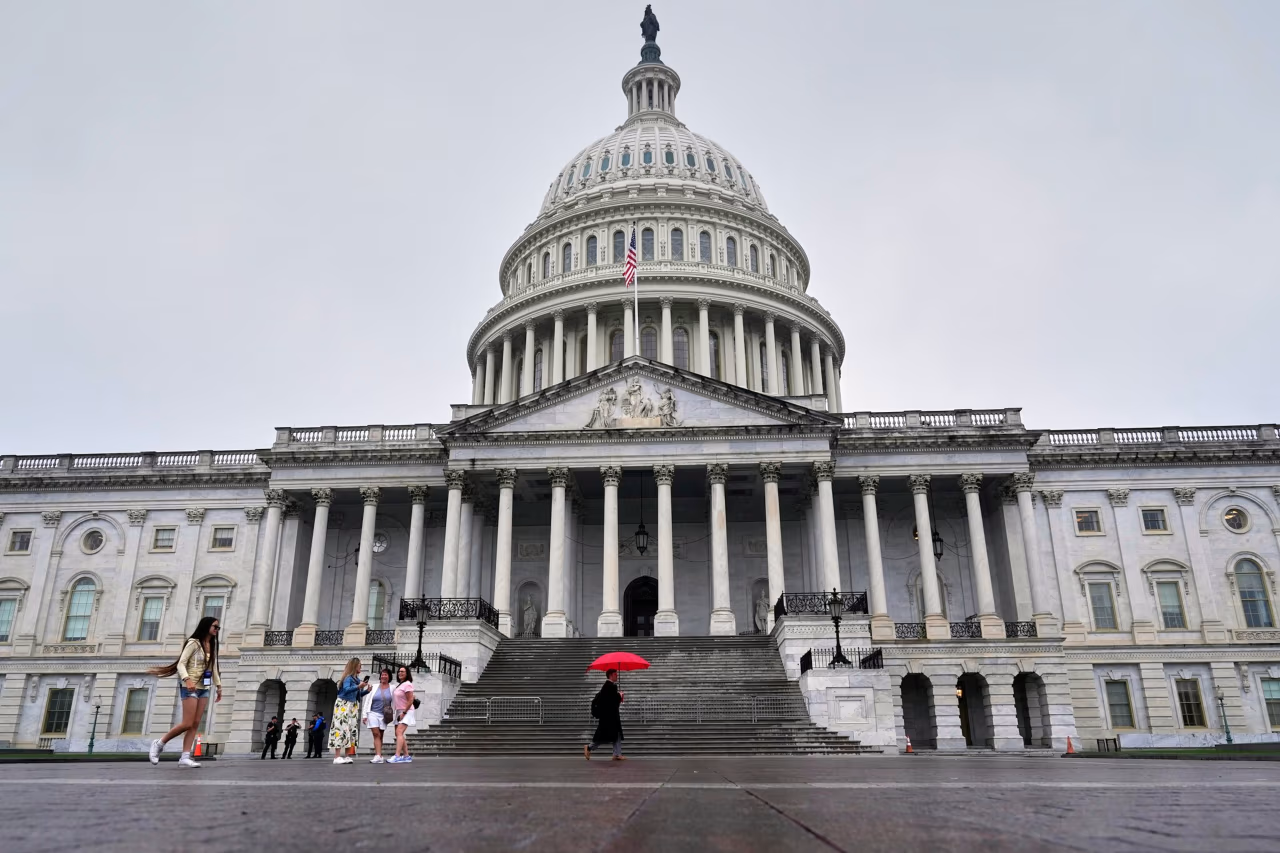
The revived commercial ties fit squarely into President Trump’s stated priorities: reviving domestic industry, curbing Chinese leverage, and tightening control over what he frequently calls “America’s backyard.” In speeches and policy memos, Trump has described Venezuela not merely as a troubled neighbor but as a vital energy asset that should be integrated into the Western supply chain — not tethered to Beijing. His administration’s calculation is clear: Bring Venezuelan barrels into U.S. markets, Reduce China’s access, Exert leverage over a country whose energy sector could otherwise fall permanently into China’s orbit. Supporters of the deal argue it stabilizes U.S. fuel markets, strengthens hemispheric ties, and gives Washington a stake in Venezuela’s eventual recovery.
Internal Pressure in Caracas
Rodríguez’s government finds itself politically exposed. Venezuelan nationalists accuse the administration of capitulating to Washington, while China-friendly factions warn that alienating Beijing risks losing billions in credit lines and technical support. But with the national oil company PDVSA struggling, declining output, and storage tanks filled with unsellable crude, the leadership is operating from a position of weakness. In that context, access to paying U.S. customers — even temporarily — is a compelling survival option.
Markets Watching the Next Move
Energy traders and diplomats are now watching three major unknowns: How much oil Washington allows through this channel — expanded volumes could push global benchmarks lower and increase geopolitical friction; Whether China retaliates economically or politically — options include tariff adjustments, trade countermeasures, or state-backed refinery rebalancing; Whether Venezuela can maintain production — years of underinvestment mean even modest export increases require repairs, crews, and cash Caracas currently lacks.
A Precarious New Reality
The oil pact is a reminder that Venezuela — a nation whose economic collapse once pushed it off Washington’s radar — remains deeply entangled in great-power rivalry. For years, sanctions functioned like a locked gate keeping Venezuelan oil out of global markets. Now one hinge has been loosened, and the consequences are already reshaping supply chains, testing alliances, and reviving ideological battles once thought dormant. Whether the deal becomes a footnote or marks the start of a full strategic pivot depends on the decisions Washington, Beijing, and Caracas make over the next several months. What is certain, however, is that Latin American crude, long treated as a local commodity, is again a trigger point in a global contest — one where price charts, diplomatic cables, and military planners are all paying attention.















Comments