Last U.S.–Russia Nuclear Treaty Nears Expiration: What It Means for Global Arms Control
Ekeoma Nwosu | 2026-01-08 | World Affairs
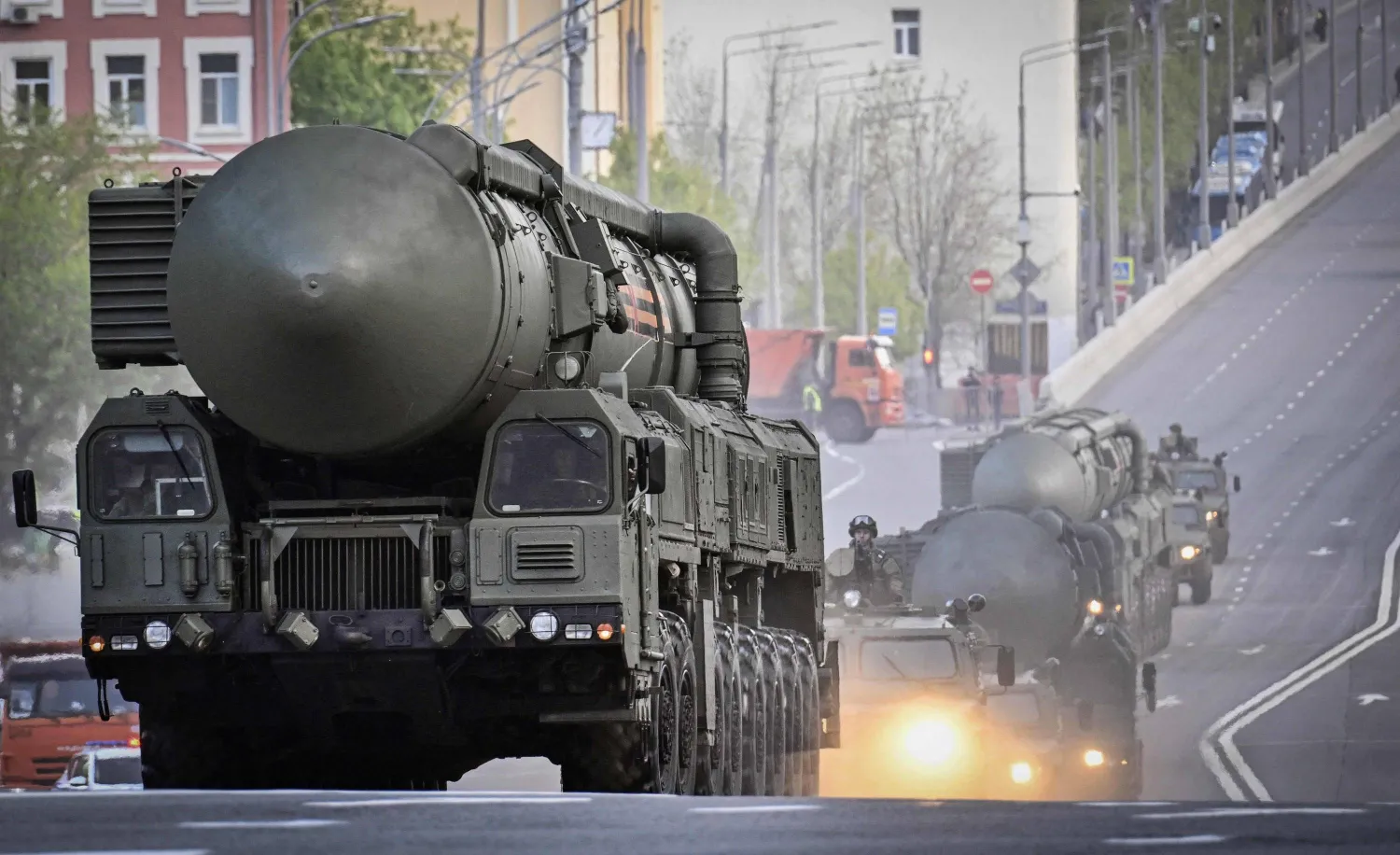
New START Treaty – The last active nuclear arms limit between Washington and Moscow.
With New START set to lapse in early 2026, the world faces a future without enforceable limits on the most destructive weapons ever built
Every several decades, history presents a turning point that feels almost deceptively quiet. No explosions. No dramatic headlines. Just a date on a page — and a clock that runs down second by second.
February 5, 2026, is one of those dates.
On that day, unless something changes, the New START treaty — the final legally operating nuclear weapons limitation agreement between the United States and Russia — will expire. When it does, the world’s two largest nuclear powers will enter territory not seen since the 1970s: an era with no enforceable ceilings on their deployed atomic arsenals.
For more than half a century, the U.S. and Russia (and, before it, the Soviet Union) have relied on painstaking diplomacy to rein in an arms race that once seemed unstoppable. New START is the last surviving pillar of that architecture. When it falls, so does the structure built on it.
To understand why so many national security scholars and diplomats are sounding alarms — and why others insist the treaty is outdated — it’s necessary to walk through how we got here.
The Road to New START — How Arms Control Began
Cold War Logic: “Trust, But Verify”
The origins of nuclear limitation stretch back to the height of Cold War tension.
By the 1960s and 70s, the U.S. and Soviet Union had amassed so many warheads and delivery systems that each nation could obliterate the other several times over. It became clear even to hardened strategists that indefinitely expanding arsenals brought diminishing security returns and escalating risk.
This realization birthed:
- SALT I (1972) — the first treaty to cap delivery systems for intercontinental missiles.
- START I (1991) — a watershed agreement signed just before the Soviet Union dissolved.
START I was transformational. It didn’t just freeze arsenals — it forced massive reductions. Thousands of deployed warheads and hundreds of missile systems were dismantled, transported, or destroyed. When it fully took effect, global strategic warhead numbers plunged from Cold War highs above 10,000 per country to levels closer to 4,000.
The 2000s — Shift Toward Simpler Limits
After START I’s term ended:
- The 2002 Moscow Treaty (SORT) replaced it with a more basic numerical reduction target.
SORT lacked the verification layers that had made START so effective, but still represented consensus that instability was dangerous.
New START — A Modern Reset
As SORT neared expiration, the U.S. and Russia acknowledged they needed a stronger successor. In April 2010, in Prague, Czech Republic, President Barack Obama and President Dmitry Medvedev signed the New Strategic Arms Reduction Treaty, better known as New START.
Its key features were:
- A cap of 1,550 deployed strategic warheads per country.
- Limits on delivery systems (ICBMs, SLBMs, and nuclear-capable bombers).
- On-site inspections, data sharing, and real-time notifications.
It entered into force in 2011 and quickly became the backbone of global strategic stability.
COVID, Conflict, and Collapse of Cooperation
Arms control relies not just on signatures but on implementation, and New START’s effectiveness slowly frayed in the 2020s.
🔹 The Pandemic Grounded Inspectors
Travel restrictions shut down reciprocal monitoring visits — the first missed inspections in decades.
🔹 Ukraine War Deepened Mistrust
Russia’s 2022 invasion of Ukraine froze nearly all U.S.–Russia diplomatic channels. Joint committees stopped meeting. Russia later barred inspection access outright.
🔹 Both Sides Still Whispered Compliance
Despite the bad blood, each side continued reporting warhead levels and launcher numbers, meaning the treaty still shaped arsenals — even if unverified.
But divisions hardened, and routine coordination became politically radioactive.
Where Things Stand Now — and Why Everyone Is Nervous
A Treaty With Months Left to Live
Without action, New START legally dies February 5, 2026.
Russia has proposed a one-year extension of current limits — a temporary stopgap that would buy negotiating space. Washington hasn’t accepted or rejected the idea, and analysts believe politics — not military logic — is the holdup.
No Negotiations = Blindness
When the treaty expires:
- Warhead caps evaporate
- Delivery limits disappear
- Transparency ends overnight
That means no more inspectors, no more required notifications, and no more verifiable data.
Arms control experts call this scenario “mutual nuclear darkness.”
A Return to Arms Racing?
Without ceilings, both sides have options:
- Russia could re-deploy warheads now kept in reserve.
- The U.S. could accelerate modernization of its ICBMs and submarines.
- Both could rush new weapons into service without telling anyone.
Even if neither intends escalation, the perception of buildup can trigger action. Arms races often start unintentionally — driven by fear rather than ambition.
Why China Complicates Everything
In the past, nuclear control was a two-superpower game. Today, China holds a growing role.
- Beijing is rapidly expanding its arsenal
- U.S. officials estimate it may triple stockpiles within a decade
- China refuses to join any limitation talks
China’s argument is simple:
Why should we limit ourselves when we have far fewer weapons than you?
From China’s perspective, parity first — negotiations later.
Between Risk and Hope — What Experts Think Comes Next
Analysts generally envision three realistic futures.
1. Limited Extension (Best Short-Term Outcome)
Keep New START’s numbers in place for 12–24 months.
Benefits:
- Prevents panic buildup
- Restores minimal predictability
- Reopens diplomatic contact
Downside: Does nothing about modern new weapon types (hypersonics, nuclear torpedoes, etc.)
2. Total Expiration Without Replacement
This scenario means:
- No constraints of any kind
- No inspections
- No data transparency
- Each side guesses the other’s capabilities
This is historically associated with:
- Higher spending,
- Harsher military doctrines,
- Rising use-it-or-lose-it anxiety.
3. Broader Successor Framework (Long-Term but Difficult)
A “New START 2.0” could:
- Update caps,
- Cover emerging tech,
- Possibly include China over time.
But this would take years, not months — especially with military tension high.
A Bigger Question: Do Treaties Still Matter?
Skeptics argue that:
- Russia violates agreements
- U.S. politics swings too unpredictably
- Technology outpaces treaty language
Supporters counter with a critical point:
Even imperfect controls prevent chaos.
Consider the alternative:
- No rules
- No communication
- No restraints
- Nuclear doctrine driven by worst-case assumptions
History suggests that even thin guard rails are better than none.
Why Everyday People Should Care
Nuclear weapons feel abstract until they’re not.
A treaty expiration does not mean war — but it increases:
- Military spending
- Global instability
- Probabilities of miscalculation
- Diplomatic misreadings
Arms control isn’t about trust. It’s about reducing the number of ways the world could accidentally end.
Conclusion — The Door Isn’t Closed Yet
New START’s expiration is not destiny. It is a deadline.
There is still room for:
- Temporary extensions,
- Innovative agreements,
- Or even informal understandings that freeze arsenals while diplomacy finds its footing.
Yet if world leaders let the clock run out, they will open a chapter unlike any written in the post-Cold War era — one where the planet’s two largest nuclear powers operate unconstrained, unobserved, and unbound.
In 1962, during the Cuban Missile Crisis, the world came within hours of nuclear disaster because leaders misread one another’s intentions. Treaties like New START were created precisely to prevent that kind of brinkmanship.
If those guardrails vanish in 2026, humanity resumes navigating blind curves at high speed — hoping no one swerves.











Comments