Trump Calls Greenland Vital for US Defence
Ekolense International Desk | 2026-01-14 | World News
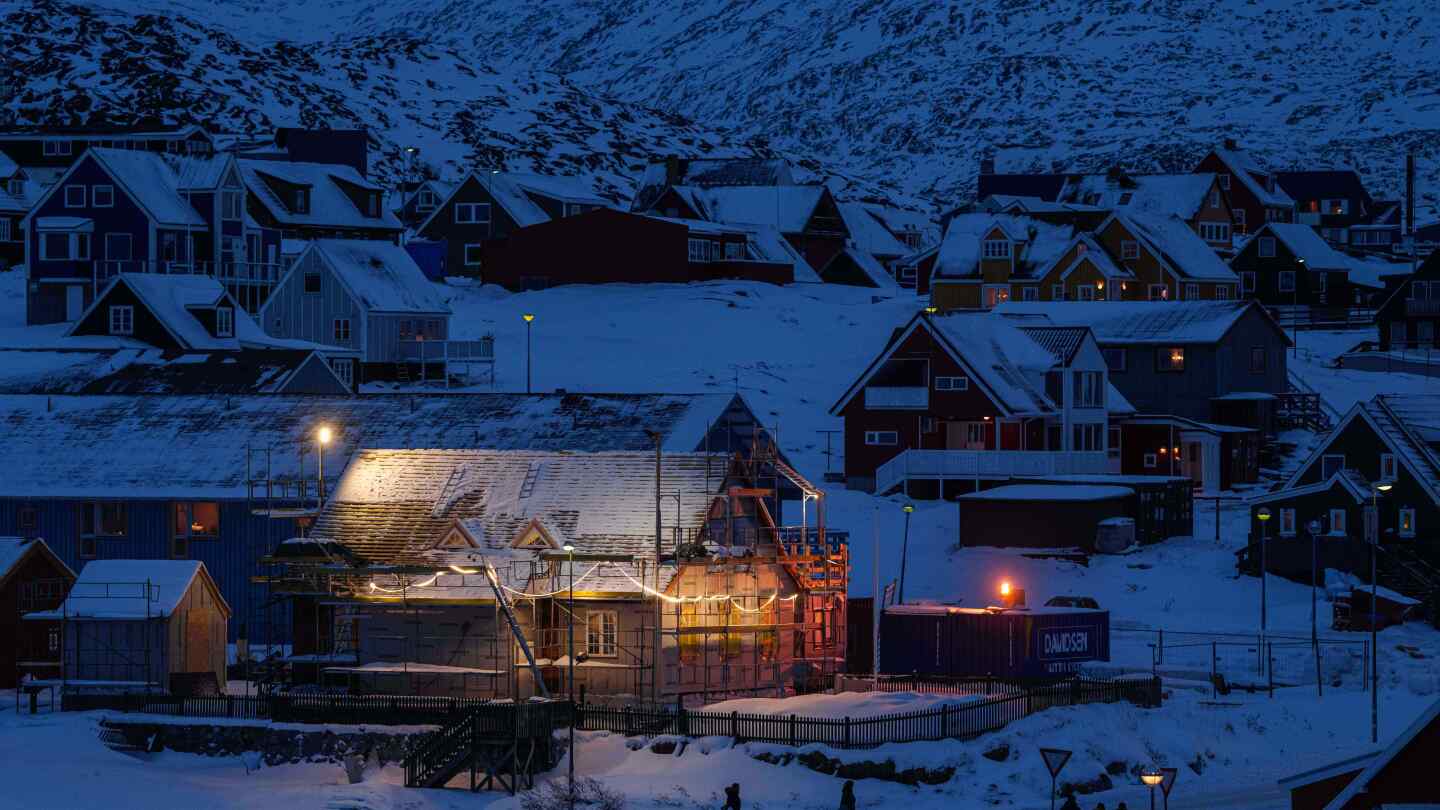
U.S. President Donald Trump emphasizes Greenland’s strategic importance for U.S. national security and air defence.
Arctic geopolitics take centre stage as the U.S. highlights Greenland’s strategic defence role
In a development that has captured international attention, U.S. President Donald Trump declared that Greenland is critical to America’s national security and regional defence strategy. Speaking publicly on social media and in interviews, Trump highlighted the Arctic territory’s strategic significance for early warning systems, air defence, and NATO operations. He suggested that U.S. control of Greenland could strengthen both the country’s security posture and the broader deterrent capabilities of Western alliances.
Trump’s comments, made in the context of ongoing geopolitical competition in the Arctic, reflect a growing U.S. focus on northern defence priorities. “The United States needs Greenland for the purpose of national security,” Trump stated, referring to an air and missile defence initiative he described as the “Golden Dome.” He argued that having a permanent and robust presence on the island would improve both U.S. defence and NATO’s ability to deter potential adversaries in the region.
Greenland, a vast Arctic territory with a small population, is an autonomous region within the Kingdom of Denmark. The island’s geographic location makes it uniquely important for transatlantic security. Its proximity to North America and Europe positions Greenland as a natural gateway for monitoring air and missile activity over the North Atlantic and Arctic Oceans. The U.S. already maintains a military presence at Pituffik Space Base, a site central to early warning systems for aerospace and missile defence. Trump’s statements emphasized expanding this presence and potentially exercising greater control over the territory’s strategic resources.
Trump’s push has raised immediate diplomatic questions. Officials from Denmark and Greenland have responded cautiously, noting that the territory’s sovereignty and governance arrangements are established under existing constitutional and international agreements. Greenlandic and Danish leaders have insisted that any significant changes in control or administration must be mutually agreed upon and consistent with NATO commitments.
The proposal for enhanced U.S. control in Greenland comes amid rising global interest in the Arctic. Russia and China have increasingly increased their presence in the region, conducting military exercises, building infrastructure, and investing in natural resources. Trump framed his stance as a preemptive measure, arguing that without a strong U.S. footprint, rival powers could exploit the island’s strategic position. Analysts say that while Trump’s comments are provocative, they highlight genuine security concerns regarding Arctic access, missile early warning capabilities, and the need for robust infrastructure in northern defence zones.
In addition to military imperatives, Greenland’s natural resources, including rare minerals and potential energy reserves, add an economic dimension to the debate. While Trump focused primarily on defence, observers note that control of the territory could confer both strategic and economic leverage, complicating relations with Denmark, the European Union, and NATO partners.
The issue has also prompted discussion within NATO. Greenland is part of a NATO member state, and altering the status of the territory without agreement could strain alliance cohesion. NATO officials have historically emphasized collective defence under Article 5, while respecting the sovereignty of member states. Experts warn that unilateral moves or rhetoric about territorial control could trigger diplomatic tensions and require careful negotiation to avoid undermining transatlantic unity.
The U.S. administration’s Arctic focus is not entirely new. For decades, the region has been recognized as strategically important, particularly during the Cold War when early-warning radar and airfields were established to monitor potential Soviet attacks. Today, climate change is opening new navigation routes, increasing the military and commercial value of Arctic territories. Analysts argue that Greenland’s role as a hub for intelligence gathering, satellite monitoring, and missile detection remains unmatched in the region.
Trump’s statements came just before planned diplomatic meetings in Washington involving senior Danish and Greenlandic officials. These talks were expected to include discussions with U.S. leadership on defence cooperation, joint military infrastructure, and the scope of U.S. operations in the Arctic. Greenlandic authorities have emphasized that they seek partnership rather than ceding sovereignty, focusing on mutually beneficial agreements that enhance security without altering governance structures.
Critics of Trump’s approach argue that suggesting U.S. control over Greenland risks undermining Denmark’s territorial integrity and could create tensions within NATO. Some scholars have described the comments as “diplomatically provocative,” noting that the Arctic is a sensitive geopolitical space where international cooperation is essential. At the same time, supporters argue that a stronger U.S. military presence could deter regional threats and protect strategic interests, particularly in light of Russia’s northern fleet activities and China’s growing Arctic investments.
The discussion around Greenland also intersects with broader global security concerns. The Arctic is expected to see increased shipping, resource exploration, and military activity as ice coverage recedes due to climate change. Control over key points like Greenland could determine who monitors air and maritime approaches and who controls early-warning and missile interception capabilities. The United States has long considered Greenland integral to its missile defence infrastructure, and Trump’s comments reinforced this strategic calculus.
In addition to national security, human and environmental concerns are part of the debate. Greenland’s small population relies on local governance and sustainable resource management. Any proposal for increased foreign control or expanded military activity must consider the impact on communities, indigenous rights, and the fragile Arctic environment. Local leaders have stressed that security measures must be balanced with environmental stewardship and respect for community autonomy.
From an international perspective, the issue also tests the boundaries of post-World War II norms regarding territorial sovereignty. While military presence and infrastructure cooperation are common, the idea of transferring or expanding control over a NATO member territory is unprecedented in modern times. Experts argue that a negotiated approach emphasizing defence collaboration rather than control is likely to be the most feasible pathway.
Trump’s statements have drawn reactions not only in Europe but also in other Arctic‑interested nations, including Canada, Norway, and the United Kingdom, which have all historically supported NATO cohesion in the north. Observers suggest that increased U.S. activity could influence Arctic security dynamics, encouraging other powers to modernize their northern defence strategies or strengthen alliances.
Despite the controversies, the discussion underscores Greenland’s importance to global defence planning. The territory’s location, infrastructure, and monitoring capabilities make it an essential asset for early warning, missile defence, and air surveillance in the North Atlantic. The debate highlights the intersection of national security, international law, environmental stewardship, and regional diplomacy.
In conclusion, Trump’s remarks have brought Greenland’s strategic significance into the global spotlight. While provocative, they reflect genuine security concerns about Arctic defence, missile monitoring, and geopolitical competition. The coming months will likely see careful negotiations between the U.S., Denmark, Greenland, and NATO partners to ensure that security needs are addressed without compromising sovereignty or alliance cohesion. Analysts agree that balancing defence imperatives with diplomacy, environmental protection, and local governance will be critical to ensuring stability in the Arctic region, where emerging threats and opportunities converge.















Comments