Deadly Raid in Central Nigeria: Armed Herders Kill Former Politician and Civilians in Benue
Ekolense International Desk | 2026-01-14 | Nigeria News
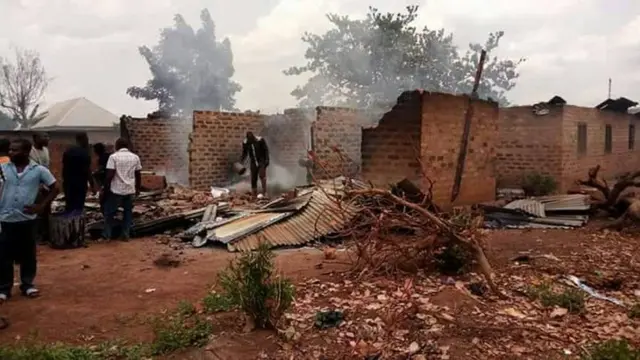
Residents in Benue State mourn the victims of the recent pre-dawn attack by suspected armed herders.
Violence in Nigeria’s Benue State draws global concern as suspected armed herders attack rural communities
In a troubling escalation of violence in central Nigeria, suspected armed herders have killed multiple civilians, including a former local political figure, in a pre-dawn raid on a community in Benue State. The attack, which occurred in the early hours of Tuesday in the Otobi-Akpa area of Otukpo Local Government Area, underscores ongoing insecurity in Nigeria’s agrarian heartland and carries implications for regional stability and humanitarian conditions.
According to local sources, the assailants struck at about 1:30 a.m., opening fire on residents who had gathered near a provision shop in the Otobi-Akpa community. Among the fatalities was Ochi Ugbabe, a former councillor and 2019 House of Assembly candidate for the Otukpo-Akpa State Constituency. Other identified victims included Achibi Onah, Eje Eba, and Sunday Iruja; one victim remained unidentified at the time of reporting.
Eyewitnesses described chaos and terror as the gunmen “stormed the community shooting sporadically,” forcing families into hiding and prompting frantic efforts to escape the violence. The attackers were also reported to have looted foodstuffs and other valuables from local stores before fleeing into nearby forest areas.
The incident follows a failed kidnapping attempt on Sunday night in the same area, when armed men believed to be herders tried to abduct residents of Ekwu-Ora Odaba but were repelled by community volunteers and youth patrols led by local commander Ocheme Jackson. Residents told journalists that the patrol teams maintained night surveillance but withdrew around midnight, shortly before the attackers returned.
“One moment was quiet, and the next was gunshots,” said a community member who witnessed the attack. “The attackers came through the railway station bridge from the Ijami axis. They shot one person near the water board first, then went where the others were seated and opened fire.”
Nigeria’s complex security landscape makes rural communities particularly vulnerable to such raids. Benue State, part of the country’s volatile north-central region, has seen a pattern of clashes between nomadic herding groups and sedentary farming communities over the past decade. Competition over land, water, and grazing rights has frequently erupted into violence, leading to widespread loss of life and displacement.
The Benue attack has drawn condemnation from political and civic leaders both within Nigeria and internationally. Kennedy Angbo, the lawmaker representing the Otukpo/Akpa constituency in the Benue State House of Assembly, deplored the “persistent and senseless killing” of his constituents. He referenced a separate Sunday attack on passengers aboard a bus, in which three people were wounded and hospitalized, adding to a growing list of security incidents in the region.
Meanwhile, the Special Adviser on Internal Security to the Governor of Benue, Joseph Har, confirmed that reports of the attack had been received from the Commander of the Community Protection Guard. The official report noted that suspected Fulani kidnappers, believed to be seeking food and other supplies, attacked a provision shop in Otobi-Akpa, killing four people before slipping back into nearby forested terrain.
The Benue State Police Command, through its spokesperson DSP Udeme Edet, also confirmed the attack and expressed condolences to the families of the victims. Edet described the incident as tragic and said investigations were underway, and efforts were being intensified to apprehend those responsible.
This attack is not an isolated incident. Previous armed incursions have occurred in the same and neighboring communities. On April 15, 2025, Otobi-Akpa was attacked by suspected herders, resulting in the deaths of at least 13 people and significant destruction. Other attacks have targeted nearby villages and major transport routes, disrupting trade and inhibiting access to basic services.
The implications extend beyond immediate loss of life. Insecurity in rural Nigeria severely undermines agricultural production — a backbone of local and national economies. Many families have reportedly fled their homes out of fear, leaving behind farms and livestock at a time when agricultural activity is crucial to food security. As residents flee to towns and cities, pressure mounts on already strained infrastructure and social services.
Human rights organizations and international observers have repeatedly raised concerns about the escalating violence in the north-central region. Beyond Benue, states such as Plateau and Taraba have also experienced similar attacks attributed to armed herding groups. Advocates argue for a comprehensive approach that addresses land use disputes, strengthens local governance, and enhances community-based conflict resolution mechanisms.
Moreover, the conflict has humanitarian consequences. Reports from various rural areas indicate that incidents of killings, abductions, and forced displacements have contributed to rising numbers of internally displaced persons (IDPs), stretching the capacity of state and non-state actors to provide adequate shelter, healthcare, and education. Although northeastern Nigeria has received considerable international attention due to insurgencies, crises like Benue’s underscore the multifaceted threats facing the population.
Security experts have pointed to several drivers of the violence. Climate change, which alters traditional grazing patterns, coupled with expanding agricultural frontiers, escalates tensions between herders and farmers. In some instances, criminal elements exploit these disputes, exacerbating violence under the guise of pastoralist grievances.
Government response has involved deploying security forces and community protection units. In some areas, joint task forces have been established to patrol vulnerable communities, recover weapons left by fleeing groups, and deter further attacks. For example, troops in Gwer East Local Government Area reportedly dislodged armed herders and recovered a rifle, indicating ongoing efforts to curb incursions.
Yet, critics argue that these interventions are insufficient without broader reforms to address root causes, including judicial responses to land disputes, economic incentives for peaceful coexistence, and expansion of conflict early-warning systems. Some analysts suggest that sustained international cooperation and targeted development aid could help reduce incentives for violence.
The risk is that if left unmitigated, such localized insurgencies could spill over into wider regional instability. Nigeria’s central region lies at a crossroads of several geopolitical interests, and prolonged insecurity risks humanitarian crises that may attract international intervention or further strain diplomatic relations with neighboring states.
In response to the Benue attack, civil society groups have called for accelerated peace-building initiatives, inclusive dialogues between herding and farming communities, and enhanced accountability for perpetrators. There is also growing pressure on national authorities to work more closely with international partners to develop frameworks that protect vulnerable populations while preserving livelihoods.
As affected families mourn their losses and communities grapple with renewed fear, the international community watches closely. The tragic events in Benue reflect both enduring local grievances and broader challenges facing Nigeria’s security architecture. Efforts to promote stability will demand sustained political will, comprehensive policy responses, and a commitment to safeguarding human lives across all regions of the country.






















Comments