Again! Boko Haram Abducts a Dozen Women, Razes Entire Village in Borno — Survivors Speak of Terror and Resolve
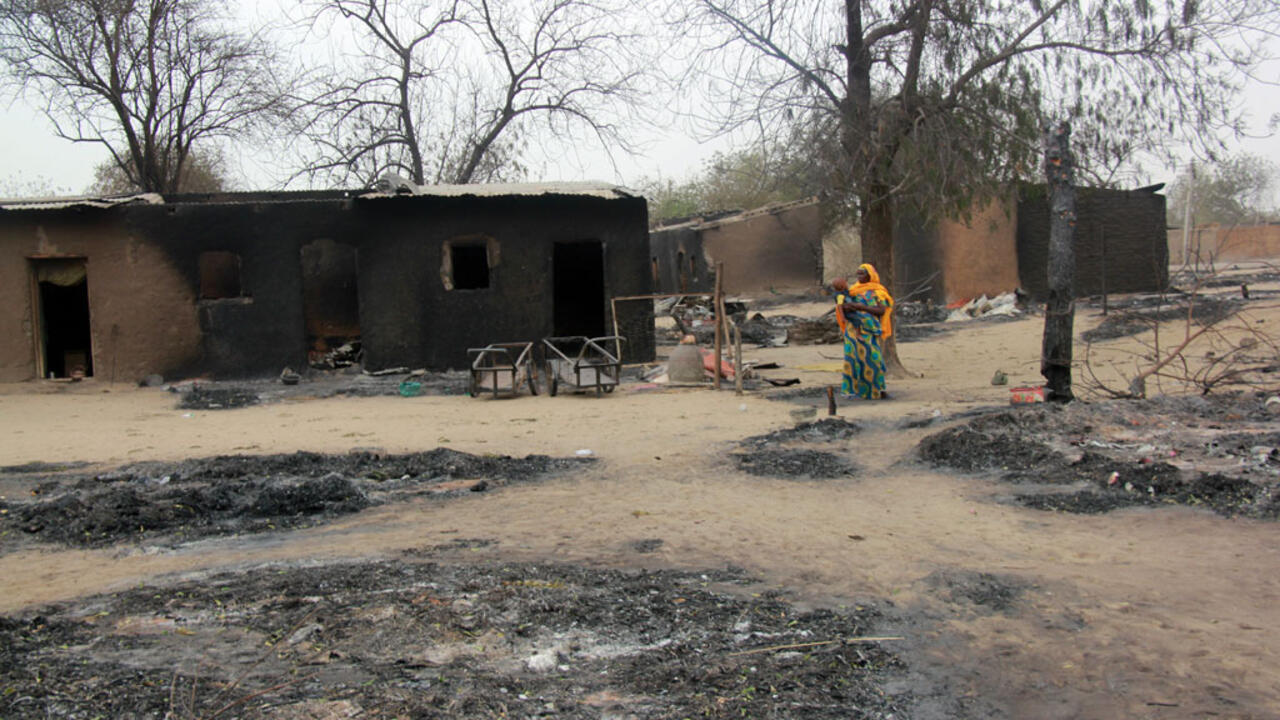
Devastation in Borno State as Boko Haram attacks villagers, abducts women, and destroys homes.
Amid the devastation, displaced residents pledge to rebuild, community leaders call for urgent security measures, and humanitarian groups mobilise to support traumatised survivors.
Nigeria’s conflict-torn Borno State has once again been rocked by a horrifying Boko Haram attack. In a recent raid on a remote village, militants abducted approximately twelve women and set fire to homes, reducing the community to smouldering ruins. The assault has left survivors traumatized, families fragmented, and a renewed sense of insecurity gripping the population.
Eyewitnesses report that the militants struck in the dead of night, riding in heavily armed convoys. Their swift and violent incursion focused on residential compounds. Shots rang out as they forced their way into houses, seizing women while ordering villagers out of their homes. As they withdrew, they spared nothing: wood-frame structures, shops, and personal belongings were engulfed in flames, turning once-thriving homes into blackened shells.
Several sources say the abducted women were marched into forested terrain or loaded into vehicles. None of them have been returned, and their fate remains unknown. Families have been left in agonizing limbo, desperate for information. Relatives, overcome by grief, describe frantic messaging among displaced groups as they try to trace their missing loved ones. The emotional toll is acute: mothers, sisters and daughters now vanish into the night, leaving holes that may never be filled.
This village had only recently begun to recover from earlier waves of violence that devastated Borno during the height of the insurgency. Many of the displaced had returned after government and aid-led resettlement efforts—and had started rebuilding small homes, reopening farms, repairing community ties. But with this attack, their fragile recovery appears shattered. Many families now face the grim reality of becoming internally displaced persons (IDPs) for a second or third time.
Life in the makeshift camps where survivors are gathering is both precarious and tense. Aid workers say there is an immediate need for shelter, food, medical care, and psychological support. Children wake up trembling, women startle at the sound of sudden movement, and the elderly whisper about nightmares. The trauma inflicted by Boko Haram’s extremist violence is deeply embedded, and many fear that without structured psychosocial interventions, the wounds will fester far beyond the physical.
The economic consequences of the raid are severe. Burnt houses and shops mean lost trade and destroyed livelihoods. Farmers—already struggling to return to their fields—now face further losses; their produce, equipment, and income have been disrupted. The cost of reconstruction is daunting. Many residents do not have formal land titles or insurance, making it difficult to access compensation or state rebuilding programs. The financial burden is compounded by a lack of sustainable development in this insurgency‑affected area.
Security analysts argue that this latest massacre exposes persistent gaps in Nigeria’s counterinsurgency strategy. Despite years of military operations, Boko Haram retains the ability to strike remote and vulnerable communities, which raises pressing questions about intelligence, response time, and coordination among security agencies. The sophistication of the attack — its coordination, the choice of target, and the execution — suggests that the group may be benefiting from local informants or sympathetic networks.
Local defense groups, including civilian vigilante forces, have been instrumental in protecting some villages. However, they often lack adequate training, weaponry, and logistical support to repel well-armed insurgents. Their presence alone may not be enough to deter lethal raids, especially in isolated or border communities. Many analysts call for a more integrated security architecture — combining military strength with community-based vigilance, early-warning systems, and real-time intelligence sharing with local leaders.
Traditional rulers and community elders have strongly condemned the abduction and burning. In a statement released after the attack, a local chief called the militants “heartless” and “cowards,” urging displaced residents to remain united. “We will rebuild. We refuse to live in fear,” he said. Religious leaders echoed this sentiment, calling for forgiveness, strength, and solidarity. Their message resonates across a population that knows the cost of vengeance but also the value of resilience.
At the state level, Borno government officials have pledged to beef up security patrols, especially around vulnerable villages. They promise more troops, faster deployment, and better coordination with local defense groups. Still, critics argue that commitment needs to be matched by concrete infrastructure improvements—such as secure roads, mobile clinics, and permanent resettlement plans—to reduce the cycle of displacement.
International humanitarian organisations are already responding. Non-governmental groups working in the region are distributing emergency relief — from tents and blankets to food packs, clean water, and essential medical supplies. Psychosocial teams have begun door‑to‑door outreach, recognizing that the mental health burden on survivors may be as devastating as the physical destruction. Aid agencies warn of a potential secondary crisis if displaced persons lack consistent support for recovery.
Civil society advocates are also renewing their calls for broader efforts. They argue that Nigeria’s ongoing war with Boko Haram is not merely a military issue, but a development dilemma. To break the cycle of terror, they say, there must be sustained investment in infrastructure, education, economic empowerment, and community resilience. Such an integrated long-term strategy is crucial to prevent future abductions, rebuild destroyed villages, and restore trust between the state and its citizens.
For the twelve women abducted, their families are now calling on the federal government, security agencies, and international partners to prioritize their rescue. There is growing pressure for an urgent, well-coordinated search and negotiation strategy. Human rights organisations have voiced concern about gender-based violence and the treatment of those held captive, urging the government to treat the abducted women as a top-security priority.
Among the displaced, stories of courage emerge amid the despair. A group of women displaced by the attack told relief workers that they intend to form a support network: to help each other heal, advocate for their missing sisters, and push for community rebuilding. Children, too, are showing resilience: many are now attending makeshift classes in the camp, hoping for continuity in education despite the chaos around them.
The attack also raises broader implications for Nigeria’s international image. Persistent terrorism, mass abductions, and the razing of civilian settlements undermine confidence in the country’s governance structures and security institutions. This could affect foreign investment, humanitarian funding, and diplomatic relations. Observers worry that repeated failure to protect citizens may deter investors concerned with stability and human rights.
Religious organisations around the world, particularly Christian advocacy groups, have taken note. The abduction of women from a community perceived to be predominantly Christian has ignited condemnation, fueling renewed calls for religious freedom, protection of minorities, and targeted intervention. International media coverage may intensify, and pressure may mount on Nigeria’s government to enforce stricter counterterrorism and civilian-protection policies. Read also: Trump to Nigeria: “Stop the Killings or Face Military Action”.
Yet, amid the horror, there is a flicker of what might be a turning point. The determination of survivors to rebuild, the solidarity among displaced families, and the mobilization of local leaders could lay the foundation for a more resilient community. If supported properly, reconstruction efforts—backed by government, civil society, and the international community—could transform this tragedy into an opportunity for reimagining security and peace in Borno’s hard‑hit zones. Related: Alleged Genocide: US Congress Divided Over Nigeria’s CPC Designation
Building a safer future will require more than just rebuilding houses. It demands healing the trauma, strengthening trust in security institutions, and creating economic opportunities so that returnees can sustain their lives without constant fear. It will require a strategy that merges military pressure with social development—a recognition that counterinsurgency alone is not enough.
The twelve abducted women are more than victims: they are symbols of the ongoing crisis and, potentially, the resilience that could define recovery. Their return would be a powerful signal that the state values every life and that justice, even in Nigeria’s most remote communities, is worth fighting for. Related incident: JUST IN: Gunmen Abduct 329+ Girls from Catholic School in Niger State, Nigeria.
Meanwhile, for those forced to flee once more, the journey ahead is difficult but not impossible. With renewed government pledges, humanitarian intervention, and grassroots solidarity, there is a fragile but genuine chance of rebuilding. The resilience of Borno’s displaced people, their faith in one another, and their commitment to return offer a glimmer of hope in a landscape overshadowed by terror. Also read: “Religious Violence Must Stop”: U.S. Congressman Pressures Nigeria After High-Level Meeting With Ribadu
As Nigeria confronts yet another chapter of its insurgency crisis, this attack is a stark reminder of how much more needs to be done. But it also underscores something more profound: despite years of suffering, the spirit of those who remain refuses to be extinguished. In the struggle against Boko Haram, that spirit may yet become the country’s greatest defence.
By Ekolense International Desk
Comments