Breaking: Death Toll from Boko Haram and ISWAP Surges Beyond 40,000 as Nigeria Faces Deepening Security Crisis and Global Scrutiny
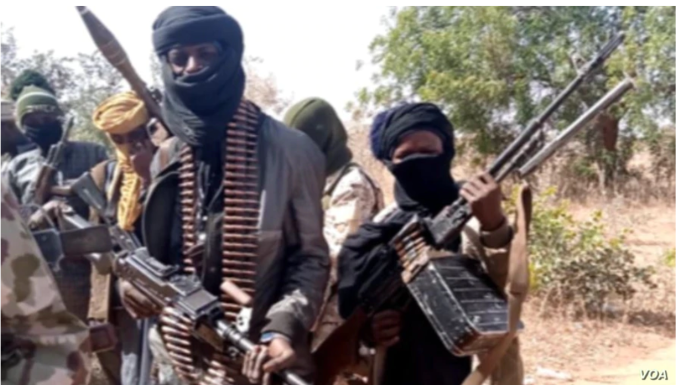
Nigeria faces an unprecedented security crisis as insurgent violence claims tens of thousands of lives.
As extremist violence intensifies, Nigeria confronts a monumental test—balancing national security, citizen protection, investor confidence, international reputation, and rising calls for action from global leaders, including the U.S. President, while millions wonder what the future holds.
Nigeria has crossed one of the darkest thresholds in its modern history. The death toll attributed to Boko Haram and the Islamic State West Africa Province (ISWAP) has now exceeded 40,000 people, according to conflict monitoring analysts, defense assessments, and regional intelligence briefings. This number, though staggering, represents only a conservative estimate—one that does not fully capture the thousands whose bodies were never found, the countless victims of abduction, nor the communities erased by years of jihadist terror.
The insurgency—now in its fifteenth year—continues to evolve, adapt, and expand across difficult terrain and vulnerable communities, leaving devastation in its wake. For many Nigerians, particularly those in the North East, the conflict has become a generational tragedy that defines daily life. It has disrupted childhoods, fractured families, and disrupted the rhythms of economic, cultural, and spiritual existence.
As Nigeria grapples with this relentless violence, major questions loom large: How strong is Nigeria’s security system? Are citizens truly protected? Will investors continue to trust the Nigerian market? How does the world now view Africa’s most populous nation? And what does the future hold for a country whose resilience is constantly tested?
A Conflict Marked by Entrenchment and Escalation
The Boko Haram uprising was once considered a fringe rebellion. Today, it is one of the most lethal insurgencies in the world. ISWAP’s emergence in 2016, following ideological fractures with Boko Haram, added fuel to an already raging fire. The two factions, though born of similar origins, now operate with distinct strategies, leadership structures, and international links.
Internal Turf Wars Increasing the Death Count
Recent intelligence reports confirm that Boko Haram and ISWAP are locked in a violent turf war for control of the Lake Chad Basin. Thousands have died in clashes between the factions. The basin’s complex geography—comprising hundreds of riverine islands, swamps, and forests—provides ideal cover for militant hideouts, makes military operations difficult, and gives insurgents a strategic advantage.
Attacks on villages, roadside ambushes on military convoys, the use of improvised explosive devices (IEDs), and targeted assassinations of local leaders have escalated sharply. Militants have become increasingly ruthless, especially when punishing communities that refuse to cooperate.
Despite several attempts at negotiation, defectors’ reintegration, amnesty programmes, and regional military offensives, the insurgent networks have proven resilient. Their survival is aided by internal financing, cross-border movement, forced taxation of traders, and exploitation of local grievances.
The Human Cost: Lives Shattered and Communities Broken
Behind the 40,000+ death toll lies an unquantifiable human tragedy. Families continue to mourn loved ones who vanished during night raids, abductions, and mass killings. Survivors recount memories of gunfire, burning houses, and endless nights of fear.
Displacement on a Massive Scale
More than two million Nigerians remain internally displaced. Some have lived in camps for years with no clear path home. Many who attempted to return were attacked again. Education has been disrupted, with hundreds of schools burned and thousands of children out of class. Agriculture—the main livelihood for millions in the region—has been crippled as insurgents frequently seize farmlands, extort farmers, or plant mines in fields.
Psychological Impact on Survivors
Beyond physical destruction lies a silent crisis—trauma. Countless children have grown up knowing only war. Women and girls who were abducted or assaulted bear lifelong scars. Entire communities suffer from unprocessed grief, fear, and hopelessness.
What This Means for the Nigerian Security System
The longevity and scale of the insurgency have laid bare critical weaknesses in Nigeria’s security architecture.
- Fragile Intelligence Coordination: Militants often strike with precision, indicating access to insider information. Communities repeatedly complain that warnings sent to authorities before attacks go unheeded. Intelligence-sharing between military, police, DSS, and regional allies remains inconsistent.
- Operational Challenges: Security forces face difficult conditions including limited equipment, dangerous terrain, overstretched personnel, insufficient surveillance technology, and logistical delays that hinder swift response.
- Funding Concerns and Accountability: Despite Nigeria’s massive defense budget, analysts question transparency in procurement and resource allocation. Corruption continues to undermine public confidence.
- Overreliance on Military Solutions: Experts say Nigeria often focuses on military responses without sufficient investment in local policing, deradicalization, border control, and community resilience.
Citizens’ Protection: A System Under Strain
For many Nigerians, particularly in rural areas, state protection often feels distant or unreliable.
- Rise of Vigilante Groups: The Civilian Joint Task Force (CJTF) and other formations act as frontline defense but raise concerns about oversight and human rights.
- Fear and Loss of Trust: Ordinary Nigerians increasingly fear traveling, farming in remote areas, or engaging in evening activities.
- Women and Children at Highest Risk: Threats include abduction, forced marriage, violence, malnutrition, disrupted education, and forced recruitment.
Investor Confidence: A Growing Concern for Nigeria’s Economy
- Declining Foreign Investment: Investors avoid high-risk regions; FDI has stagnated despite Nigeria’s market potential.
- Rising Operational Costs: Businesses spend disproportionately on security, insurance, and risk mitigation.
- Impact on Agriculture and Food Prices: Farmland insecurity and disrupted markets increase food inflation.
- Investor Perception of Stability: Prolonged insurgency raises doubts about governance efficiency and long-term development.
The Nigerian Face Before the World
- Diplomatic Pressure: Global powers and rights organizations call for greater accountability and protection of civilians.
- Perceived Weakening of Regional Influence: Nigeria struggles to maintain leadership within West Africa due to internal instability.
- Implications for Migration and Security Partnerships: Countries abroad increasingly consider Nigeria a high-risk partner.
The U.S. President’s Call to Action — A Turning Point?
Recent statements from the U.S. President calling for international collaboration, protection of religious minorities, and humanitarian support have drawn attention across Nigeria.
Many Christian communities in the North view the comments as long-overdue recognition of suffering, acknowledgment of targeted violence, and an appeal for Nigeria to intensify domestic protection efforts.
What Does the Nigerian Future Hold?
- A Future Defined by Choices: The nation’s next steps will determine whether it emerges stronger or remains engulfed by instability.
- A Chance to Rebuild: Nigeria has a vibrant youth population, abundant natural resources, and entrepreneurial energy that can drive progress if security challenges are addressed.
- Structural Reform Needs: Modernize security systems, invest in intelligence, promote governance and accountability, support community-based interventions, and create inclusive economic opportunities.
- Hope Through Unity: Nigerians’ resilience remains the greatest asset for building a peaceful future.
Nigeria’s story is still being written. The 40,000+ lives lost stand as a painful reminder of urgency—but also a call for decisive action, renewed national unity, and a bold vision capable of securing a brighter future.
By Ekolense International Desk
Comments