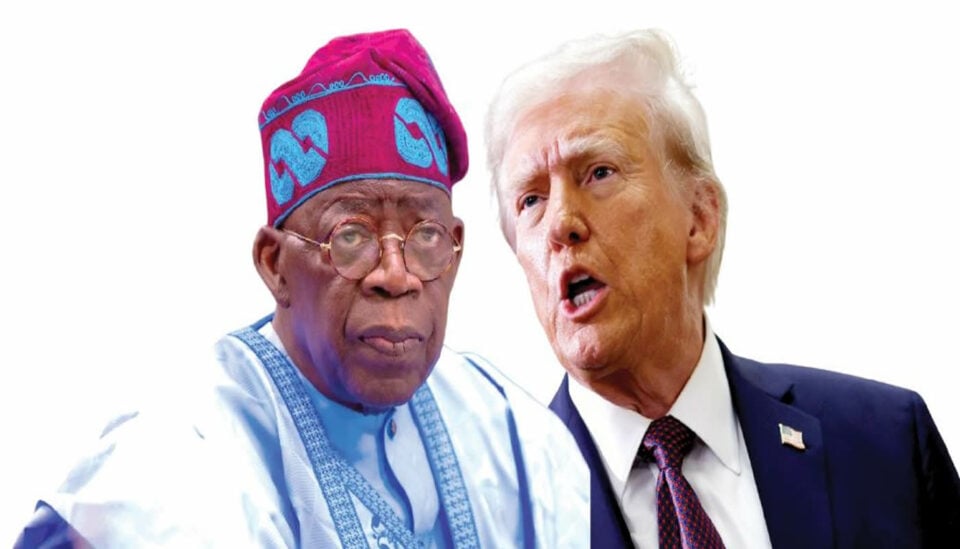
A new wave of diplomatic tension erupted this weekend after former U.S. President Donald Trump issued a scathing warning to the Nigerian government, demanding an immediate end to what he described as “mass killings of Christians.” Trump declared that the United States would consider military action and suspend all aid to Nigeria if the violence continues unchecked.
In a fiery post on his social media platform, Trump accused Nigerian authorities of failing to curb extremist violence and suggested that radical elements were operating freely against Christian communities. “I have ordered the Pentagon to prepare plans for fast military action if Nigeria does not stop the slaughter,” he wrote, adding that the U.S. “will not stand by while innocent Christians are being killed.”
The Nigerian government swiftly dismissed Trump’s allegations, describing them as “misleading and inflammatory.” A spokesperson for President Bola Ahmed Tinubu stated that Nigeria remains committed to protecting the rights of all citizens regardless of religion or ethnicity.
“There is no state-sponsored persecution in Nigeria,” the spokesperson said. “President Tinubu’s administration is deeply engaged in tackling terrorism, banditry, and all forms of violence across the country.”
Government officials emphasized that insecurity affects both Christians and Muslims, noting that extremist attacks, communal clashes, and kidnappings have plagued multiple regions, not just faith-based communities.
Nigeria’s internal security challenges have spanned over a decade, with militant groups such as Boko Haram and ISWAP (Islamic State in West Africa Province) destabilizing the country’s northeast since 2009. In recent years, bandit groups and armed herders have further expanded violence into the central and northwestern regions, leaving thousands dead and millions displaced.
While international watchdogs have repeatedly raised concerns over religiously motivated violence, many experts say the reality is more complex — often rooted in economic hardship, land conflicts, and governance failures rather than pure religious intolerance.
Trump’s remarks, made in typically blunt fashion, sent shockwaves across diplomatic circles. While no sitting U.S. administration official has confirmed any military plans, Trump’s influence within American conservative and evangelical circles remains significant. His comments reignited discussions about international accountability and religious freedom in Africa.
Human rights groups were divided in their reactions. Some U.S.-based Christian advocacy organizations welcomed Trump’s stance as a show of strength against persecution, while others cautioned that military threats could destabilize an already fragile region.
International analysts have warned that such rhetoric risks straining U.S.-Nigeria relations at a time when both nations collaborate closely on counterterrorism and intelligence sharing.
Experts note that although Christians in Nigeria have faced severe attacks in certain regions, Muslims and non-religious civilians have also suffered heavy casualties. Violence from insurgent groups and communal militias often crosses religious lines.
“The problem isn’t simply religion — it’s about weak institutions, corruption, and the proliferation of armed groups,” said Dr. Abdulrahman Sule, a political analyst at the University of Abuja. “Any external military threat ignores the complexity of Nigeria’s internal crisis.”
Aid agencies have also expressed concern that a potential U.S. aid freeze could jeopardize humanitarian projects that millions of Nigerians rely on, including food assistance, healthcare, and educational programmes.
If Washington were to impose sanctions or consider intervention, the consequences could be far-reaching. Nigeria remains the largest economy in Africa and a critical regional power. Its cooperation is vital to U.S. interests in counterterrorism operations across West Africa, particularly in the Sahel region.
Experts believe that direct U.S. intervention is unlikely, but even the rhetoric could impact investment confidence, international partnerships, and Nigeria’s diplomatic image.
“This kind of language, whether official or not, sends shockwaves through financial and diplomatic networks,” said Dr. Faith Ogundipe, a security policy expert. “It puts pressure on Nigeria’s leadership but also risks alienating a key African ally.”
As of now, the Nigerian government has not summoned the U.S. ambassador or issued a formal diplomatic protest. However, insiders at the Ministry of Foreign Affairs hint that Abuja is preparing a “measured response” aimed at calming tensions without escalating the issue further.
Observers say the situation highlights an enduring tension between Western narratives of “religious persecution” and Nigeria’s internal realities. While Trump’s warning has dominated global headlines, experts insist the focus should remain on addressing the root causes of violence — poverty, corruption, and weak governance.
For Nigeria, the statement serves as a reminder of how deeply its domestic conflicts have become global talking points. For Washington, it raises questions about how far America is willing to go in linking human rights to foreign policy enforcement.
The exchange marks one of the most confrontational moments in U.S.–Nigeria relations in recent years. Whether or not Trump’s remarks translate into any policy action, they have amplified international scrutiny of Nigeria’s human rights record and its ongoing struggle with violence.
For millions of Nigerians, however, the concern remains the same — not political rhetoric from abroad, but lasting peace and security at home.
By Ekolense International Desk