Hong Kong Fire: Death Toll Reaches 151 as Authorities Arrest Suspects Over Renovation Failures
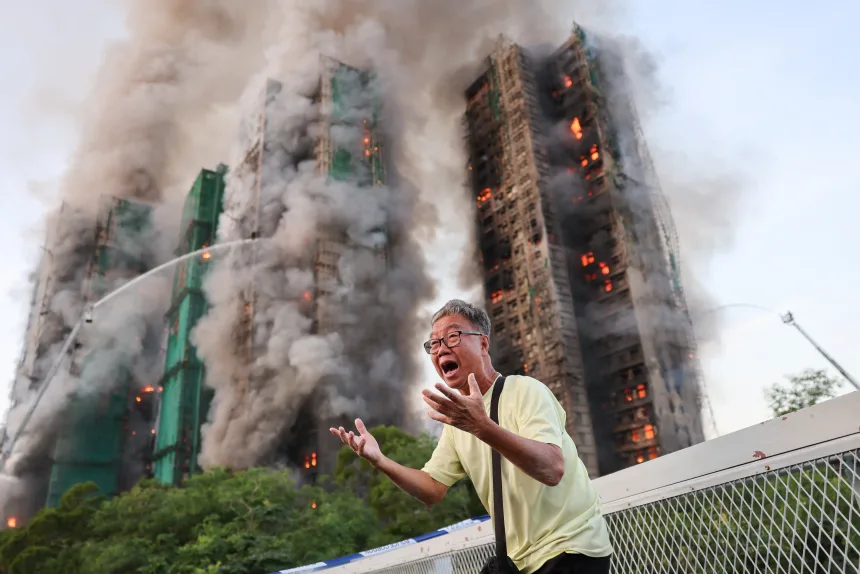
Firefighters search through the charred remains of Hong Kong’s Wang Fuk Court after the city’s deadliest fire in decades.
Substandard Building Materials and Faulty Fire Safety Systems Linked to City’s Deadliest Blaze in Decades
HONG KONG – The city of Hong Kong is grappling with the aftermath of its deadliest fire in decades, as authorities confirmed that at least 151 people have died and continued to arrest individuals over suspected negligence and manslaughter in connection with the disaster. For more details on earlier developments, see our related story: Hong Kong Fire: Death Toll. The devastating fire, which broke out last Wednesday at the Wang Fuk Court estate, consumed seven residential towers undergoing renovations, leaving behind charred remains and shattered communities. The devastating fire, which broke out last Wednesday at the Wang Fuk Court estate, consumed seven residential towers undergoing renovations, leaving behind charred remains and shattered communities. More than 40 residents remain missing, and families are anxiously awaiting news amid ongoing search efforts.
Officials have indicated that the fire was exacerbated by substandard construction and renovation materials, including bamboo scaffolding wrapped in green mesh that did not meet fire-retardant standards. Contractors had used these materials in areas difficult for inspectors to access, effectively concealing them during routine safety checks. Foam insulation added during the renovations also intensified the flames, while fire alarms failed to operate correctly, significantly hindering residents’ ability to escape.
Police have arrested 13 individuals suspected of manslaughter in connection with the blaze. Authorities say that these suspects are linked to the use of improper materials and negligence in adhering to building safety standards. Chief Secretary Eric Chan emphasized that investigations are ongoing to determine accountability for contractors and building management, noting that legal proceedings will follow once sufficient evidence is gathered.
Search operations at the affected towers have been described as painstaking and emotionally taxing. Officers in full protective gear are combing through charred stairwells, collapsed apartments, and waterlogged rooms where furniture and personal belongings have been reduced to ash. Police spokesperson Tsang Shuk-yin acknowledged the harrowing conditions, noting that some bodies have been incinerated beyond recognition, making it unlikely that all missing individuals will be recovered. The intensity of the fire, combined with the structural damage, means that search teams will likely remain at the site for weeks.
The human cost of the disaster has been profound. Many victims were trapped while attempting to flee, and authorities have reported that at least nine Indonesian domestic helpers and one Filipino worker were among those killed. Thousands of mourners have paid tribute to the deceased, lining streets near the estate to offer condolences and floral tributes. Vigils have also been planned in international cities, including Tokyo, London, and Taipei, to honor the lives lost and draw attention to the tragedy.
The fire has ignited public concern regarding building safety and regulatory oversight in Hong Kong. Questions have been raised about how substandard materials and poorly maintained alarm systems were allowed to persist in occupied residential buildings. While investigations continue, the government has promised a thorough review of fire safety protocols, especially in properties undergoing renovations. Officials have highlighted that stricter enforcement measures may be introduced to prevent a recurrence of such catastrophic events.
Adding to the tension, authorities have indicated that individuals attempting to politicize the tragedy or call for independent probes could face scrutiny under national security laws. Security Chief Chris Tang warned that “malicious actors” seeking to exploit the incident could be subjected to enforcement actions, a statement that has prompted debate among residents and advocacy groups about the balance between safety oversight and freedom of expression. Sources familiar with ongoing investigations confirmed that at least one person involved in circulating a petition calling for independent review was briefly detained, though details of the case remain confidential.
In terms of humanitarian response, city officials have relocated over 1,100 residents into temporary accommodations, including government shelters and community facilities. These displaced individuals are receiving basic necessities such as food, clothing, and medical care, although many families face long-term challenges in rebuilding their lives. Social services and non-governmental organizations are coordinating efforts to provide psychological support, recognizing the trauma that survivors and neighbors have endured.
The Hong Kong Fire Services Department continues to emphasize the technical causes of the fire. According to investigators, the green mesh covering the bamboo scaffolding failed to comply with fire-safety regulations. The presence of foam insulation and other flammable materials allowed the fire to spread rapidly, engulfing multiple floors within minutes. Residents attempting to escape were impeded by blocked stairwells and smoke-filled corridors, and malfunctioning alarms prevented timely alerts. The combined effect of these factors created conditions that made survival nearly impossible for many occupants.
Experts have pointed out that the tragedy underscores broader systemic issues in urban construction and building maintenance. Hong Kong, like many densely populated cities, relies heavily on renovation and retrofitting to maintain aging residential complexes. However, lax oversight, insufficient inspections, and the use of cost-cutting materials can result in high-risk scenarios. Fire safety authorities have vowed to tighten inspection regimes, particularly for high-rise buildings and older estates, to prevent similar disasters in the future.
The social ramifications of the blaze extend beyond the immediate loss of life. Families face not only emotional trauma but also practical challenges, such as the loss of homes, possessions, and livelihoods. Local community centers have been mobilized to provide counseling and material assistance, while government agencies are reviewing compensation schemes and rebuilding plans. Authorities have also encouraged residents to participate in fire safety training and awareness programs, emphasizing preparedness as a critical component of urban resilience.
International reactions have highlighted the severity of the incident. Aid organizations and foreign governments have expressed condolences, while observers note that the disaster draws attention to urban planning and safety challenges in high-density areas. The involvement of migrant domestic workers among the casualties has also prompted calls for enhanced protections for vulnerable populations living in shared or multi-tenant housing.
Investigations into the fire remain ongoing, with authorities meticulously documenting evidence at the site. Structural engineers, forensic specialists, and fire investigators are working collaboratively to reconstruct the sequence of events and determine accountability. Legal analysts anticipate that the prosecution of those arrested will focus on gross negligence and failure to adhere to building regulations, potentially leading to significant prison terms and fines if convictions are secured.
The disaster has catalyzed discussions about urban safety regulations in Hong Kong, particularly in the context of renovation practices and contractor accountability. While building codes exist, the enforcement of compliance has been uneven, and the tragedy has revealed weaknesses in oversight mechanisms. Policymakers are now under pressure to implement reforms that ensure renovation work meets strict fire safety standards, with mandatory inspections and certification processes for high-risk materials and construction methods.
As the city mourns, the long-term impact of the fire on Hong Kong’s urban landscape is becoming evident. Families displaced from their homes face uncertain futures, many seeking rental accommodations or temporary housing while authorities assess the feasibility of rebuilding or repairing affected towers. Community cohesion is being tested, as neighbors who survived grapple with the loss of friends and relatives, and local support networks work to provide aid and solace.
The human dimension of the tragedy is particularly poignant. Survivors recount harrowing escapes, the frantic efforts of neighbors to rescue others, and the harrowing realization that some loved ones may never be found. Firefighters and emergency personnel have been lauded for their courage in navigating hazardous conditions, yet the scale of destruction underscores the deadly combination of human error, regulatory lapses, and unsafe materials. The lessons learned from this catastrophe are likely to influence building codes, enforcement practices, and emergency response protocols for years to come.
Hong Kong’s recent fire at Wang Fuk Court has exposed critical vulnerabilities in urban housing safety, from the use of substandard materials to insufficient maintenance and inspection. With a confirmed death toll of 151 and dozens still missing, the city faces an unprecedented challenge in providing support to affected families, pursuing justice for negligence, and preventing future tragedies. Authorities have pledged continued investigation and reform, while the public continues to mourn the lives lost and hopes for stronger safety safeguards to protect residents in the future.
By Ekolense International News
Comments