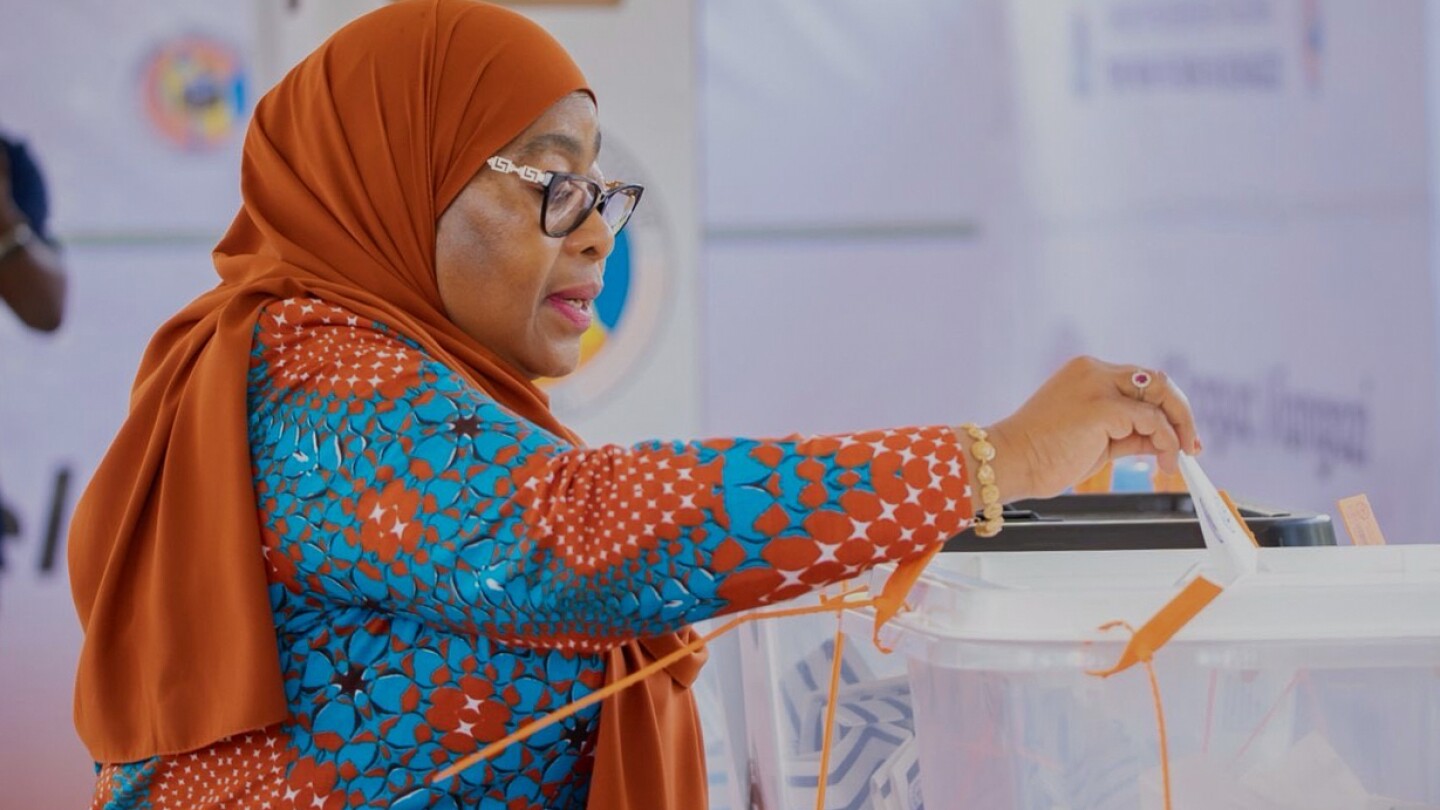
I n what many are describing as one of the most controversial elections in Tanzania’s modern history, President Samia Suluhu Hassan has been declared the winner of the October 29 polls, securing nearly 98 percent of the vote, according to the country’s electoral commission.
The commission announced that Hassan’s ruling party, Chama Cha Mapinduzi (CCM), won across all regions with little to no opposition presence — a result that has triggered widespread criticism from both domestic observers and the international community.
While government officials hailed the result as a “resounding confirmation of public trust,” opposition parties have rejected the outcome, calling it a sham election marred by intimidation, arrests, and bloodshed.
Several key opposition figures were reportedly barred from contesting, detained before the election, or forced into exile. This, analysts say, effectively handed CCM an uncontested victory.
The main opposition alliance has accused security forces of killing hundreds of protesters in the aftermath of the vote — a claim the government denies, acknowledging only “isolated clashes” that led to a few casualties.
Following the declaration of results, mass protests erupted in major cities including Dar es Salaam, Arusha, Mwanza, and Zanzibar, where demonstrators clashed with heavily armed security officers.
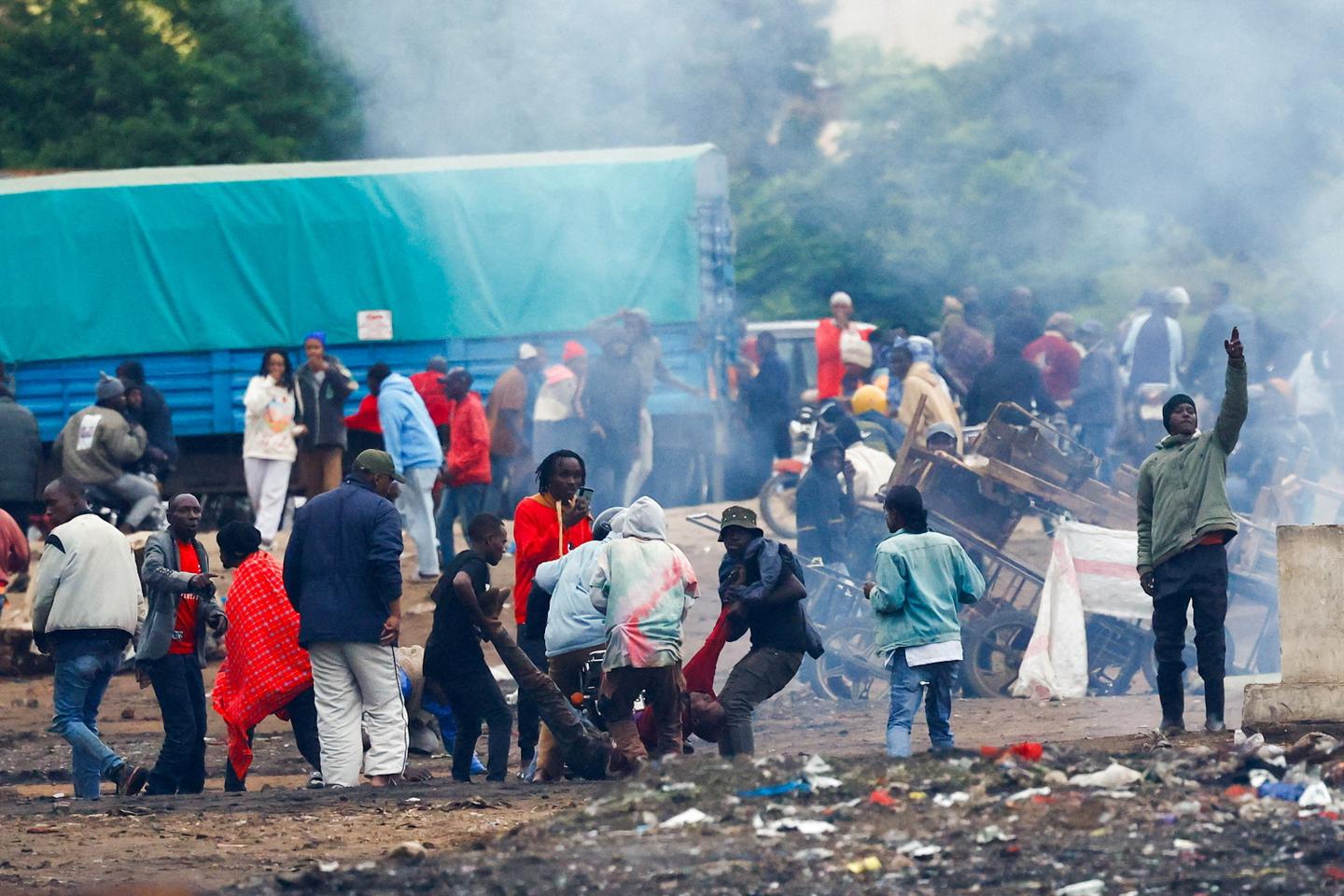
Protesters gather in Dar es Salaam amid reports of violence following the election results. (Photo Credit: Ekolense/Reuters)
Human rights monitors reported that police and military units used live ammunition and tear gas to disperse crowds, while several journalists covering the unrest were harassed or detained.
The government has since imposed a nationwide curfew, restricted internet access, and deployed military checkpoints around key urban centers.
In her victory address, President Hassan dismissed the opposition’s claims of foul play, insisting that her administration had conducted a “free, fair, and peaceful election.”
“When it comes to the security of Tanzania, there is no debate,” she said. “We will use all available means to protect peace, unity, and national stability.”
Her remarks were met with mixed reactions — supporters hailed her as a strong leader preserving national order, while critics accused her of justifying state repression.
International organizations, including Amnesty International, Human Rights Watch, and the United Nations Office of the High Commissioner for Human Rights (OHCHR), have called for independent investigations into the alleged killings and the reported use of excessive force.
The UN described the developments as “deeply alarming,” urging the Tanzanian government to respect citizens’ rights to peaceful assembly and free expression.
Meanwhile, Western governments — including the United States, United Kingdom, and European Union — have expressed concern over the conduct of the polls and the post-election violence.
Diplomatic sources say sanctions or aid reviews could follow if credible evidence of human-rights violations emerges.
Political observers argue that Tanzania’s election underscores a growing democratic decline in East Africa. Once praised for its stability, the country now faces accusations of increasing authoritarianism and erosion of political freedoms.
Dr. Nelson Mwakyembe, a Dar es Salaam-based political scientist, told Ekolense: “The scale of this result — nearly 98 percent — raises serious questions about competitiveness. The opposition has been systematically weakened, and this election may mark the end of true multiparty democracy in Tanzania.”
The ruling party, however, maintains that the results reflect the will of the people, citing government social programs and infrastructure expansion under Hassan’s administration as evidence of her popularity.
Tanzania’s political stability has long been vital for East African Community (EAC) cooperation and regional trade. Experts warn that if unrest continues, it could affect neighboring nations such as Kenya, Uganda, and Rwanda, which rely heavily on Tanzanian ports and infrastructure.
For now, the government remains defiant, and the opposition — weakened but not silent — vows to pursue justice through regional and international legal bodies.
As the dust settles, one question looms large: Can Tanzania restore faith in its democracy — or has this election permanently altered the country’s political landscape?
By Ekolense International Desk