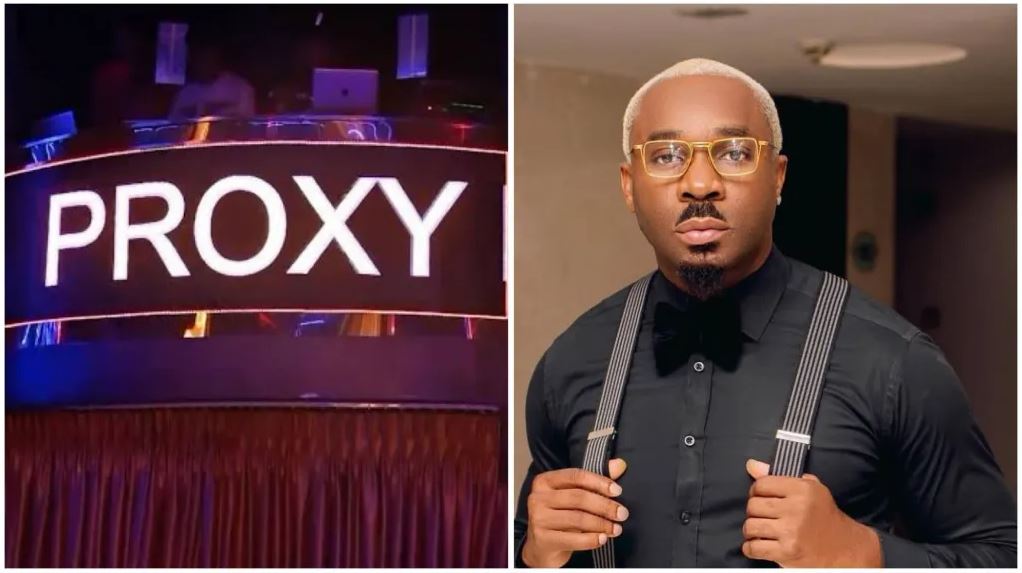
The glitz and glamour of Lagos nightlife collided with the stern face of law enforcement this week as a Federal High Court ordered the interim forfeiture of Proxy Lagos Nightclub, a luxury nightlife spot owned by popular socialite and event promoter, Mike Nwogu, famously known as Pretty Mike.
The ruling, delivered by Justice Musa Kakaki, followed an ex parte motion filed by the National Drug Law Enforcement Agency (NDLEA), which accused the nightclub of being a hub for “drug-themed parties” involving nitrous oxide (“laughing gas”) and cannabis sativa.
The NDLEA told the court that it acted upon credible intelligence indicating that Proxy Lagos had become a gathering point for “high-profile drug use and illicit distribution” disguised as entertainment events. The agency claimed that its operatives, working on surveillance for weeks, documented several instances of controlled substances being used freely within the club’s VIP sections and during special “exclusive nights” hosted by celebrities and social influencers.
According to NDLEA’s court filings, a special operations team raided the premises on a Saturday night in late October 2025. The operation reportedly resulted in the seizure of 169 cylinders of nitrous oxide, 200 grams of cannabis, and other related paraphernalia.
Witnesses at the scene described a dramatic moment as heavily armed officers stormed the building in the middle of a crowded party. Music stopped, lights came on, and guests were ordered to the floor as investigators combed through the premises.
The NDLEA argued that the confiscated substances and intelligence reports provided enough grounds to consider the nightclub as “an instrumentality used to commit a criminal offence,” thus warranting temporary forfeiture to the federal government under Section 49 of the NDLEA Act.
Justice Kakaki, after reviewing the motion and attached evidence, granted an interim order placing the property under government control pending the determination of a full forfeiture suit. The judge ruled that the order was necessary to preserve the property while investigations continue.
The case has been adjourned to later this month for hearing on whether the forfeiture should be made permanent. The order means that the nightclub, once a bustling venue for Lagos elites, influencers, and music stars, will remain sealed — with all operations suspended — until the court delivers a final ruling.
As of press time, Pretty Mike had not issued an official statement. Sources close to him told Ekolense News that he was “shocked” by the development and maintains that the NDLEA raid was a misunderstanding blown out of proportion.
One associate, who requested anonymity, said: “Mike has always been controversial, but he’s not into drugs. That place hosts hundreds of people every weekend — you can’t control what every guest does.”
However, NDLEA officials insist that the evidence points to a pattern of tolerance for drug use on the premises, adding that the agency will “not be intimidated by celebrity status or social influence.”
The case underscores a widening crackdown by the NDLEA on unconventional drug use, especially among Nigeria’s elite youth. Over the past year, the agency has shifted focus toward substances like nitrous oxide, commonly called “laughing gas,” which has become popular in Lagos and Abuja’s upscale clubs.
Though legal in small medical or industrial quantities, its recreational use is prohibited due to health risks, including oxygen deprivation, neurological damage, and sudden collapse from over-inhalation. The NDLEA has repeatedly warned that nightclubs and lounges could face forfeiture if found facilitating or tolerating the use of such substances.
“No property, no matter who owns it, is above the law,” an NDLEA spokesperson said. “We are sending a strong message to operators who profit from illegal activity under the guise of entertainment.”
Pretty Mike, known for his flamboyant fashion sense and dramatic public appearances — including arriving at events surrounded by women on leashes or in bridal gowns — has long been a lightning rod for controversy. His club, Proxy Lagos, quickly became a hotspot for Lagos high society, attracting A-list celebrities, artists, and influencers.
Yet the same popularity has drawn criticism, with moral watchdogs and conservative groups accusing the nightlife industry of promoting moral decadence and drug culture among youth. This latest case, many observers say, is a test of Nigeria’s resolve to balance personal freedoms with public morality — and a reminder that fame and luxury offer no immunity from law enforcement.
Industry insiders fear that the closure could send shockwaves through Lagos nightlife, where dozens of workers, DJs, bartenders, and vendors depend on clubs like Proxy for their livelihood. “If the club stays sealed, over a hundred staff could lose their jobs,” said a hospitality consultant. “We understand the NDLEA’s work, but there should be a way to sanction without total shutdown.”
Legal experts say Pretty Mike’s team has two major hurdles ahead: first, proving that the alleged drugs were not directly linked to the club’s management, and second, convincing the court to lift the forfeiture order before the main trial concludes. If found guilty of using the property for illegal purposes, the nightclub could be permanently confiscated and auctioned off by the government.
However, if Pretty Mike’s lawyers can establish that the substances were brought in by guests without the club’s knowledge or approval, the court may order the return of the property and dismiss the forfeiture suit.
Public reaction on social media has been divided. While some Nigerians argue that the NDLEA is right to “set an example” against celebrity impunity, others see the action as “media theatre” aimed at gaining attention.
“Let’s be honest — most Lagos clubs have people using these things. Singling out Pretty Mike is selective justice,” one X (formerly Twitter) user posted. Another countered: “The NDLEA should clean up everywhere, not just make arrests after the fact. If a club allows drug use, shut it down.”
The unfolding saga touches on deeper societal issues — the normalization of drug use among young Nigerians, the growing influence of nightlife culture, and the government’s struggle to regulate the entertainment economy without stifling creativity or livelihoods.
Whether Pretty Mike is vindicated or convicted, his case has already sparked a national conversation about the boundaries of glamour, legality, and responsibility in modern Nigeria. For now, Proxy Lagos stands dark and silent, its neon signs switched off, awaiting the judgment that could either restore its reputation or seal its fate permanently.
By Ekolense News Desk