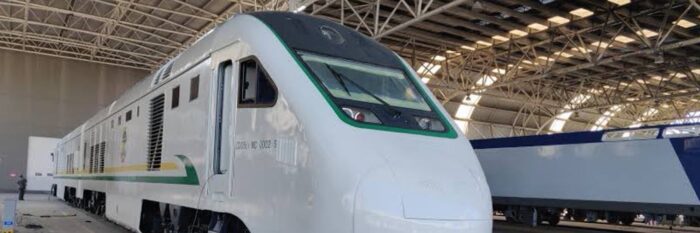
The Federal Government of Nigeria is preparing to unveil a comprehensive National Railway Development Roadmap aimed at linking all 36 states and the Federal Capital Territory (FCT) through a unified, modern railway network.
The announcement came during the 7th National Transport Conference of the Chartered Institute of Transport Administration (CIOTA) in Abuja. The project is one of the central pillars of President Bola Ahmed Tinubu’s Renewed Hope Agenda, emphasizing infrastructure and transportation as vital engines of sustainable growth.
According to officials of the Nigerian Railway Corporation (NRC), the roadmap offers a long-term strategic framework for modernizing Nigeria’s railway system and expanding it to every region of the country — a milestone never achieved before.
The plan envisions a seamless national transport grid that will facilitate trade, tourism, and economic integration, while significantly reducing pressure on the nation’s overburdened highways. Importantly, state governments will be permitted to use federal rail corridors without additional cost — a move expected to spur regional rail investment and cooperation.
The roadmap’s implementation will follow the NRC’s Vision 2-5-10-20 framework, setting measurable milestones over the next two decades:
- 2-Year Goal: Rehabilitate and optimize all existing rail assets to full capacity.
- 5-Year Goal: Transition part of the network to electric traction for cleaner, more efficient operation.
- 10-Year Goal: Double national rail capacity through expanded infrastructure and modern technology.
- 20-Year Goal: Expand the rail network to about 60,000 kilometers, ensuring total national coverage.
This structured roadmap underscores the government’s intention to not just expand but also modernize Nigeria’s railway for long-term sustainability and global competitiveness.
Beyond passenger services, the roadmap places strong emphasis on freight transport, a crucial component of industrial and commercial growth. Freight trains already carry goods such as containerized cargo, cement, steel coils, and materials for key projects like the Ajaokuta–Kaduna–Kano (AKK) Gas Pipeline.
With this expansion, freight movement will increase exponentially, reducing logistics costs and road congestion while boosting productivity in agriculture, manufacturing, and trade. Analysts say the initiative could save Nigeria billions in annual road maintenance expenses and make local industries more competitive globally.
The introduction of electric-powered rail lines marks a major shift toward sustainability, reflecting Nigeria’s commitment to cleaner energy and environmental responsibility. The roadmap also proposes upgraded safety systems, digital ticketing, and advanced signaling technology — transitioning from outdated infrastructure to a smarter, data-driven network.
“This project represents one of the most ambitious transport transformations in Nigeria’s post-independence era,” said one transport analyst in Abuja. “If implemented effectively, it could redefine the future of Nigerian mobility.”
The roadmap’s broader goal is to position Nigeria as a regional transport hub, connecting key trade corridors across West Africa and integrating land and port systems for cross-border movement of goods and people.
Despite the optimism, experts highlight several challenges that could shape the roadmap’s success:
- Financing: Developing and maintaining 60,000 km of track demands immense capital. The project will likely depend on public-private partnerships, foreign loans, and federal budget allocations.
- Security: Persistent vandalism, theft, and attacks on railway property threaten infrastructure sustainability.
- Execution & Governance: Past transport projects have suffered from delays, corruption, and red tape. Experts warn that without accountability, this initiative could face similar pitfalls.
- State Capacity: While states can access federal corridors, not all have the technical or financial readiness to manage independent rail systems effectively.
The unveiling of this roadmap signals more than just transport reform — it embodies Nigeria’s determination to build unity through infrastructure that connects communities, reduces travel time, and fosters trade. When completed, the network is expected to bridge rural and urban economies, lower transport costs, and unlock investment in logistics, real estate, and tourism.
If the roadmap delivers even 70% of its vision, analysts say it could transform how Nigerians live and work — creating thousands of jobs and reigniting industries long stifled by poor transport systems.
The Federal Government’s National Railway Roadmap represents a pivotal step in Nigeria’s modernization journey. Yet its success will rely on sustained funding, transparency, and political will. For millions who endure daily transport struggles, a functioning rail system could finally reconnect a nation long divided by distance and neglect.
By Ekolense News Desk