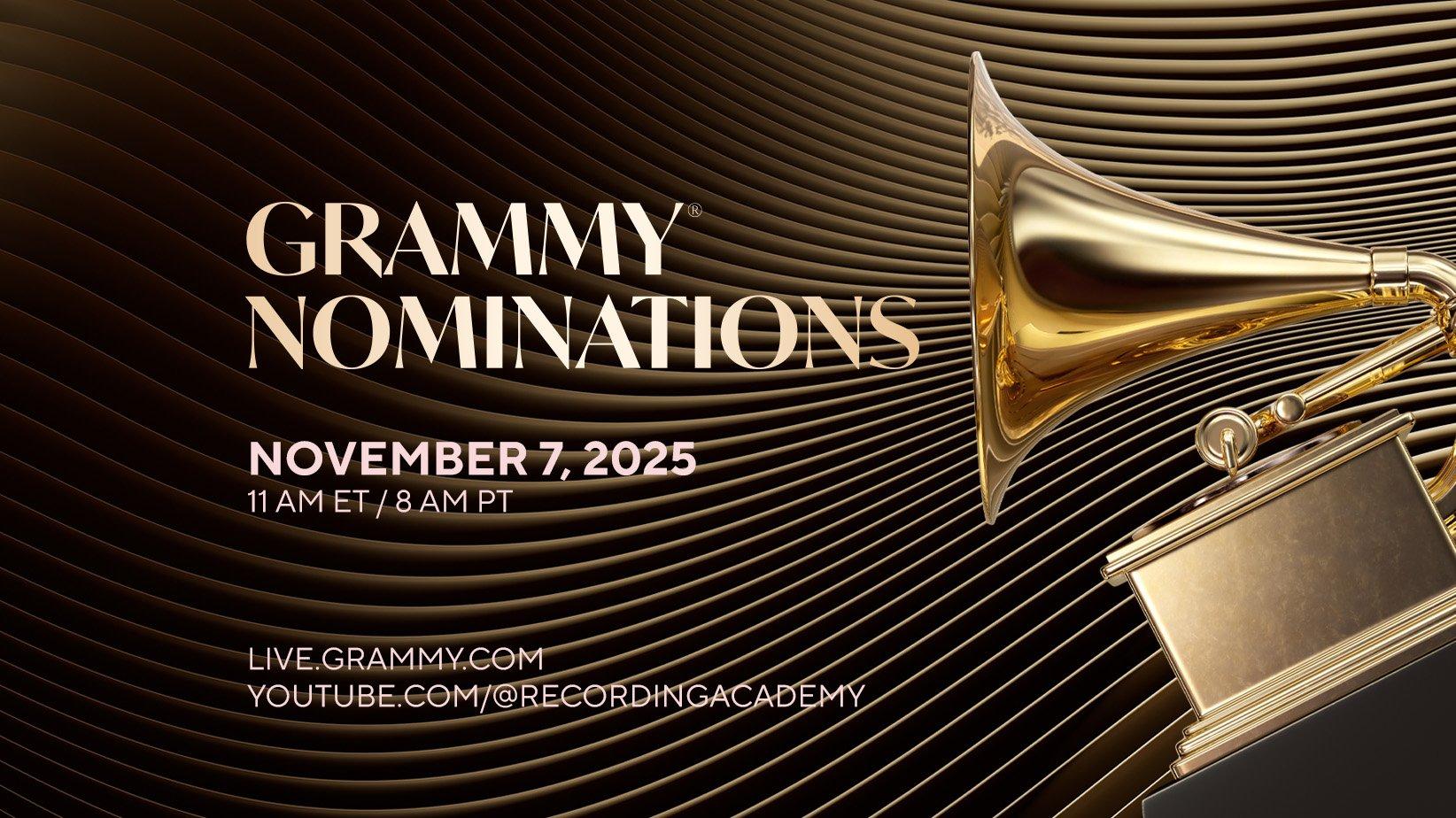
The global music stage is once again alive with excitement as the Recording Academy unveils the 2026 Grammy Awards nominations — and this year’s lineup has sent shockwaves through the industry. From Lady Gaga’s theatrical comeback to Bad Bunny’s unstoppable global reign, and the powerful inclusion of African artists breaking international barriers, this year’s Grammys are shaping up to be one of the most inclusive and unpredictable yet.
The 2026 Grammy Awards will take place on February 1, 2026, at the Crypto.com Arena in Los Angeles, covering music released between August 31, 2024 and August 30, 2025. The nominations reflect a bold shift by the Recording Academy — one that celebrates not just Western dominance but the emergence of global sounds from Africa, Latin America, Asia, and beyond.
At the forefront of this transformation are artists who have blended artistry, activism, and authenticity — reshaping how we define global pop music. Lady Gaga’s critically acclaimed album Mayhem leads several major categories, including Album of the Year and Best Pop Vocal Album. Critics describe the project as a fearless mix of rock, opera, and electronic innovation — her most ambitious record since Chromatica.
Bad Bunny continues to push the Latin wave to new heights. His genre-defying album Debí Tirar Más Fotos earned nominations across Record of the Year, Best Global Music Performance, and Best Urban Album, reaffirming his position as a worldwide phenomenon. Meanwhile, Kendrick Lamar’s socially charged album GNX dominates the rap field, marking yet another year of lyrical brilliance and cultural commentary from one of hip-hop’s most decorated voices.
Africa Steps Into The Spotlight
Perhaps the most significant development this year is the rise of African nominations — a clear sign that the continent’s music is now shaping global soundscapes. For years, African artists were largely confined to “world music” or specialist categories. In 2026, they are crossing over into mainstream fields and taking places alongside global heavyweights.
Burna Boy, with his groundbreaking album No Sign of Weakness, has been nominated for Album of the Year, Best Global Music Album, and Best African Music Performance — marking his fourth consecutive year of Grammy recognition. His fusion of Afro-fusion, reggae, and hip-hop continues to redefine African excellence on the world stage.
Wizkid returns with Morayo, a lush, rhythmic project that blends Afrobeats with futuristic production. His track Balance featuring Tems has been nominated for Record of the Year and Best African Music Performance — a milestone for the Afrobeats movement.
Rising star Ayra Starr makes her first-ever Grammy appearance, nominated for Best New Artist, Song of the Year for her viral anthem Commas, and Best African Music Performance. Her nomination symbolizes a generational handover — from Afrobeats pioneers to a new era of female-led African pop.
South Africa’s amapiano innovators Tyler ICU and Kabza De Small continue the genre’s global rise, with their hit Mnike nominated for Best African Music Performance and Best Dance/Electronic Recording. This is the first time a South African amapiano track has been recognized outside the African category, signalling amapiano’s widening international influence.
Also earning nods this year are Davido, Rema, Tems, and Asake, all of whom have dominated streaming playlists and collaborative projects that crossed borders. Experts say the African category in 2026 is the most competitive in Grammy history.
Africa’s growing Grammy presence is the result of a decade-long surge in creativity, infrastructure and global collaboration. Sold-out tours, high-profile collaborations with international stars, and strong streaming numbers have turned African music into a global commodity — and a cultural force. The continent’s artists are no longer asking for validation; they are defining the agenda.
Music critic and cultural analyst Dr. Ifeanyi Eze told Ekolense Entertainment,
“African artists aren’t just contributing to global music anymore — they are shaping it. This year’s Grammys prove that you can’t talk about the sound of the future without Africa.”
Veterans such as Taylor Swift and Adele also feature on this year’s list. Swift’s surprise acoustic project August Nights and Adele’s soulful single Don’t Forget Me receive multiple nominations, while British rising stars Olivia Dean, Lola Young, and Tyla appear in the Best New Artist conversation — reflecting the Recording Academy’s widening global lens.
Behind the boards, producers and engineers are receiving attention too. The Producer of the Year race includes established names and newer figures who’ve moved Afrobeats and amapiano into mainstream playlists; this is a sign that the technical pipelines that support African music are increasingly world-class.
What’s striking about the 2026 nominations is not just who is on the list — it’s what the list represents. The borders between genres and geographies are blurring. From Afrobeats and amapiano to reggaetón and global pop, music today is the product of collaboration, cultural exchange, and technological reach.
The Best African Music Performance category, introduced only a few years ago, has become more than a genre label — it’s a cultural statement celebrating rhythm, identity, and resilience. The category now functions as both recognition and a launchpad into global fields.
As anticipation builds toward February, fans around the world are already rallying behind favourites. Social feeds are buzzing with tags like #GrammyAfrica, #TeamGaga, #BadBunnyForever, and #AyraForBNA. Voting members of the Recording Academy now face tough choices — between established icons and emergent global voices.
Whether it’s Lady Gaga’s show-stopping innovation, Bad Bunny’s genre-bending vision, or Burna Boy’s Afrocentric global energy — one thing is clear: the 2026 Grammys will not only celebrate music, they will celebrate the world.
The 2026 Grammy nominations mark a defining moment in global music history — one where African artists stand shoulder-to-shoulder with pop’s biggest icons. This isn’t just about awards: it’s about recognition, representation, and revolution — proving that the rhythm of Africa is now the heartbeat of the world.
By Ekolense International Desk