Controversy in Edo State: Governor Okpebholo Sacks Two Monarchs Amid Leadership Turmoil
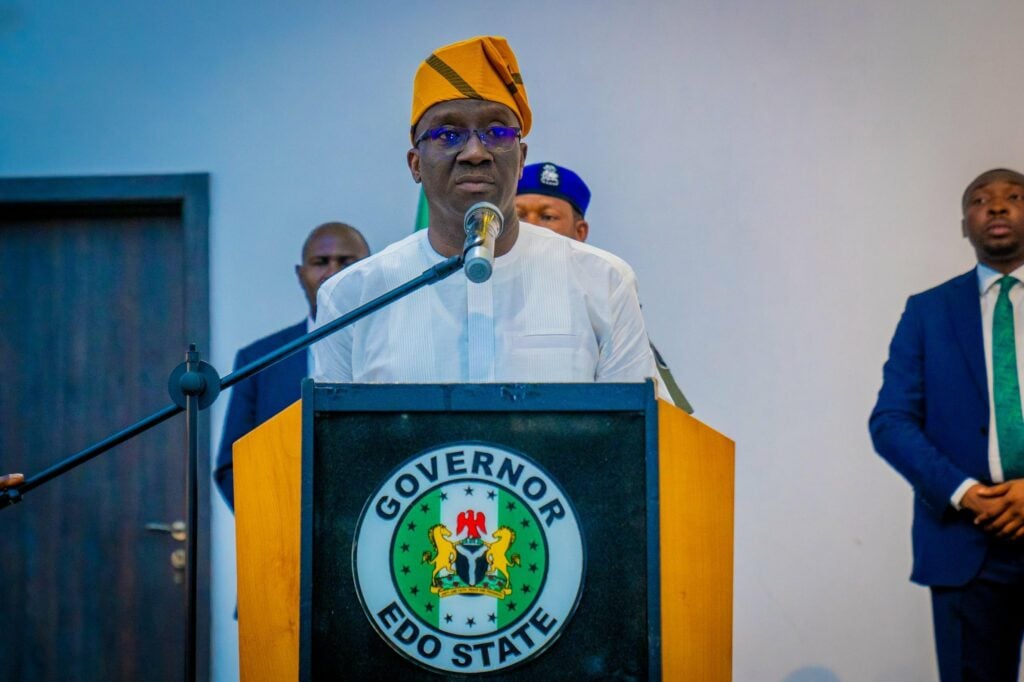
Edo State Governor Monday Okpebholo has removed two traditional rulers in Akoko-Edo, sparking controversy.
Edo State’s controversial removal of two traditional rulers in Akoko-Edo has ignited tensions, raised questions about due process, and threatens to destabilize long-standing community leadership structures.
Edo State Governor Monday Okpebholo has sparked widespread controversy following the removal of two prominent traditional rulers in Akoko-Edo Local Government Area. The move, officially framed as a corrective measure to address long-standing disputes within the affected communities, has drawn sharp criticism from local leaders, civil society groups, and residents alike. Critics argue that the action is heavy-handed, undermines customary norms, and could potentially escalate existing tensions.
The monarchs affected by this decision are:
- HRH Bamidele Obaitan, the Olososo of Ososo Kingdom
- Zaiki Luckman Odamah III, the traditional ruler of the Ikpeshi/Egbegere Clan
Official statements cite prolonged community disputes as the justification for the dismissals. However, observers have raised questions about the process, the timing of the action, and whether the state government overstepped its authority in intervening in age-old traditional structures.
Rather than promoting stability, the removals have generated uncertainty and unrest. In Ikpeshi/Egbegere, Nicholas Odamah has been appointed as regent to temporarily oversee the community, while elders in Ososo have been instructed to reach a consensus on a new leader. While these interim arrangements are intended to fill the leadership vacuum, they have left some residents confused and frustrated. Elders complain that they were given limited time to organize, while some residents feel that their autonomy in selecting leaders is being undermined.
Political analysts have noted that Edo State has a long history of disputes over succession and chieftaincy titles, many of which are deeply rooted in historical, familial, and cultural claims. By removing two monarchs simultaneously, Governor Okpebholo risks creating perceptions of favoritism or political alignment, potentially favoring one faction over another.
Traditional rulers in Nigeria wield significant influence in social, cultural, and political spheres. They often serve as mediators, custodians of community customs, and stabilizers in local governance. The abrupt dismissal of two such leaders simultaneously sends a troubling message that centuries-old customs and internal community processes may be overridden at the discretion of the state government.
The reaction among residents has been largely critical. Many argue that the government’s intervention disregards local customs and undermines established rotational leadership practices. In Ososo, for instance, some quarters reportedly resist the ongoing selection process, perceiving it as politically influenced rather than genuinely community-driven. Similarly, elders in Ikpeshi/Egbegere have expressed concern that the appointment of a regent bypassed traditional consultative mechanisms. Without widespread community support, these measures may be viewed as illegitimate, potentially sparking protests or unrest.
Several risks arise from this intervention:
- Erosion of Trust: By sidelining established leaders without transparent legal or customary justification, the government risks eroding its credibility among local populations.
- Factionalism: Competing groups may interpret the removals as favoritism, deepening divisions rather than resolving disputes.
- Potential Violence: Disputes over traditional leadership in Edo State have historically escalated into clashes, and similar outcomes remain a concern.
- Weak Transitional Authority: Appointing regents or pressuring elders may not ensure effective governance, leaving communities vulnerable to administrative neglect or mismanagement.
The sacking also raises questions about governance and accountability. It remains unclear whether a formal investigation was conducted into the disputes or if the monarchs were given an opportunity to present their cases. The public statement issued by the Secretary to the State Government, Umar Musa Ikhlor, emphasizes peace and stability but provides little transparency on the specific criteria used to justify the dismissals. Without clear explanations, the government’s actions risk being perceived as arbitrary or politically motivated.
Implications for Traditional Authority
Traditional rulers are central to conflict resolution, social cohesion, and cultural preservation in Nigeria. When state authorities bypass or weaken these structures, it undermines centuries-old institutions that serve as trusted anchors within communities. Experts caution that repeated interventions could reduce monarchs to ceremonial figures, forcing communities to increasingly rely on political actors for legitimacy.
The simultaneous removal of two monarchs represents a particularly aggressive approach that may prioritize state control over community-led governance. Without careful handling, resentment among residents is likely. Community members loyal to the deposed leaders may resist interim arrangements, disrupting local governance functions, including dispute mediation, land matters, and communal events.
Politically, opponents of Governor Okpebholo may exploit the unrest, framing the dismissals as politically motivated rather than genuine attempts at reform. This could polarize public opinion and complicate governance at a state level.
Local observers warn that the government’s current approach risks creating a long-term credibility gap. If communities perceive that leadership is imposed rather than organically determined, trust in both traditional institutions and the state may diminish. The resulting friction may lead to protests, civil disobedience, or even violent clashes between factions, mirroring past incidents in Edo State.
Despite the government’s assurances that the removals were aimed at peace and stability, the reality is complex. Leadership disputes in these communities are deeply tied to identity, heritage, and local customs. Heavy-handed interventions without consultation or transparency may exacerbate instability rather than resolve it.
Managing the Fallout
Governor Okpebholo’s administration now faces the dual challenge of ensuring a smooth leadership transition while managing political fallout. Success will require impartiality, transparency, and active engagement with community stakeholders. Interim arrangements, such as regent appointments and elder-led selection processes, must be handled sensitively to avoid perceptions of bias or coercion.
Experts suggest that the government could restore trust by instituting a clearly documented process for evaluating disputes, engaging neutral mediators, and ensuring that community voices play a central role in leadership decisions. Without these measures, any newly appointed leaders risk being viewed as illegitimate, weakening their authority and reducing their ability to govern effectively.
Edo State’s situation serves as a cautionary tale for other regions with similar traditional governance structures. Interventions in longstanding community leadership systems must balance the need for order with respect for cultural norms, historical practices, and communal autonomy. Failure to do so risks long-term damage to both social cohesion and public confidence in political institutions.
In conclusion, Governor Okpebholo’s decision to sack two monarchs in Akoko-Edo is fraught with controversy. While officially aimed at resolving disputes and restoring peace, the move has triggered questions of due process, legitimacy, and respect for cultural traditions. Communities are watching closely, and the coming months will determine whether the government’s actions stabilize or destabilize local leadership structures.
The incident underscores the delicate nature of traditional governance in Nigeria, highlighting the need for careful, consultative, and transparent approaches when political authorities intervene. Edo State’s political and cultural observers caution that without inclusive dialogue and respect for customs, even well-intentioned interventions may backfire, exacerbating tensions rather than resolving them.
By Ekolense News Desk
Comments