Africa Unveils Groundbreaking HIV Prevention Shot With 99.9% Protection
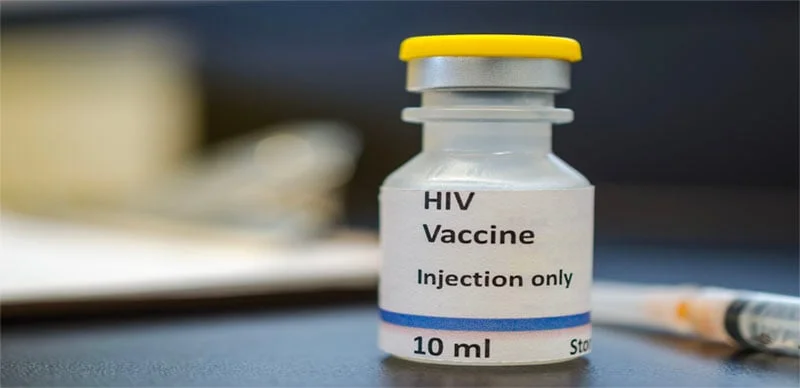
Lenacapavir, a twice-yearly HIV prevention injection, is set to revolutionize HIV prevention in Africa.
A Twice-Yearly Injection That Could Change the Course of HIV Prevention Across the Continent
The global battle against HIV has taken a dramatic and hopeful turn as Africa begins rolling out a revolutionary new prevention method: a twice-yearly injection known as lenacapavir. This breakthrough medication, scientifically tested and shown to reduce the risk of HIV infection by over 99.9%, is already being hailed as one of the most significant public-health advancements in decades. For countries with high HIV burdens, especially across sub-Saharan Africa, this innovation represents more than just another medical option — it signals the possibility of an entirely new era where HIV transmissions can be drastically reduced, and perhaps one day, eliminated.
The significance of this injection becomes clearer when considering the history of HIV prevention. For years, individuals relied primarily on condoms, behavioural education, and more recently, daily oral PrEP (pre-exposure prophylaxis) pills. While effective, each of these methods comes with limitations. Condoms are not always used consistently, education does not always translate into behaviour change, and daily medication routines can easily be disrupted due to forgetfulness, stigma, lifestyle challenges, or socioeconomic conditions. These obstacles have prevented many communities from achieving the level of protection needed to slow down the virus effectively.
Lenacapavir offers a fresh path. Delivered only twice a year, the injection provides long-lasting protection without depending on consistent daily adherence. Once administered, it slowly releases medication that prevents the virus from establishing infection in the body. Many health experts are calling it “the closest thing yet to an HIV vaccine,” and that description isn’t far-fetched. Although technically not a vaccine, its impact — especially its longevity and near-perfect efficacy — brings the scientific community closer to a goal that once felt impossible.
The initial rollout of this injection has started in countries like South Africa, Zambia, and Eswatini. These nations were chosen because they have some of the highest rates of HIV globally and already possess strong HIV-treatment infrastructures, which makes them ideal for early implementation. The first batches are still small, but they have set an important precedent: Africa does not have to wait decades to access life-saving innovation. This time, the continent is receiving breakthrough technology early, not years later after it has already circulated in wealthier countries.
What makes the timing particularly meaningful is the reality that Africa remains the continent most affected by HIV. Millions of people live with the virus, and millions more are at risk of acquiring it. Entire generations have grown up in communities where HIV is a constant presence. Despite tremendous progress in treatment, prevention remains a challenge — and prevention is ultimately the most powerful weapon in reducing the epidemic. With a shot that requires only two clinic visits a year, the barriers that stood in the way of other prevention tools begin to crumble.
One of the most transformative aspects of the injection is its ability to work around the issue of adherence. Daily PrEP pills can be highly effective, but only if taken consistently. In real life, many people simply cannot stick to a daily medical routine — whether due to school, work, travel, stigma around HIV medication, or even just forgetfulness. Missing doses weakens the protective effect. Lenacapavir solves that problem completely. A person only needs to show up twice a year, an approach far more aligned with real human behaviour. It also offers privacy: one can receive the injection at a clinic without ever needing to store pills at home or explain their medication to anyone.
The claim of 99.9% protection is another game-changer. Few medical interventions offer such a high level of effectiveness, especially in the realm of infectious diseases. For comparison, many common vaccines do not reach this level of real-world efficacy. Knowing that one injection can almost completely eliminate the risk of HIV transmission not only changes personal health decisions but also has the potential to reshape public-health strategies at national and continental levels. If enough people adopt this prevention tool, Africa could see a sharp decline in new HIV cases within a few years.
Despite the excitement, several challenges remain. Cost is a major barrier. In high-income countries, lenacapavir is currently priced at levels unreachable for ordinary people — tens of thousands of dollars per year. Africa cannot sustain such costs. However, global health organisations and pharmaceutical partners have already mapped out a pathway for affordable generic versions. By 2027, generics are expected to be widely available across Africa for around $40 per person per year. This would mark one of the most significant price reductions in the history of modern medicine, making the injection accessible to millions.
Supply remains another concern. The first batches sent to South Africa, Zambia, and Eswatini were relatively small compared to the number of people who may need the drug. Countries with larger populations, such as Nigeria, Kenya, and Ethiopia, will require major production scaling. But the early rollout proves the system can work — and once manufacturing increases, distribution will become faster and more widespread.
A subtle but important point is that while the injection is powerful against HIV, it does not prevent other sexually transmitted infections. Health professionals stress that it should be viewed as part of a broader sexual-health strategy, not a total replacement for condoms. The shot prevents HIV; it does not prevent syphilis, gonorrhoea, chlamydia, or unwanted pregnancy. For many people, a combination of prevention tools remains the safest approach.
Still, the social impact of lenacapavir may reach far beyond its medical effects. HIV has carried heavy stigma in many African communities for decades. Even the act of taking daily PrEP pills can draw suspicion or judgment. A twice-yearly injection reduces visibility, allowing individuals to protect themselves without facing questions or assumptions. This privacy may encourage more people — especially young women, who represent a significant share of new infections — to embrace prevention without fear or hesitation.
Nigeria, Africa’s most populous nation, stands to benefit greatly once the injection becomes available. While not part of the initial rollout, discussions have already begun regarding future access and integration into the country’s health system. Nigeria’s large network of HIV treatment centres and community health workers makes it a strong candidate for scaling up preventive injections quickly once supplies and generics arrive. With over 200 million people and diverse risk profiles across regions, Nigeria could experience one of the most dramatic declines in new HIV cases if the injection becomes available and widely adopted.
The broader African continent also has an opportunity to rewrite the story of HIV. Instead of being a region overwhelmed by the virus, Africa could become the leader in a new form of public-health success. With young populations, expanding healthcare infrastructure, and strong grassroots organisations, the introduction of a powerful, long-acting, and near-perfect prevention tool could signal the beginning of the end of the epidemic.
The unveiling of this injection is not just a scientific milestone — it is a human one. It represents hope for families who have lived through decades of loss, for young people who fear infection, for communities struggling to reduce transmission, and for nations carrying the social and economic weight of HIV. This twice-yearly shot brings Africa closer than ever to breaking free from an epidemic that has shaped its history for over forty years.
If the rollout is sustained, affordability is achieved, and awareness spreads, lenacapavir could become one of the most important innovations in Africa’s public-health journey. For the first time in decades, the possibility of dramatically reducing new HIV infections feels not just ambitious, but achievable. The future looks different now — more hopeful, more empowered, and more within reach.
By Ekolense News
Comments